


In order to immigrate to the US, you must hold a lawful visa, green card, or be considered a refugee or asylum seeker. Some of the reasons why people choose to immigrate to the US include being closer to family, pursuing educational or economic opportunities, and fleeing a dangerous environment. Legal immigration to the US is controlled by the United States Citizenship and Immigration Services (USCIS), an agency in the US Department of Homeland Security. Understanding the immigration system will be critical to effectively achieving your goals in the United States.
Table of Contents
What is the Difference Between Immigrant and Nonimmigrant Visas?
Immigrant visas are for individuals seeking permanent residence in the US, while nonimmigrant visas are for those only seeking temporary stays for specific purposes (e.g. to attend a university or for business purposes). Once you receive an immigrant visa, you will be able to apply for a Green Card after a number of years, which will give him permanent resident status. With a Green Card, you can live and work freely in the US, and eventually become eligible for US citizenship.
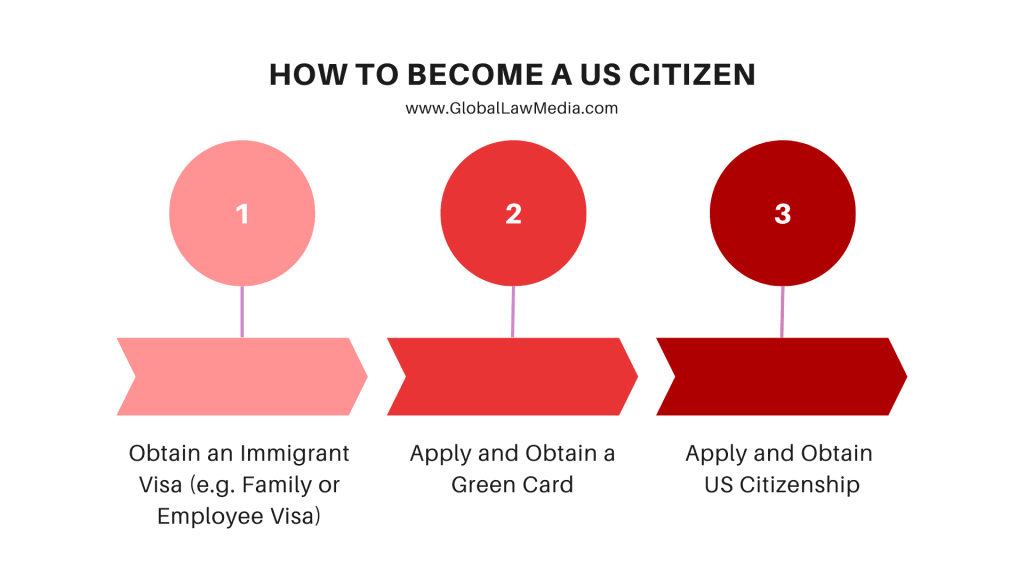
Nonimmigrant visas do not directly lead to permanent residency status, however, some nonimmigrant categories may allow you to transition to an immigrant visa status under certain circumstances. It will be wise to understand your long-term goals and be able follow a visa path that fits those plans
What are the Different Types of Immigrant Visas?
Family-Based Immigration and Employment-Based Immigration are the two main types of immigration visas. Family-Based Immigration allows US citizens and lawful permanent residents to apply for certain relatives to immigrate to the US. Employment-Based Immigration allows individuals with certain skills and qualifications that are in demand by US employers to be able to come and stay in the US.
What is Family Based Immigration?
Family-Based Immigration is typically for family members of green card holders and US citizens and is based on a preference category and limit per year. If a family member is considered an Immediate Relative, then there is no fiscal year limit on the amount of family members in this category that can apply for a visa. The type of Immediate Relative visa covers the following individuals:
- Spouse of a US Citizen,
- Unmarried Child Under 21 Years of Age of a U.S. Citizen,
- Orphan adopted abroad by a US Citizen,
- Orphan to be adopted in the U.S. by a US citizen, and
- Parent of a U.S. Citizen who is at least 21 years old
US citizens can file an immigrant visa petition for their spouse, child, parent, or sibling. However, a US Lawful Permanent Residents can only file an immigrant visa petition for their spouse and unmarried son or daughter.
What are Family Preference Immigrant Visas?
Family Preference Immigrant Visas are petitions for more distant family relationships to a U.S. citizen and some specified relationships with a Lawful Permanent Resident. Unlike the Immediate Relative Visa, the Family Preference Immigrant Visas has a limit on the number of these visas that can be granted every fiscal year.
The family preference categories are:
- First preference (F1) – unmarried sons and daughters (21 years of age and older) of U.S. citizens;
- Second preference (F2A) – spouses and children (unmarried and under 21 years of age) of lawful permanent residents;
- Second preference (F2B) – unmarried sons and daughters (21 years of age and older) of lawful permanent residents;
- Third preference (F3) – married sons and daughters of U.S. citizens; and
- Fourth preference (F4) – brothers and sisters of U.S. citizens (if the U.S. citizen is 21 years of age and older).
Once the limit has been reached Family Preference Immigrant Visas, there will be no more Family Preference Immigrant Visas issued in the fiscal year.

What are the Pros and Cons of Family Based Immigration?
The main pro of family-based immigration is that it allows you to later apply for a green card, which creates a way for you to become permanent resident in the US, and then you can apply for US citizenship after you receive a green card. In addition, you can live near your family. The main con is that family-based immigration requires significant paperwork and potentially lawyer fees, long wait times if you are in the preference category.
If you marry or have a close family member who is a US citizen or green card holder, family-based immigration may be a viable option for you. However, it’s crucial to carefully research the process, understand the eligibility requirements and potential wait times, and consider seeking guidance from an experienced immigration attorney.
What are Employment-Based Immigration Visas?
Employment-based immigration visas allow individuals with a valuable skill set to relocate and come work in the US. Employment-based immigration encompasses visas that lead to a green card, unlike the popular H-1B visa. US employers will petition for these employees and if the person fits into one of the five more common preference category visas such as the following:
- EB-1: For individuals with extraordinary abilities and typically at the top in their field, (e.g., athletes, researchers, or inventors). It also applies to executives and managers of multinational organizations. Most people will not qualify for a EB-1, and therefore it takes a shorter time to get a EB-1 visa
- EB-2: For professionals with advanced degrees (Masters degrees or higher) in fields relevant to the US job market, or individuals with exceptional ability in the arts, sciences, or business. These individuals will not have the extraordinary talent as individuals in the EB-1 category, and therefore the processing time will be long for this visa than the EB-1.
- EB-3: For professionals, skilled workers, and unskilled workers that work in areas where there are no qualified American workers who could perform the job. This is confirmed by a PERM certification. In addition, you must have two years of experience.
- EB-4: For religious workers, certain government employees, and some international investors. This is considered a special category because often these individuals do not need a formal education. For example, a person isn’t required to go to college to be a religious worker.
- EB-5: For foreign investors who invest a significant amount of capital into a US commercial enterprise (at least $1,050,000 and $800,00 for Targeted Employment Areas) that creates at least ten jobs for qualified US workers.
The Immigrant Based Visas all lead to ability to obtain a green card, which offers permanent residency in the US. This is different from nonimmigrant visas.
How does a Person Apply for an Immigrant Visa?
A person can apply for an immigrant visa by having someone submit the petition on your behalf, paying the necessary fees, interviewing at a consulate or embassy, and completing the necessary document. Once this process has been completed, you can potentially obtain a Green Card. This petition is mostly filed by either a family or employer where you have a job offer. In addition, the document will be submitted to the USCIS.
What are the Different Types of Nonimmigrant Visas?
The different types of nonimmigrant visas allow individuals to come to the US for tourism, business, study, work, and cultural exchange. A nonimmigrant visa has no direct path to a green card, unlike the immigrant visas, which permits permanent residence. Both foreigners and the US benefit from nonimmigrant visas.

What are the Tourism Visas for the US?
The B-1 visa and the B-2 visa are the main tourist visas for the US. The B-1 visa is primarily for individuals who are visiting the US for business purposes (e.g, closing a business, signing a contract, or attending a conference/convention). The B-2 visa is for leisure tourism and vacation (e.g., touring a major US city, visiting family and friends, participating in a festival or concert).
What are the US Student Visas?
The F-1 and the M-1 are the primary student visas individuals use to enter the US for educational purposes. The F-1 student visa is for students accepted into full-time academic universities, colleges, high schools, private elementary schools, etc. The M-1 student visa is for students accepted into a full-time vocational school, instead of an academic school. Both the F-1 and M-1 must be enrolled into a Student and Exchange Visitor Program (SEVP) approved program. In addition, the student must show he/she can financially support and cover their living expenses while attending the school in the US.
Other Nonimmigrant Visas
The J-1 Visa is for individuals participating in an exchange program (e.g., students, researchers, teachers, and interns). The I Visa is for individuals seeking to come to the US that work in foreign media organizations working (e.g., newspapers, radio, or press) The R Visa is for religious workers coming to the US to perform religious functions in a religious organization (e.g, church, synagogue, or mosque).
Nonimmigrant visas cater to individuals seeking temporary stays in the US for various purposes. Here’s a breakdown of some common nonimmigrant visa categories:
What are the Benefits of a Nonimmigrant Visa?
Foreigners benefit from a Nonimmigrant Visa because it allows them to come to the US for a variety of purposes on a short term basis and experience American culture. In addition, while nonimmigrant visas do not offer a direct path to permanent residence, they can offer opportunities for permanent residency. For example, an F-1 visa holder can be granted an employment based green card.
The US benefits from increased money spent during tourism, an increased skilled workforce, cultural exchange programs, and increased partnerships with other countries.
What is a Green Card for Immigration to the US?
A Green Card is a document that allows for permanent residence in the US, where a person can work and live indefinitely in the US. To qualify for a Green Card, you must qualify for one from an employment based visa, family sponsorship, being an investor, have refugee or asylum status, or win the Diversity Visa Lottery. All applicants for Green Cards undergo security screenings and background checks. In addition, you will have to have an interview for your Green Card.
Are there Limits on the Amount of Green Cards Issued Every Year?
Yes, there are limits on the amount of green cards issued every year. This is known as “per-country ceilings” and it helps ensure that no one country takes a large percentage of green cards in a particular year, according to, “Numerical Limits on Permanent Employment Based Immigration: Analysis of the Per-country Ceilings” by Carla Argueta. They primarily focus on the annual limits on green cards for each preference category within family-based and employment-based immigration.
The demand for visas from certain countries is so high, that a backlog forms and can create longer wait times for certain countries (e.g. Mexico, China, India). It may be wise to apply for a visa or permanent residency in different areas if you qualify. Diversity is important to the US, and the US wants to ensure that its population is composed of individuals from different countries.
What are the Costs to Obtain a Green Card?
The cost to obtain a Green Card can range from $325 up to almost $4,000 depending on the type of immigration visa (family based, employer based) you will be using to apply for a green card. If you are using an immigration lawyer to apply for a green card, you can expect the fees to be more. You will likely expect to pay for the following:
- Application fees
- Biometric fees
- Medical examination
- Affidavit of Financial Support for your Sponsors
- Attorney Fees
These are just estimated costs, and it will be important to take into consideration additional travel costs for the interviews, translation services, etc. Please visit the USCIS website for more information on the exact price.
How Long Does it Take to Obtain a Green Card?
It can take up anywhere from a year up to almost four years to obtain a green card, depending on the visa category you are applying from and the volume and backlog of applications from your home country. Countries with a higher number of applications for green cards, will have long wait time and experience backlogs. Please check the USCIS monthly Visa Bulletin which details the priority dates for each visa category in countries with visa backlog
To minimize the wait times, you can strategically choose the visa categories based on their potential wait time. An immigration attorney will be best to help you with this matter. In addition, it is vital to complete the paperwork correctly and respond to the USCIS request as quickly as possible.
How Can A Person Lose Their Green Card?
A person can lose their Green Card by not spending the required amount of time in the US, and failing to renew the Green Card before it expires. It will be important to maintain permanent resident status in order to be able apply for US citizenship.
Who Qualifies for Asylum and Refugee Status in the US?

Individuals that are fleeing persecution or violence in their home countries qualify for asylum and refugee status in the US. A person seeking asylum status is already present in the US, while a refugee is a person that is not necessarily in the US but is seeking refugee status from the US. Both refugees and asylum seekers may seek permanent residency in the US after a year, and can be protected from being deported in the US. However, there are caps on the number of individuals that will be granted asylee or refugee status every year. In addition, each person will be interviewed and will have to go through a security screening.
What are the other US Humanitarian Relief Immigration Programs?
The U Visa, T Visa, and Temporary Protected Status (TPS), are some of the other humanitarian relief immigration programs. The U Visa is available to victims of human trafficking, violent crime, or domestic violence in the US, and who have assisted law enforcement to investigate or prosecute the crime. The T Visa is primarily for victims of human trafficking that help law enforcement with the investigation or prosecution of the trafficking scheme. In addition, the TPS is granted on a limited basis, and is for individuals from certain countries that are experiencing natural disasters, ongoing armed conflict, or other situations that prevent their safe return home.
What is the Diversity Visa Program?
The Diversity Visa Program is a US lottery program where individuals from countries with low rates of immigration to the US are given the opportunity to win a US Permanent Resident Card. The Diversity Visa Program is also known as the “Green Card Lottery” because 50,000 immigrants are awarded a green card every year. The goal of the Diversity Visa Program is to diversify the US immigrant population, and the program selects from countries with low numbers of immigrants in the previous five years. More than 11 million people apply for 50,000 green cards every year. There is no fee that is charged to enter the Diversity Visa lottery, applicants should ensure their country is on the list of eligible nations for the Diversity Visa Program.
What are the Common Problems When Immigrating to the US?
Choosing the wrong visa category, not completing the application properly, missing deadlines, not having legal representation, and entering the US illegally are the common problems when immigrating to the US. All of the mishaps will lead you to not getting a successful visa or green card. In addition, it can cost even more money to refile and correct any mistakes.
What happens if a Person Illegally Immigrates to the US?
A person risks deportation, working for low wages and overpaying in taxes without receiving a refund, straining on public welfare and social services, and participating or being a victim of crime (e.g., human trafficking, drug trafficking, theft) if he/she illegally immigrates to the US. Illegal immigration is a very political topic and has both truth (e.g., bypassing security checks) and elements of fear mongering (e.g., immigrants taking all of the jobs). In addition, illegal immigration is complex because many American children have undocumented parents, and deporting the parent will potentially break up a family.
Final Words
Immigrating to the US and obtaining a Green Card can be a life-changing experience. New doors will be opened for new opportunities, cultural experiences, and personal growth. It is important to properly research the visa requirements, and seek the help of an immigration lawyer professional guidance from an immigration attorney. The US system is complex, but it will be worth the time and money spent once you have successfully immigrated to the US.
FAQ
What is a permanent resident?
A permanent resident is a person who has the legal right to live in a country or territory permanently, but is typically not a citizen of the country.
What is an immigrant?
An immigrant is a person living in a country other than that of his or her birth or home country.
What is a refugee?
A refugee is a person that has been forced to leave their country in order to escape war, persecution, or natural disaster.
What is a migrant?
A migrant is a person that moves away from his or her place of residence temporarily or permanently. A migrant may choose to move within the country or internationally

