


No, the US Immigration does not perform a physical test for drugs. During the medical examination for a green card, the doctors will ask questions about your current medications and your history with alcohol and drugs. Based on your answers, the doctor may require you to take a drug test. This is because drug use and addiction can be grounds for inadmissibility to the United States. However, the medical exam is much broader than just drug testing, and is important to know for aspiring green card holders and individuals that aim to be a US Citizen one day.
Table of Contents
What is the immigration medical exam?
The immigration medical exam is a mandatory part of the green card application process. It is conducted by a doctor who has been authorized by the United States Citizenship and Immigration Services (USCIS) – often referred to as a “civil surgeon.” The exam aims to ensure you don’t have any medical conditions that could pose a threat to public health or prevent you from working.
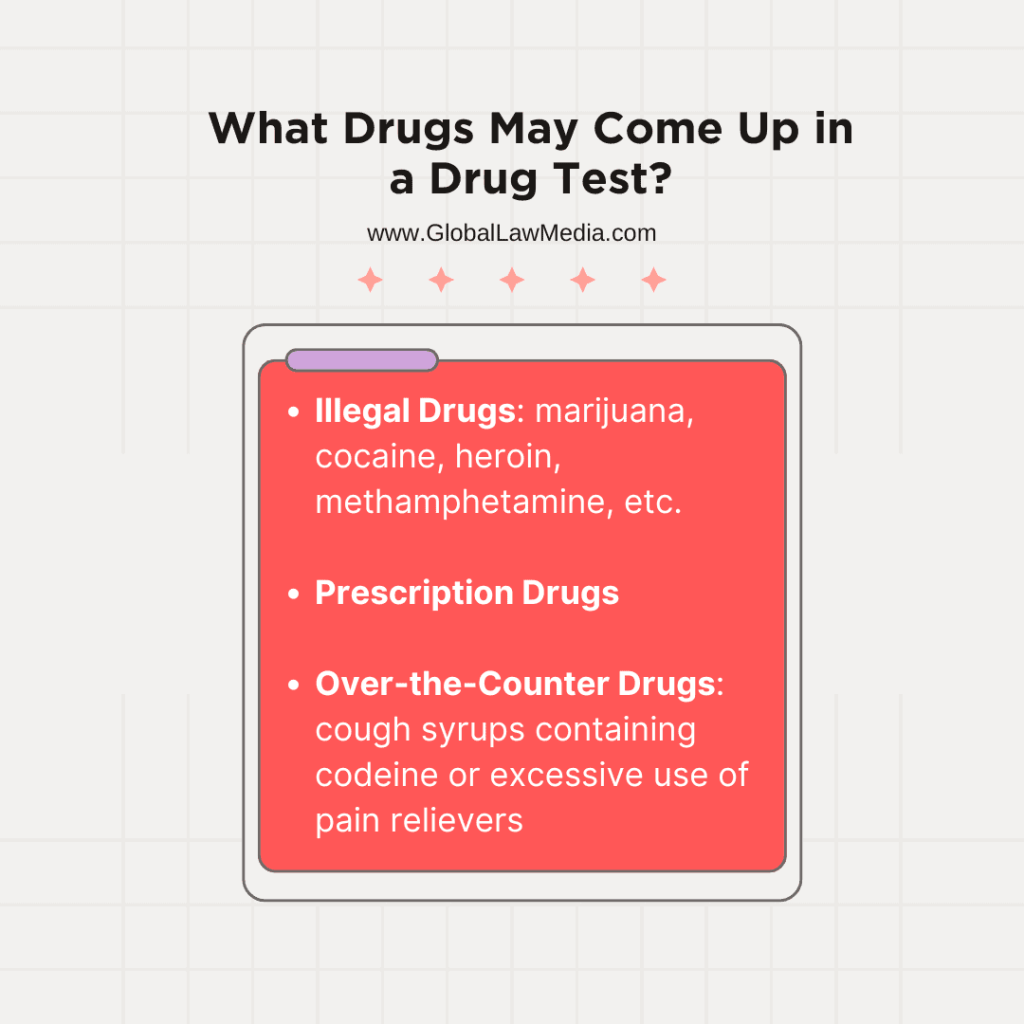
What Drugs May Come Up in a Drug Test?
As mentioned earlier, there’s no routine drug test during the green card medical exam. However, the doctor will ask questions about your past and present drug use. Here are some categories of drugs that might raise concerns:
- Illegal Drugs: This includes marijuana, cocaine, heroin, methamphetamine, and other illicit substances. Using or possessing illegal drugs is a serious offense and can lead to inadmissibility.
- Prescription Drugs: While taking prescription drugs isn’t necessarily an automatic bar to getting a green card, misusing them or having a history of addiction can be problematic. Be honest about any prescription medications you take and their purpose.
- Over-the-Counter Drugs: While less likely to be a major concern, abusing over-the-counter medications like cough syrups containing codeine (also known as dirty sprite) or excessive use of pain relievers could raise questions about potential substance abuse issues.
It is important to be truthful and upfront about your past and present drug use during the medical exam. If you have a history of drug abuse but have undergone rehabilitation and are no longer using drugs, provide documentation to support your recovery.
Why do I need to take the immigration medical exam?
There are two main reasons why you need to take the immigration medical exam:
- Public Health Protection: The exam helps screen for contagious diseases that could spread to others in the US.
- Ensuring Self-Sufficiency: The exam also assesses your overall health to determine if you have any medical conditions that would prevent you from working and supporting yourself financially.
By undergoing the medical exam, you demonstrate that you meet the health requirements for obtaining a green card.
What to Expect and How to Prepare for the Green Card Medical Exam
You can expect the exam to lasts about an hour and can involve the following:
- Review of your medical history: The doctor will ask questions about your past and present health conditions, medications you’re taking, and any surgeries you’ve had.
- Physical examination: This includes a basic checkup like checking your blood pressure, heart rate, vision, and hearing.
- Vaccinations: The doctor will review your vaccination records and may recommend additional vaccinations if needed.
You can prepare for the medical exam by:
- Gather your medical records: Collect documents like immunization records, past prescriptions, and doctor’s reports to share with the civil surgeon.
- Complete the vaccination questionnaire: USCIS will provide you with a questionnaire about your vaccination history. Fill it out accurately and bring it to the exam.
- Fasting (optional): While not always required, some blood tests might require fasting beforehand. Check with the doctor’s office for specific instructions.
By coming prepared with your medical history and any necessary records, you can ensure a smooth and efficient medical exam experience.
How Much Will the Medical Exam Cost?
The cost of the medical exam can vary depending on the doctor’s fees and any additional tests required. Generally, it can range from $200 to $500. It’s important to confirm the cost upfront with the civil surgeon before scheduling the exam. The USCIS fee for filing Form I-693, the Application for Verification of Medical Examination, is separate from the doctor’s exam fee.
When and How Do I Schedule the Medical Exam?
You schedule a medical exam depending on whether you are located in or out of the US.
What to Do if you are Applying from Within the United States?
If you’re already in the US and applying for a green card through adjustment of status, USCIS will typically send you instructions on scheduling your medical exam after you file Form I-485, Application to Register Permanent Residence or Adjust Status.
Here’s the process:
- USCIS will send a notice: You’ll receive a notice containing a list of USCIS-authorized civil surgeons in your area.
- Choose a doctor: Select a convenient civil surgeon from the list.
- Contact the doctor’s office: Call the doctor’s office to schedule your exam appointment.
What to Do if you are Applying from Outside the United States?
If you’re applying for your green card from outside the US through consular processing, the process is slightly different.
Here’s what to expect:
- The US embassy or consulate will contact you: After your green card interview at the US embassy or consulate, they’ll provide you with a list of USCIS-approved panel physicians in your area.
- Schedule the exam: Contact a chosen doctor from the list to schedule your medical exam appointment.
Regardless of your location, ensure you schedule the medical exam after you receive instructions from USCIS or the US embassy/consulate. Scheduling the exam too early can cause delays in your green card application process.
What Should I Bring to My Medical Exam?
You should bring the following items with you to your medical exam
- A valid government-issued photo ID (e.g., passport, driver’s license)
- The Appointment Letter you received from USCIS
- Completed Form I-693 (Application for Verification of Medical Examination)
- Your Vaccination Records (childhood and adult immunizations)
- Any Medical Records related to past illnesses, surgeries, or ongoing medical conditions
In addition, you should dress comfortably, bring a translator if you need one, potentially wear a mask if the healthcare facilities still require masks due to COVID-19. Check with the doctor’s office beforehand for their specific guidelines.
By bringing the necessary documentation and following these tips, you can ensure a smooth and efficient medical exam experience.
What will Happy During the Green Card Medical Exam?
During the green card medical exam, you will have to undergo a variety of tests such as a drug and alcohol screening, tuberculosis test, blood and urine test, and vaccination screening
Drug and Alcohol Screening
As mentioned earlier, there’s no physical drug test during the exam. However, the doctor will ask you questions about your past and present drug and alcohol use. Be honest and upfront in your responses.
The doctor will assess your answers and may request a drug test if they have concerns about potential substance abuse issues. Drug addiction or dependence on controlled substances can be grounds for inadmissibility to the US.
Tuberculosis Test
- This test checks for tuberculosis (TB), a contagious lung infection.
- There are two ways the TB test can be administered:
- Skin test (TST): A small amount of tuberculin is injected under the skin of your forearm. You’ll need to return to the doctor’s office 48-72 hours later for a reading.
- Blood test (IGRA): A blood sample is drawn to detect TB infection.
The type of TB test used may depend on several factors, including your age, medical history, and the country you’re coming from.
Blood and Urine Tests
These tests are used to screen for various medical conditions, such as anemia, syphilis, and HIV.
Vaccination Screening
The doctor will review your vaccination records and may recommend additional vaccinations to meet US requirements. Common vaccinations for green card applicants include measles, mumps, rubella (MMR), tetanus, diphtheria, and polio.
After the Green Card Medical Exam
Once you’ve completed the medical exam, the process varies slightly depending on whether you’re applying from within the US or abroad.
What to Do if you are Applying from Within the United States
- The civil surgeon will complete Form I-693, which summarizes your medical exam findings.
- Sealed Envelope: The doctor will seal the form in an envelope and give it to you unopened. Do not break the seal!
- Submit the Sealed Envelope: You’ll need to submit the sealed Form I-693 along with your other green card application materials to USCIS.
What to Do if you are Applying from Outside the United States
- The civil surgeon will submit Form I-693 electronically to the US Department of State.
- You won’t receive a copy of the form.
- The US embassy or consulate will be notified of your medical exam results.
Regardless of your location, keep a copy of your medical records and any receipts from the exam for your own reference.
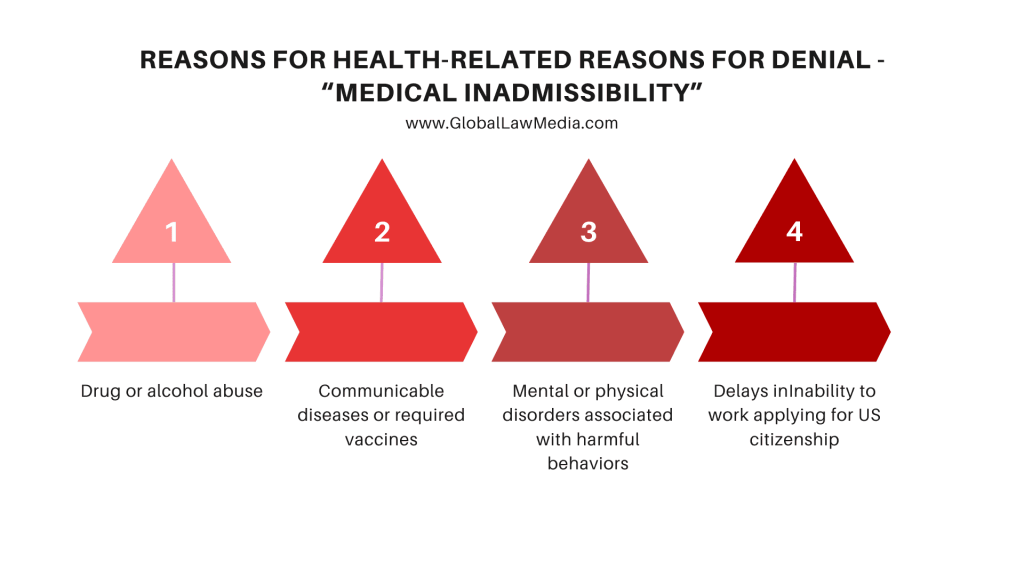
What Are the Health-Related Reasons for Denial – “Medical Inadmissibility”
There are several health-related reasons that can lead to a denial on the basis of “medical inadmissibility”, such as the following
Reason 1: Communicable diseases that could affect public health
This includes diseases like tuberculosis (TB), syphilis, and certain contagious strains of influenza. The goal is to prevent the spread of serious illnesses within the US population. If you have a communicable disease, you may be denied a green card until you complete the necessary treatment and are deemed non-contagious by a doctor.
Reason 2: Drug or alcohol abuse
Drug addiction or dependence on controlled substances can be grounds for inadmissibility. The doctor’s assessment during the medical exam and your answers about past or present drug use will be considered. If there’s evidence of a serious substance abuse problem, your green card application could be denied.
Reason 3: Mental or physical disorders associated with harmful behaviors
This category applies to mental health conditions that could pose a threat to yourself or others. It’s important to note that having a mental health condition itself doesn’t automatically disqualify you. However, if the condition is severe and unmanaged, leading to harmful behaviors, it could lead to inadmissibility.
Reason 4: Inability to work
One of the underlying purposes of a green card is to allow you to live and work in the US and support yourself financially. If the civil surgeon determines you have a severe medical condition that prevents you from working entirely, your application could be denied.
Reason 5: Failure to show proof you previously had your required vaccines
Vaccinations are crucial for protecting public health. The US has specific vaccination requirements for green card applicants. If your medical records lack documentation of receiving the required vaccinations, you may be denied until you get them and update your records.
Unfortunately, not everyone who undergoes the green card medical exam automatically qualifies. Here’s a breakdown of the main reasons.
How Can I Prevent or Challenge a Health-Related Denial
You can prevent a health-related denial by ensuring you have all of your medical documentation and you can challenge the denial by filing with the I-601 Waiver and I-602 Waiver and with help of an immigration attorney.
If your green card application is denied due to medical inadmissibility, you have the right to appeal the decision. This process typically involves filing a waiver application with USCIS. There are two main waiver options:
- I-601 Waiver (Medical Grounds): This waiver applies to inadmissibility based on specific medical conditions, such as certain communicable diseases. Meeting specific criteria and demonstrating the condition won’t cause harm allows for a waiver.
- I-602 Waiver (Public Charge): This waiver applies to inadmissibility based on the inability to work and potential reliance on public benefits. Showing sufficient financial resources and future earning potential can strengthen a waiver request.
The waiver process can be complex, and consulting with an immigration attorney is highly recommended for navigating the legalities and increasing your chances of a successful appeal.
Is there Important Information About the Immigration Medical Exam for Women?
Yes, there are some specific considerations for women undergoing the green card medical exam which include:
- Pregnancy: If you are pregnant, inform the doctor at the beginning of the exam. Certain tests, like X-rays, may not be recommended during pregnancy. The doctor will adjust the exam accordingly to ensure your safety and the health of the fetus.
- Pap Smear: While not mandatory, some civil surgeons may recommend a Pap smear during the exam, especially for women over a certain age. A Pap smear is a screening test for cervical cancer. Ultimately, the decision to undergo a Pap smear is yours, but discussing it with the doctor beforehand allows you to make an informed choice.
- Menstrual Cycle: The timing of your menstrual cycle may not significantly impact the exam itself. However, if you experience heavy bleeding or cramps, you may want to reschedule for a more comfortable experience.
It’s always best to communicate openly and honestly with the doctor about any health concerns or questions you may have, including those related to your pregnancy or menstrual cycle.
How Do I Choose the Right Doctor?
You must select a USCIS-authorized civil surgeon to conduct your green card medical exam. You can find these doctors in the following places:
- USCIS Website: The USCIS website provides a searchable directory of authorized civil surgeons in your area.
- Insurance: Check with your insurance company to see if they cover any portion of the medical exam cost. If so, choosing an in-network doctor can help reduce your out-of-pocket expenses.
- Online Reviews: Read online reviews from other immigrants who have used the doctor for their green card medical exam. This can give you insights into the doctor’s efficiency, communication style, and overall experience.
- Location: Consider the doctor’s location and choose one conveniently located for you to minimize travel time on the day of your exam.
Ultimately, the most important factor is choosing a doctor who is licensed, experienced, and puts you at ease.
Do I Need an Immigration Lawyer?
While not mandatory, consulting with an immigration lawyer can be beneficial for several reasons:
- Complex Medical Conditions: If you have a pre-existing medical condition that might raise concerns about inadmissibility, an attorney can advise you on appropriate steps to take and explore options like waivers.
- Application Process Guidance: An immigration lawyer can guide you through the entire green card application process, ensuring all forms are filled out correctly and deadlines are met.
- Denial Appeals: If your green card application is denied due to medical inadmissibility, an immigration lawyer can represent you throughout the appeal process and increase your chances of success.
While the decision to hire a lawyer is ultimately yours, their expertise can provide valuable support and peace of mind during the green card application journey, especially if your situation involves any complexities.
Frequently Asked Questions (FAQ)
Here are some commonly asked questions regarding the green card medical exam and drug testing:
Q: Can I fail the medical exam because of a past DUI?
A: Not necessarily. A DUI on its own might not automatically disqualify you. However, if it indicates a pattern of problematic alcohol use, it could raise concerns. Honesty about the DUI and any steps you’ve taken to address the issue can be helpful.
Q: What happens if I test positive for drugs during the exam?
A: As mentioned before, there’s typically no physical drug test during the exam. However, if the doctor has concerns about your drug use based on your answers, they may request a drug test. A positive test result could lead to a denial of your green card application, but it’s not an automatic disqualification. Consulting with an immigration lawyer can help you navigate the situation.
Q: Can I get a medical marijuana card and still qualify for a green card?
A: Marijuana remains a federally controlled substance in the US, even if it’s legal for medicinal purposes in some states. Using medical marijuana could be grounds for inadmissibility. Consult with an immigration lawyer to discuss your specific situation.
Final Words
The green card medical exam is an important step in the green card application process. While there’s no physical drug test, being honest about your past and present drug use is crucial. Understanding the reasons for medical inadmissibility and potential options for overcoming them can help ease anxieties. Once you get your green card, Remember, consulting with an immigration lawyer can provide valuable guidance and support throughout your green card journey.

