


To choose a good immigration lawyer, the lawyer should be experienced in handling immigration matters and be able to answer your questions clearly. Legal directories, Bar Associations, and referrals from trusted sources can be a good starting point in your search for a qualified attorney. However, choosing the right lawyer goes beyond just finding someone who practices immigration law. When navigating the complexities of US immigration law, having a skilled and experienced lawyer on your side can make a significant difference in the outcome of your case. Immigration law is complex and involves immigrating to the US or becoming a US citizen. It is important to know when legal representation is crucial, what qualities to look for in a lawyer, and where to find qualified professionals.

Table of Contents
When is an Immigration Lawyer Needed?
A Immigration lawyer is needed when you need legal matters involving immigration. However, not every immigration process requires an attorney. There are situations where legal expertise is highly recommended. Here are some instances where consulting with an immigration lawyer is beneficial:
- If You Have Prior Immigration Violations: If you have a history of overstaying a visa, deportation orders, or any past immigration offenses, an immigration lawyer can advise you on the best course of action and represent you in court if necessary.
- If You’re Currently Out of Status in the U.S.: Being out of status can make it difficult to obtain legal immigration status. An immigration lawyer can explore your options, including potential avenues to adjust your status or re-enter the US legally.
- If You Have Criminal History: A criminal record can complicate the immigration process. An immigration lawyer can assess your situation and determine the potential impact of your criminal history on your immigration case.
- If You’re Facing Deportation or Removal Proceedings: If you are facing deportation proceedings, having an immigration lawyer represent you in court is crucial. The lawyer can fight for your rights and explore potential avenues to remain in the US legally.
- If You Need to Get Your Application Process Faster: Under certain circumstances, it may be possible to expedite the processing of your immigration application. An immigration lawyer can help you determine if you qualify for expedited processing and guide you through the necessary steps.
- If You Need Help Figuring Out Your Immigration Options: The US immigration system can be complex and confusing. An immigration lawyer can help you understand your options based on your specific circumstances and advise you on the best path forward.
- If You Have a Unique Case or Specific Legal Questions: If your situation involves unusual circumstances or you have complex legal questions, consulting with an immigration lawyer can provide much-needed clarity and guidance.
How Much Does an Immigration Lawyer Cost?
An immigration lawyer costs between $150 to $400 or more per hour in major US cities, or they may work on a flat fee where lawyer fees are capped. In addition, some lawyers may charge a consultation fee for the initial meeting to discuss your case.
Many immigration lawyers charge an hourly rate and they will track the time spent working on your case and bill you accordingly. If the immigration matter is straightforward, some lawyers may offer a flat fee for the entire process. This can be helpful for budgeting purposes, as you’ll know the total cost upfront. However, flat fees may not be applicable for complex cases that might require additional work outside the initial scope. Legal fees are an investment in your future. While cost is a consideration, prioritizing experience and qualifications is crucial for a successful outcome in your immigration case.
What To Look For When Choosing A Good Immigration Lawyer
Finding a qualified and trustworthy immigration lawyer requires careful consideration. Here are some key factors to keep in mind:
Get A Trusted Referral:
Personal recommendations from friends, family, or colleagues who have had positive experiences with immigration lawyers can be a valuable starting point.
Avoid Hiring A General Practitioner Lawyer:
Immigration law is a complex area with its own specific set of regulations and procedures. Choose a lawyer who specializes in immigration law and stays up-to-date on the latest changes.
Be Skeptical Of Unrealistic Promises:
If a lawyer guarantees a successful outcome or makes promises that seem too good to be true, proceed with caution. Reputable lawyers will explain the legal process honestly and set realistic expectations.
Inquire About Their Availability During Regular Office Hours:
Effective communication is essential. Choose a lawyer who is readily available to answer your questions and address your concerns throughout the process.
Cost Hourly Rate Or A Flat Fee:
Understand the lawyer’s fee structure (hourly rate or flat fee) upfront and inquire about any additional costs associated with the case.
Experience In The Immigration System:
Experience matters. Choose a lawyer with a proven track record of success in handling cases similar to yours. Look for lawyers who are members of the American Immigration Lawyers Association (AILA).
Written Contract:
Before starting work, ensure a written service agreement clearly outlines the scope of the lawyer’s services, fees, and payment schedule.
Question Their Work Ethics:
A good lawyer should be ethical, honest, and responsive to your needs. Ask about their approach to communication and how they handle client concerns.
Check Their Professional Memberships And Affiliations:
Membership in reputable organizations like AILA indicates the lawyer’s commitment to staying current with immigration law.
Look For An Online Presence And Reviews:
Many lawyers have websites that showcase their experience and areas of expertise. Additionally, online reviews from past clients can offer valuable insights.
Immigration Lawyer Cost When Hiring An Immigration Lawyer:
While cost is a factor, remember that the lawyer’s experience and qualifications are paramount. A skilled lawyer can help you navigate the complexities of the immigration system and increase your chances of a successful outcome, potentially saving you time and money in the long run.
Where to Look for a Good Lawyer
You can look for a good lawyer in many places. Finding a qualified immigration lawyer involves exploring various avenues. Here are some effective ways to begin your search:
Word of Mouth:
Personal recommendations are a great starting point. Talk to friends, family, colleagues, or anyone you know who has gone through the immigration process. Ask about their experiences with their lawyers and see if they would recommend them to you.
Nonprofits and Pro Bono Lawyers:
Non-profit organizations often offer immigration legal services or referrals to pro bono (free) lawyers. These services can be particularly helpful for low-income individuals.
Find a Service Organization Near You:
Locate non-profit organizations in your area that specialize in immigration issues. These organizations can provide legal assistance, referrals, and other resources.
Lawyer Directories:
Several online lawyer directories allow you to search for attorneys by practice area and location. Here are a few reputable options:
- AILA Private Immigration Lawyer Search Tool: The American Immigration Lawyers Association (AILA) website has a searchable directory of its members who specialize in immigration law.
- National Immigration Project of the National Lawyers Guild – Find an Attorney tool: This directory allows you to search for immigration lawyers affiliated with the National Lawyers Guild.
- DOJ Recognized Organizations And Accredited Representatives: The US Department of Justice (DOJ) website maintains a directory of organizations recognized to provide immigration legal services and accredited representatives who can assist with certain immigration applications and petitions.
How to Prepare to Meet with an Immigration Lawyer
Before meeting with your immigration lawyer, gather all relevant documents related to your immigration case. This might include your passport, visa documents, any previous immigration applications, and any court orders or documentation related to your situation.
Having a clear understanding of your desired outcome is also crucial. Do you want to apply for a green card, citizenship, or temporary work authorization? The more specific you are about your goals, the better the lawyer can tailor their advice and services to your needs.
By being prepared and asking thoughtful questions, you can gain valuable insights into the lawyer’s experience, approach, and suitability for your case.
How Do I Know if an Immigration Attorney Is Right for Me?
Choosing the right immigration lawyer is a crucial decision. Here are some key factors to consider when evaluating potential lawyers:
- Experience and Track Record: Look for a lawyer with a proven track record of success in handling cases similar to yours. Experience translates to a deeper understanding of the legal issues involved and the best strategies to navigate the immigration process.
- Communication Style and Demeanor: During your consultation, pay attention to the lawyer’s communication style. Do they explain things clearly and answer your questions in a way you understand? Do they appear confident and knowledgeable in immigration law? It’s important to feel comfortable and trust your lawyer throughout the process.
- Availability and Responsiveness: An immigration case can take time. Choose a lawyer who is readily available to address your concerns and promptly responds to your questions. Effective communication is essential for building trust and ensuring a smooth attorney-client relationship.
- Fees and Payment Structure: Be upfront about your budget and inquire about the lawyer’s fees. Understand their fee structure (hourly rate or flat fee) and any additional costs associated with the case. Some lawyers may offer payment plans to accommodate your financial situation.
- Client Reviews and Testimonials: While online reviews shouldn’t be the sole deciding factor, they can offer valuable insights from past clients. Look for reviews that mention the lawyer’s expertise, communication style, and overall effectiveness.
Don’t be afraid to interview several lawyers before making a decision. The initial consultation is an opportunity for you to assess the lawyer’s qualifications and determine if they are a good fit for your needs and personality.
What Are Potential Red Flags When It Comes To Choosing an Immigration Attorney?
Finding the right lawyer can feel overwhelming, and unfortunately, there are some red flags to watch out for during your search. Here’s how to avoid falling victim to unscrupulous practices:
- Guaranteed Success: If a lawyer guarantees a successful outcome in your case, be wary. Immigration law is complex, and there are no guarantees in any legal proceeding. A reputable lawyer will explain the process honestly and set realistic expectations.
- Pressure to Hire Immediately: A trustworthy lawyer won’t pressure you to make a hasty decision. Take your time, interview several lawyers, and choose the one you feel most comfortable with.
- Unrealistic Timelines: If a lawyer promises a lightning-fast turnaround time for your case, proceed with caution. The US immigration system can have processing backlogs, and reputable lawyers will manage your expectations accordingly.
- Vague Fee Structure: A lawyer should be upfront and transparent about their fees. Don’t hesitate to ask clarifying questions about the fee structure, hourly rate (if applicable), and any potential additional costs.
- Unethical Behavior: If a lawyer suggests breaking the law or providing false information, avoid them at all costs. A good lawyer will prioritize ethical practices and legal compliance.
- Dismissive Attitude: A lawyer who doesn’t listen attentively to your concerns or seems dismissive of your questions is not a good fit. Choose a lawyer who demonstrates genuine interest in your case and takes the time to address your needs.
By being aware of these red flags, you can make informed decisions and avoid choosing a lawyer who might jeopardize your immigration case.
If I Don’t Need an Immigration Attorney, Why Hire One?
While not every immigration process requires legal representation, there are significant advantages to having a qualified immigration lawyer on your side:
- Increased Chances of Success: Immigration law is intricate, and the application process can be complicated. An experienced lawyer can navigate the legalities, ensure all forms are filled out correctly, and represent you effectively if any issues arise.
- Reduced Stress and Anxiety: The immigration process can be stressful and confusing. A lawyer can handle the complexities, answer your questions, and provide guidance throughout the journey, giving you peace of mind.
- Avoiding Delays and Denials: Improperly filled-out applications or missing documentation can lead to delays or even denials. A lawyer can ensure your application is complete and filed correctly, minimizing the risk of setbacks.
- Knowledge of Recent Changes: Immigration laws and regulations are constantly evolving. A lawyer stays up-to-date on the latest changes and can advise you on how they might impact your case.
- Representation in Court: If your case requires appearing in immigration court, having a lawyer by your side is crucial. A skilled lawyer can advocate for you and fight for your rights in court proceedings.
Even for seemingly straightforward applications, an immigration lawyer’s expertise can prove invaluable. They can identify potential issues you might overlook, expedite the process, and ultimately increase your chances of a successful outcome.
What Happens After I Choose My Immigration Lawyer?
After you choose an immigration lawyer you will formally establish the attorney-client relationship, and sign a retainer agreement that outlines the scope of the lawyer’s services, fees, and payment schedule.
The lawyer will then gather all necessary documents and information from you to begin working on your case. They will guide you through the application process, answer your questions, and keep you informed of any updates.
Open communication is key throughout the process. Don’t hesitate to reach out to your lawyer with any questions or concerns you may have.
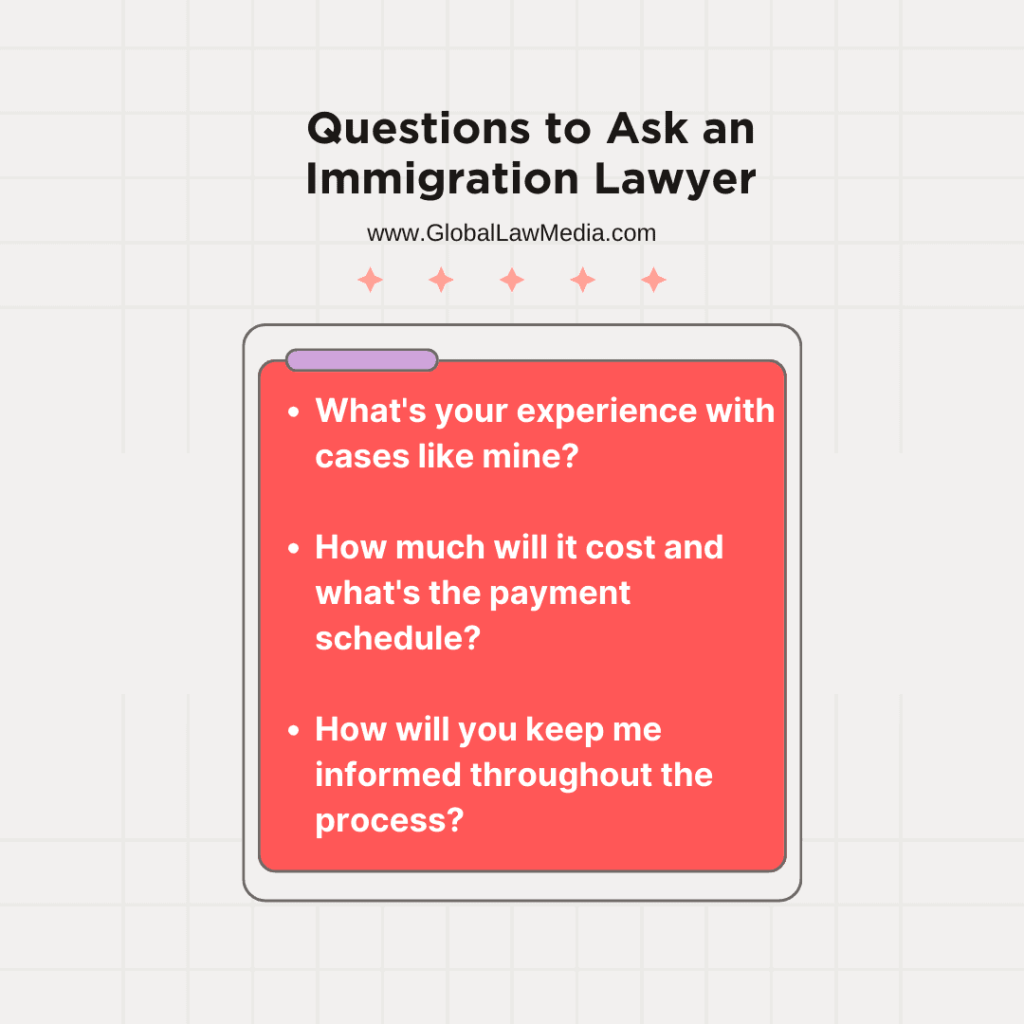
What are some Questions to Ask Potential Immigration Lawyers?
Here are some additional questions to consider asking potential lawyers during your consultations:
- How much experience do you have handling cases similar to mine?
- How many clients do you typically handle at a time?
- How will you keep me informed about the progress of my case?
- What is your plan for handling any potential challenges that may arise in my case?
- Do you offer any payment plans?
- What are your fees and how do you bill?
- What is your communication style? How often can I expect updates on my case?
- What are the potential challenges in my case and what is the likelihood of success?
By asking thoughtful questions, you can gain a deeper understanding of the lawyer’s approach, experience, and suitability for your specific needs.
Written Service Agreement or Contract:
Before starting work on your case, ensure a written service agreement clearly outlines the following:
- The scope of the lawyer’s services (what they will and will not do for you)
- The lawyer’s fees and how they will be billed (hourly rate or flat fee)
- The payment schedule
Having a written agreement protects both you and the lawyer and ensures everyone is on the same page regarding the scope of services and associated costs.
Questions About Their Practice
Here are some additional questions to consider asking potential lawyers about their practice:
- Do you primarily focus on immigration law?
- What types of immigration cases do you handle most often?
- Are you familiar with the specific consulate or USCIS office that will be handling my case?
- What is your approach to communication with clients?
- How can I reach you if I have questions outside of regular office hours?
By asking these questions, you can gain valuable insights into the lawyer’s experience, communication style, and overall approach to handling immigration cases.
Communication and Promptness
Effective communication is paramount throughout the attorney-client relationship. Here’s what to look for in a lawyer regarding communication:
- Accessibility: Choose a lawyer who is readily available to answer your questions and address your concerns. This might involve phone consultations, email communication, or in-person meetings.
- Promptness: Timely responses to your inquiries are essential. A lawyer who takes days or even weeks to return your calls or emails is not demonstrating the level of responsiveness you deserve.
- Clear and Concise Communication: Legal jargon can be confusing. A good lawyer will explain complex legal concepts in a way you can understand and ensure you are informed about the progress of your case.
- Transparency: Be upfront about your budget and any concerns you may have. A reputable lawyer will be honest and transparent about fees, potential challenges, and the overall timeline of your case.
How to Avoid Immigration Scams?
Unfortunately, there are individuals who prey on immigrants seeking legal assistance. Here are some tips to avoid becoming a victim of a scam:
- Check Credentials: Always verify the lawyer’s license to practice law in your state with the Bar Association.
- Beware of Unrealistic Promises: If a lawyer guarantees a successful outcome or makes promises that seem too good to be true, be wary. The immigration process can be complex, and there are no guarantees in legal matters.
- Don’t Pay Large Upfront Fees: While a retainer fee is common, be cautious of lawyers who demand a large sum of money upfront before any work is done.
- Get Everything in Writing: A written service agreement should clearly outline the scope of services, fees, and payment schedule. Never proceed without a signed agreement.
- Trust Your Gut: If something feels off about a lawyer or their practices, don’t hesitate to walk away and seek out a more reputable professional.
By following these tips, you can protect yourself from scams and ensure you are working with a qualified and trustworthy immigration lawyer.
US Immigration: A Statistical Overview
Understanding some general statistics about US immigration can provide context for your situation. Here’s a brief snapshot:
- Legal Permanent Residents (Green Card Holders): As of 2023, there were over 12 million legal permanent residents in the United States, according to Office of Homeland Securit.
- Top Sending Countries: Mexico, India, China, the Philippines, and El Salvador are consistently among the top countries of origin for immigrants to the United States.
- Reasons for Immigration: People immigrate to the US for various reasons, including family reunification, employment opportunities, education, and escaping violence or persecution.
Frequently Asked Questions (FAQ)
- Q: Can I represent myself in immigration court?
A: Yes, you can represent yourself, but it’s highly advisable to have an attorney represent you in court. Unlike in criminal court, you are not constitutionally guaranteed a lawyer. Immigration law is complex, and an experienced lawyer can significantly increase your chances of a successful outcome.
- Q: How long does it take to get a green card?
A: It can take several months to several years to get a green card. Processing times for green cards can vary depending on the category you are applying under and the current workload of USCIS.
- Q: What documents do I need to apply for a green card?
A: The required documents will vary depending on your specific situation. An immigration lawyer can advise you on the exact documentation needed for your case.
Final Words
Choosing the right immigration lawyer is a crucial decision that can significantly impact your future. By following the guidance in this article, you can find a qualified and experienced professional who will effectively represent you throughout the immigration process. Remember, don’t hesitate to ask questions, conduct thorough research, and trust your instincts when choosing a lawyer who is the right fit for you.

