


The average salary for an immigration lawyer in the US is $90,054, according to salary.com. This is higher than the average salary for the average US citizen at approximately $55,000, according to indeed.com. Therefore, immigration lawyers make good money compared to the average person. The salary of an immigration lawyer depends on the type of immigration law they practice, their location, and their education. In addition, being able to speak multiple languages will help immigration lawyers make a high income as well.
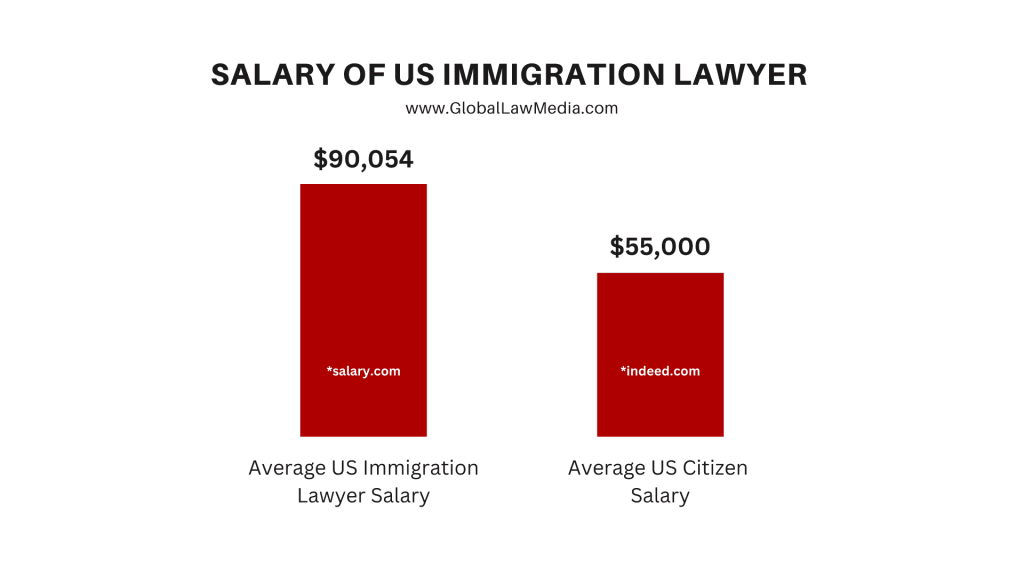
Table of Contents
What is an Immigration Lawyer?
An immigration lawyer is an attorney who specializes in helping individuals and businesses with their immigration law and legal matters. These specialized attorneys possess a deep understanding of immigration laws, regulations, and procedures.
Immigration lawyers handle a wide range of legal matters, including:
- Visas: They assist clients in obtaining various visas, such as family-based visas for relatives of U.S. citizens, travel visas, employment-based visas for skilled workers, and student visas for international education opportunities.
- Green Cards: Green cards grant lawful permanent residency status in the U.S. Immigration lawyers guide clients through the green card application process, ensuring all requirements are met and supporting them during interviews with US Citizenship and Immigration Services (USCIS).
- Citizenship: Becoming a US citizen is a significant milestone. Immigration lawyers help clients navigate the naturalization process, including completing applications, passing the citizenship exam, and participating in the naturalization ceremony.
- Deportation Defense: If someone faces deportation proceedings, an immigration lawyer can represent them in court, advocating for them to stay in the U.S. This may involve exploring options like waivers or appealing deportation orders.
- Compliance: Immigration lawyers advise businesses on employing foreign workers and ensure they comply with complex immigration regulations.
In essence, immigration lawyers act as advocates for their clients, protecting their rights and helping them achieve their immigration goals.
What Do Immigration Lawyers Do?
Immigration lawyers consult and communicate with clients and the government, appear in court, and perform legal research. The daily tasks of an immigration lawyer can vary depending on their area of specialization and clientele. Here’s a glimpse into a typical day:
- Client Consultations: Immigration lawyers spend a significant amount of time meeting with clients to understand their specific situations and immigration goals. This initial consultation allows the lawyer to assess the client’s eligibility for different options and develop a personalized strategy.
- Casework and Research: Once a strategy is established, immigration lawyers delve into legal research, gathering evidence, and completing extensive paperwork on behalf of their clients. This may involve collecting documents, filling out complex forms, and preparing written legal arguments.
- Client Communication: Immigration lawyers keep their clients informed throughout the process, explaining legal complexities in clear and understandable terms. They address their clients’ questions and concerns promptly, ensuring they feel supported and understood.
- Communication with USCIS: Immigration lawyers frequently communicate with USCIS, submitting applications, responding to requests for evidence, and representing their clients during interviews. Effective communication with USCIS is crucial for moving cases forward smoothly.
- Court Appearances: In some cases, immigration lawyers appear in court on behalf of their clients. This may involve deportation hearings, appeals of unfavorable decisions, or challenges to USCIS actions. Strong litigation skills are essential for success in these situations.
- Staying Up-to-Date: Immigration laws and regulations are constantly evolving. Immigration lawyers must dedicate time to continuing legal education, ensuring their knowledge remains current with the latest changes and legal interpretations.
The work of an immigration lawyer requires a unique blend of legal expertise, communication skills, empathy, and meticulous attention to detail. Their dedication plays a vital role in helping individuals and families navigate the complexities of the US immigration system.
How to Become an Immigration Lawyer?
The path to becoming an immigration lawyer requires a strong academic foundation, legal training by going to law school, and a commitment to ethical practice. Here’s a breakdown of the key steps:
- Earn a Bachelor’s Degree: There’s no specific undergraduate major required for immigration law. However, a strong foundation in political science, history, international relations, or criminal justice can be beneficial. If you do not attend university in the US, you’ll likely have a LL.B (Bachelors of Law) from an accredited university outside the US.
- Take the Law School Admission Test (LSAT): The LSAT is a standardized test used by law schools to assess a candidate’s reading comprehension, analytical reasoning, and logical thinking skills. A high LSAT score can increase your chances of admission to a top law school.
- Graduate from Law School: Earning a Juris Doctor (JD) degree is the foundation for becoming a lawyer. Law school typically takes three years and involves intensive coursework in legal theory, constitutional law, and various legal practice areas.
- Pass the Bar Exam: Each state has its own bar exam, which you must pass to become licensed to practice law in that state. The bar exam tests your knowledge of the law and your ability to apply legal principles to real-world scenarios.
- Consider an Immigration Law Specialization: While not mandatory, some law schools offer specialization programs or courses in immigration law. These programs provide a deeper understanding of the intricacies of immigration law and can give you a competitive edge in the job market.
- Gain Immigration Law Experience: Many immigration lawyers gain valuable experience through internships or clerkships with immigration law firms, non-profit organizations, or government agencies during law school or after graduation.
- Join the American Immigration Lawyers Association (AILA): AILA is a professional association for immigration lawyers. Membership offers access to resources, continuing education opportunities, and networking with other immigration law professionals.
The journey to becoming an immigration lawyer requires dedication and hard work. However, for those passionate about helping others navigate the complexities of immigration law, the rewards can be both personally and professionally fulfilling.
What Makes Up the Immigration Lawyer Industry?
Immigration lawyers work in various settings, each offering unique opportunities and challenges. Here’s a look at some common work environments:
- Private Law Firms: Many immigration lawyers work in private law firms specializing in immigration law. These firms may handle a wide range of immigration matters or focus on specific areas, such as business immigration or family-based immigration.
- Non-Profit Organizations: Non-profit organizations dedicated to immigrant rights and legal services often employ immigration lawyers. These lawyers typically work with low-income clients and may specialize in deportation defense or advocating for policy changes.
- Government Agencies: US Citizenship and Immigration Services (USCIS) and other government agencies employ immigration lawyers to review applications, adjudicate cases, and provide legal advice. These positions typically require passing a government civil service exam.
- In-House Counsel: Large corporations with international operations may have in-house immigration lawyers on staff. These lawyers advise the company on immigration compliance, handle employment-based visa applications for foreign workers, and ensure the company adheres to complex immigration regulations.
The choice of work environment depends on individual preferences and career goals. Some lawyers might thrive in the fast-paced environment of a private firm, while others may prefer the mission-driven work of a non-profit organization. Government positions offer stability and benefits, while in-house counsel roles provide opportunities for close collaboration with businesses.
What is the Growth Trend for Immigration Lawyers?
The demand for skilled immigration lawyers is expected to remain strong in the coming years. Here are some key factors driving this trend:
- Increased Global Mobility: The world is becoming increasingly interconnected, with people traveling and working across borders more frequently. This trend translates to a higher need for legal guidance on immigration matters.
- Complex Immigration Laws: US immigration laws and regulations are complex and constantly evolving. Individuals and businesses navigating this system require the expertise of immigration lawyers to ensure compliance and achieve their goals.
- Enforcement and Policy Changes: Changes in government enforcement priorities and immigration policies can create uncertainty and lead to increased demand for legal representation. Immigration lawyers can help clients understand these changes and navigate the resulting complexities.
- Backlog and Processing Times: USCIS currently faces a significant backlog of immigration applications, leading to longer processing times. Immigration lawyers can help clients navigate the application process, ensure all requirements are met, and advocate for faster case processing.
- Undocumented Population: The United States has a large undocumented immigrant population. As pathways to citizenship become available or policies change, this population might require legal assistance to navigate the process of obtaining legal status.
These factors, combined with an aging population of immigration lawyers nearing retirement, suggest that the job outlook for qualified immigration lawyers remains positive. The demand for their expertise is likely to continue growing in the foreseeable future.
Frequently Asked Questions (FAQs)
Q: How much does it cost to hire an immigration lawyer?
An immigration lawyer costs between $150 to $400 or more per hour in major US cities, or they may work on a flat fee where lawyer fees are capped. In addition, some lawyers may charge a consultation fee for the nitial meeting to discuss your case.
Many immigration lawyers charge an hourly rate and they will track the time spent working on your case and bill you accordingly. If the immigration matter is straightforward, some lawyers may offer a flat fee for the entire process. This can be helpful for budgeting purposes, as you’ll know the total cost upfront. However, flat fees may not be applicable for complex cases that might require additional work outside the initial scope. Legal fees are an investment in your future. While cost is a consideration, prioritizing experience and qualifications is crucial for a successful outcome in your immigration case.
Q: What are some of the benefits of hiring an immigration lawyer?
A: Here are some key benefits of hiring an immigration lawyer:
- Expertise and Knowledge: Immigration lawyers possess a deep understanding of immigration laws, regulations, and procedures. They can guide you through the complex process and ensure you meet all the requirements.
- Increased Chances of Success: An experienced immigration lawyer can significantly improve your chances of a successful outcome in your case. They can anticipate potential issues, address them proactively, and represent you effectively in interviews or court proceedings.
- Save Time and Reduce Stress: The immigration process can be lengthy and overwhelming. An immigration lawyer can handle the paperwork, communication with USCIS, and legal complexities, freeing you up to focus on other aspects of your life.
- Peace of Mind: Having an experienced professional by your side can provide peace of mind throughout the immigration journey. An immigration lawyer can answer your questions, address your concerns, and advocate for your rights.
Q: Can I represent myself in immigration proceedings?
A: Yes, you can represent yourself in immigration court. However, immigration law is complex, and the stakes can be high. An immigration lawyer can provide invaluable guidance and representation, significantly increasing your chances of a successful outcome.
Q: How can I find a qualified immigration lawyer?
A: There are several ways to find a qualified immigration lawyer. You can ask friends, family, or colleagues for recommendations. You can also search online directories of the American Immigration Lawyers Association (AILA) or your state bar association. Finally, attending immigration workshops or community events can be a good way to connect with local immigration lawyers.
Final Words
Becoming an immigration lawyer is a demanding yet rewarding career path. It requires a strong academic foundation, legal expertise, and a commitment to ethical practice. However, for those passionate about helping others navigate the complexities of immigration law, the opportunity to make a positive impact on people’s lives can be incredibly fulfilling.
Whether you’re considering a career in immigration law or simply seeking legal guidance with your own immigration journey, understanding the role of an immigration lawyer is crucial. These dedicated professionals can be your trusted guide through the US immigration system, helping you achieve your goals and build a new life in the United States.

