No, immigration legal fees are not tax deductible for individuals on their personal income tax reports. The Internal Revenue Service (IRS) considers personal legal expenses, including those related to immigration matters, to be non-deductible. Tax deductions allow you to reduce the amount of money you owe in taxes to the US Government. Since immigration legal fees are considered personal expenses, expenses paid for immigrating to the US or becoming a US citizen do not qualify for a deduction on your individual tax return.
However, immigration legal fees are tax deductible for businesses because they need to hire foreign skilled labor and to effectively run their business. Let’s explore when immigration legal fees might be tax deductible for businesses.
Table of Contents
Are Immigration Legal Fees Tax Deductible for Businesses?
Yes, immigration legal fees are tax deductible for businesses if they incur immigration legal fees on behalf of their employees. The IRS allows businesses to deduct ordinary and necessary business expenses and immigration legal fees can be common and helpful for running a business. Immigration legal fees can be considered a business expense if they are:
What are Ordinary and Necessary Expenses
Ordinary expenses are common and expected in your specific industry. Therefore, if you hire foreign workers for a specialized job and it’s difficult to find qualified US citizens for the job, paying immigration legal fees to sponsor their visas will likely be ordinary.
Necessary expenses are helpful and essential for the operation of your business. If hiring foreign workers with specific skills is crucial for your company’s success, the legal fees to obtain their work visas might be considered necessary.
What are Some Examples of Immigration Legal Fees Tax Deduction?
Business expenses that are ordinary and necessary will qualify for business deductions such as the following:
Sponsoring visas for foreign workers with specialized skills
Transferring existing employees to a US office
Complying with government regulations
It will be important to speak with an immigration attorney and tax attorney to help advising with these legal expenses
Who Needs to Pay Taxes in the United States?
Individuals and businesses that earn income need to pay taxes in the US, subject to tax deduction and credits. According to the 16th Amendment to the US Constitution, Congress can collect taxes on income, from whatever source you earn it. Because of the law, most people and businesses are required to file tax returns and report their income each year. For example, if you are single, under 65, and make at least $12,950 in a year, you must file a tax return. Please check the IRS guidelines to determine whether you need to file a tax return.
How Do You File Taxes in the United States?
The IRS provides various resources and tools to help individuals and businesses file their taxes. You can choose to file your taxes electronically, by mail, or with the help of a tax professional. Here are some resources to get you started:
IRS website: The IRS website offers a wealth of information on tax filing, including forms, instructions, and helpful tools.
Tax software: There are many user-friendly tax software programs available that can guide you through the filing process and help you claim any deductions you qualify for.
Tax professionals: Tax professionals like accountants or enrolled agents can provide personalized advice and assistance with filing your taxes. This can be especially helpful if your situation is complex or you have questions about specific deductions.
What are the Consequences of Not Paying Taxes?
If you do not pay taxes, the consequences include the IRS charginf penalties and interest on any unpaid taxes, you may have your wages garnished, and may face criminal charges. It is a legal requirement to pay your taxes in the US, and your filing tax returns and reporting your income must be taken seriously.
Frequently Asked Questions (FAQs)
Here are some frequently asked questions regarding immigration legal fees and taxes:
Can I deduct the cost of obtaining a US passport on my taxes?
No, you can not deduct the cost of obtaining a US passport because it is generally not considered a tax-deductible expense.
Can I deduct the immigration legal fees I paid for a family member?
No, you can not deduct the immigration legal fees I paid for a family member because they are considered personal expenses and not tax deductible.
I’m self-employed and pay for my own business visa. Can I deduct the legal fees?
Yes, it is possible you can deduct these expenses if you are self-employed and pay for my own business visa. You must show that the expenses are ordinary and necessary for your self-employed business. Please speak with a tax advisor.
Final Words
While immigration legal fees generally cannot be deducted on your personal tax return, businesses might be able to deduct them as ordinary and necessary business expenses under specific circumstances. Understanding the difference between personal and business expenses and consulting with a tax professional can help you determine if your immigration legal fees qualify for a deduction.
Remember, timely filing your taxes and keeping good records are essential for navigating the US tax system. Following these tips can help ensure a smooth tax filing process and avoid any potential complications.
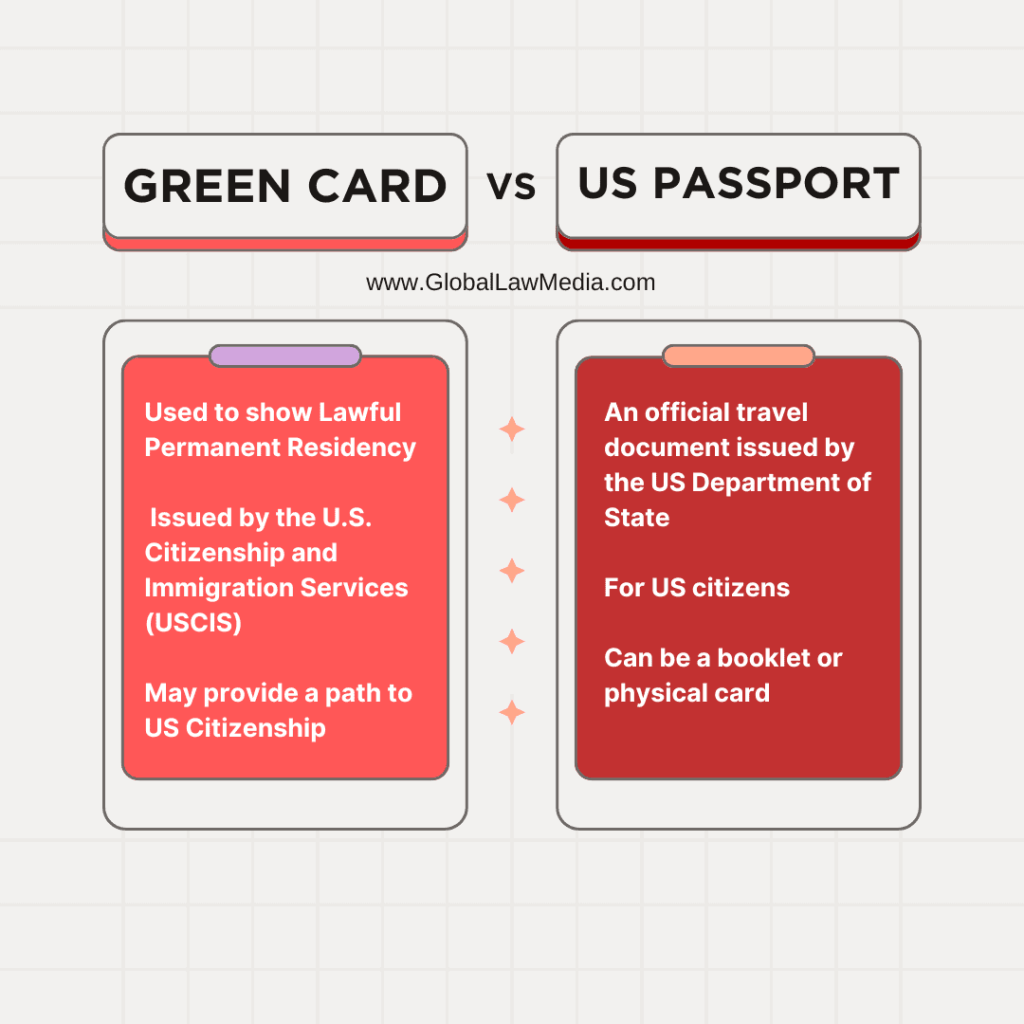
No, you can not get a US passport with a Green Card. A Green Card is primarily used to show that you are a lawful permanent resident when you apply for a US passport, and is issued by the U.S. Citizenship and Immigration Services (USCIS). A US passport is an official travel document issued by the US Department of State, and shows that you are a US citizen. While a Green Card doesn’t qualify for a US passport, it is important to understand the differences and benefits of both a US passport and Green Card as you try to become a US citizen.
Table of Contents
What is a US Passport?
A US passport is a legal travel document that is issued by the US Department of State that allows you to travel internationally and confirms that you are a US citizen. A US Passport comes in a booklet or card form, and includes your photo, biographical information, and a unique passport number. A US Passport booklet allows you to travel internationally on an airplane, while a US Passport Card allows you to drive and cross over to Canada and Mexico.
US passports are typically valid for 10 years for adults and 5 years for children under 16. The application process involves submitting forms (e.g., Form DS-11 if it is your first time applying for a green card), providing identification documents (e.g., a passport size photo and driver’s license), and paying a fee ($130 for a passport book and $30 for a passport card).
What are the Benefits of a US Passport?
The Benefits of a US passport allows for visa-free travel to many countries around the world, ability to have access to more employment opportunities, and assistance from the US government. Owning a US passport offers travel opportunities and allows you to travel internationally under the protection of the US government. In addition, a US passport is a recognized and respected travel document worldwide. As a US citizen, you can even serve on juries.
However, it is important to be careful when traveling because many people believe a person holding a US passport may be wealthy and could increase your chances of being a victim of a crime such as theft, robbery, or even worse kidnapping. It is always best to use common sense and avoid dangerous places.
What are the Benefits of a Green Card?
The benefits of a Green Card include the ability to live and work permanently in the US, and the potential to become a US Citizen. However, a Green Card doesn’t replace a US passport. After meeting specific eligibility requirements, Green Card holders can apply for naturalization and obtain all the rights and privileges of US citizenship, including the ability to obtain a US passport. Marriage is a common path to obtaining a Green Card, and later a US Passport. It is important to ensure that your Green Card is not expired before applying for US citizenship.
Frequently Asked Questions (FAQs)
Can I travel internationally with a Green Card?
Yes, you can travel internationally with a green card. However, a Green Card itself is not a travel document and you might be required to obtain a visa from specific countries to travel there while holding a Green Card, depending on your nationality.
Do I need to give up my Green Card if I get a US passport?
No, you do not need to give up your Green Card if you get a US passport, however the US passport will take precedence over the Green Card. The Green Card will have no power and you should not try to use the Green Card once you have a US passport.
How long does it take to get a US passport after becoming a US citizen?
The processing time for a US passport application can vary, but it typically takes several weeks.
Final Words
While a Green Card and a US passport serve distinct purposes, they are both valuable documents for individuals living in the United States. Understanding the difference between them can help you navigate your travel plans and your journey towards becoming a US citizen. If you hold a Green Card and want of traveling the world with a US passport, contact an immigration attorney who can help you with the naturalization process and the requirements for obtaining US citizenship.
A Green Card expires after 10 years. However, if you became a permanent resident before you turned 14 years old, your green card expires when you turn 14. Therefore, it’s important to replace your card before you become 14 years old. Having an unexpired green card is critical throughout your journey to becoming a US citizen. This card serves as proof of your lawful permanent resident status in the United States, and allows you to enjoy many benefits, such as living and working legally in the country. If you have an expired green card, it can cause problems when traveling internationally, renewing your driver’s license, or potentially applying for certain jobs. Therefore, it is important to understand when your Green Card expires and the renewal process to maintain your legal status.
Table of Contents
What is a Green Card?
A Green Card is a physical identification card that is officially issued by the United States Citizenship and Immigration Services (USCIS) to lawful permanent residents. It has the color green on the document, and has acquired the name “Green Card”, however it is officially called a Permanent Resident Card. A Green Card is proof that you are authorized to lawfully live and work permanently in the United States.
There are several different categories for Green Cards that allow you to lawfully immigrate to the US, The each have their own specific eligibility requirements, and the most common type of Green Card issued are for individuals who have family members who are US citizens or for those who have employment skills that are in high demand in the US.
What Happens if My Green Card Is Expired?
If you have an expired Green Card, you could have employment and travel issues, and difficulty in renewing your driver’s license and applying for citizenship. It is important to note that an expired Green Card does not necessarily make you lose your lawful permanent resident status. However, it can lead to the following difficulties such as the following:
Travel restrictions which could prevent you from re-entering the US if you travel abroad,
Employment issues because some companies might require you to have a valid Green Card to keep your job,
Problems with renewing your driver’s license or other government IDs, and
Delays in applying for US citizenship
Can I Get a Temporary Green Card?
A temporary Green Card does not exist. However, there are temporary documents such as a I-551 stamp in your passport if you are approved for lawful permanent residence and allows you to enter the US. But, it does not replace the Green Card.
How to Renew or Replace a Green Card?
If a Green Card has expired, been lost, or needs replacement because a child is no longer under 14 years old, use Form I-90 to renew or replace a Green Card. This application can be found on the USCIS’s website. In addition, it will be best to consult with an immigration attorney to help plan your approach to avoid any legal obstacles in case you need to appeal or file a motion to reconsider a denial.
Frequently Asked Questions (FAQs)
Here are some frequently asked questions regarding Green Card expiration and renewal:
How Long Does it Take to Renew a Green Card?
A Green Card renewal can take anywhere from several months to a year to receive your renewed Green Card after submitting your application. Processing times for Green Card renewals can vary depending on USCIS workload and your individual case.
Do I need to renew my Green Card if I am applying for citizenship?
Yes, it’s important to have a renewed and valid Green Card if you are applying for US citizenship.
Can I travel outside the United States with an expired Green Card?
No you should not travel outside the US with an expired Green Card. It is best to renew your Green Card before traveling or explore options like applying for advance parole if your situation requires urgent travel.
What if I lose my Green Card renewal application receipt?
You can contact the USCIS customer service If you lose your Green Card renewal application receipt.
Final Words
It is important to maintain a valid Green Card because there are many benefits of being a lawful permanent resident in the US. Understanding when your Green Card expires and proactively renewing it well before the expiration date helps avoid unnecessary complications and ensures a smooth path towards your goals, such as applying for US citizenship. A US citizenship has many benefits such as serving on a jury.
By following the guidelines and resources provided in this article, you can successfully navigate the Green Card renewal process and continue your journey as a lawful permanent resident in the United States.
No, Green Card holders cannot serve on a jury. In order to serve on a jury, a person must be at least 18 years of age or older and a US citizen. Green Card holders, also known as lawful permanent residents, are not US citizens, and therefore cannot serve on a US jury. Serving on a jury is an important part of trials, and it must be taken seriously. If you received jury notice in the mail, you may be surprised. However, there may be a reason why you received a jury notice and we can explore more.
Table of Contents
What is a Green Card?
A green card, officially known as a Permanent Resident Card, is the important immigration legal document that grants you the right to live and work in the U.S. permanently. It’s like a key that unlocks a world of opportunities, offering stability and a pathway to citizenship.
Why Did I Receive A Jury Notice?
You received a jury notice because your name was likely on the Department of Motor Vehicles (DMV) records when you obtained an ID or driver’s license. Therefore, Even though you can’t serve as a juror, you might still receive a jury summons. This is more common than people realize because jury selection involves compiling a list of potential jurors from a variety of sources, and includes individuals that are not US citizens. Since Green Card holders often have driver’s licenses, their names might be included in the initial pool of potential jurors.
Once you go to court, they will typically ask a series of questions which includes your citizenship status. Once you answer that you are not a US citizen, you will not have to serve on the jury.
What is a Jury?
A jury is a group of US citizens who are chosen to hear evidence presented in a trial and decide whether the defendant is guilty or not guilty, or in a civil case, to reach a verdict on a legal dispute. Jurors are very important to the justice system, as they represent the voice of the community in legal proceedings.
There are two main types of juries:
Grand Jury: A grand jury decides whether there is enough evidence to bring criminal charges against a person.
Trial Jury: A trial jury listens to the evidence presented in court and determines the guilt or innocence of the defendant in a criminal case, or reaches a verdict in a civil case.
The Sixth Amendment of the US Constitution guarantees the right to a jury trial for individuals who are accused of a crime.
Can you Ignore a Jury Summons to Come to Court?
No you can not ignore a jury summons to come to court. Therefore, while you can not serve as a juror if you are not a US citizen, it’s important to respond to a jury summons. Ignoring a jury summons can result in a fine or even a warrant for your arrest. If you are a Green Card holder who receives a jury summons, show up and indicate that you are not a US citizen and not ineligible to serve.
How to Become a US Citizen?
To become a US citizen, you must be at least 18 years old, and have been a lawful permanent resident (holding a Green Card) for at least 5 years or 3 years if you are married to a US citizen. Most lawful permanent residents filed for nonimmigrant visas. In addition, the person must submit Form N-400 and go through a background check. Lastly, you must pass the naturalization test which includes a civics and English exam, and take the Oath of Allegiance to the United States.
Final Words
Jury duty is an important civic responsibility for US citizens. While Green Card holders cannot serve on juries, understanding the jury system and the role of jurors is a valuable part of being informed about the legal system in the United States.
A person becomes a US citizen either through naturalization, being born in the US, or being born to a US citizen. The most common path for someone to become a US citizen, who isn’t born a US citizen, is through a process called naturalization which allow a person to immigrate to the US. The naturalization process requires a successful application with the U.S. Citizenship and Immigration Services (USCIS). Once an individual becomes a citizen, they can participate in many of the benefits afforded to US citizens (e.g., voting)
Table of Contents
What is Naturalization?
Naturalization is the legal process where a lawful permanent resident is granted US citizenship after meeting the requirements in the Immigration and Nationality Act. Naturalization is the greatest benefit the US offers pertaining to immigration. The US naturalized more than 8 million individuals over the last 10 years, according to uscis.gov.
What are the Requirements for US citizenship?
US citizenship requires a person to be at least 18 years old, and have been a lawful permanent resident (holding a Green Card) for at least 5 years or 3 years if you are married to a US citizen. In addition, the person must submit Form N-400 and go through a background check. Lastly, you must pass the naturalization test which includes a civics and English exam, and take the Oath of Allegiance to the United
How Do You Apply for US citizenship?
Submitting Form N-400 is how you apply for US citizenship. It is one of the most important documents in the naturalization process because without the Form N-400, the USCIS will not know. As stated earlier, a background check, passing the naturalization test, and an interview will be a part of the application process.
How to Prepare for your US Immigration Interview and Naturalization Test
To prepare for your US immigration interview and naturalization test, you need to rehearse with mock interviews and study and take full-length practice naturalization exams. It will be important to arrive on time for your appointment and dress professionally, if possible. The interview will be held at your local USCIS office or at the U.S. embassy or consulate closest to you. Please be professional and polite to the USCIS officer. Studies have shown that people with high test anxiety perform worse on exams, according to “The Nature and Treatment of Test Anxiety” by Charles Spielberger, Anton William, and Jeffrey Bedell. The USCIS offers study materials for both the civics test and the English portion of the exam on their website.
What are the Benefits of US Citizenship?
US Citizen offers benefits in the area of voting, employment, and access to government benefits. Many are of the benefits are detailed as the following:
Voting, the eligibility to run for office in city, county, state, and federal elections, and participate in jury trials
Ability to work in government and private sector jobs that require US citizenship
Access to government assistance and welfare programs that are not available to non-citizens
Immigration benefits such as the ability to sponsor family members, and being free from deportation, and expensive immigration filing fees.
Visa free travel to countries in Europe and other parts of the world.
Obtaining US citizenship is a legal status, and serves as a symbol of belonging to a melting pot of a diverse nation.
What are the Exceptions for Naturalization?
The exceptions for naturalization are based on age, disability, military service which allow a quicker than normal path to being a US citizen.
If you are 65 years old or older and have been a lawful permanent resident for at least 20 years, you may be eligible for a reduced civics test with only 20 questions instead of 100. In addition, you may be able to take the civics test in your native language if a disability prevents you from learning English. A person that blind or with visual impairment, may take the citizenship test orally.
If a person participates in the military he or she only needs to be a lawful permanent resident for 3 years, instead of 5, before applying for US citizenship. Moreover, a soldier may automatically qualify for US citizenship, where they served during wartime.
What are the Naturalization Costs and Timeline?
The naturalization cost for naturalization includes the $760 (or $710 if filing online) filing fee for Form N-400. The timeline for naturalization ranges from 12 to 18 months. However, the timeline may last longer depending on USCIS workload, when you file your application, how long after you schedule your interview, exam, and Oath ceremony. In addition, cost can be significantly higher if you hire an immigration lawyer, buy practice exam, and have to include travel costs.
What if I Can Not Afford the Filing Fee?
Fee waivers are offered for low-income individuals who meet the threshold and can not afford the filing fee.
How to Become a Citizen in the United States
There are four ways to become a US citizen which include the following:
Citizenship at birth where a person born in the US (jus soli) or born to a US citizen parent (jus sanguinis) while in the US is automatically a US citizen.
Acquisition of citizenship where children born outside the US may acquire US citizenship automatically at birth if their parents meet specific criteria.
Citizenship through derivation where children born outside the US may also derive US citizenship from a parent who went through the naturalization process.
Citizenship through naturalization is the most common path for immigrants to become US citizens. Individuals seeking citizenship through naturalization must meet eligibility requirements as stated above, file an application with USCIS, pass a background check, interview and pass an exam, and take the Oath of Allegiance.
Can a Person have Dual Citizenship in the US?
Yes, a person can have dual citizenship in the US. There’s sometimes confusion about dual citizenship and the US While the US doesn’t officially endorse dual citizenship, it also doesn’t prohibit it. This was largely allowed in the Afroyim v. Rusk, US Supreme Court which allows US citizens the right to hold citizenship in another country without losing their US citizenship. However, dual citizenship may have tax implications and it will be important to avoid potential double taxation.
Final Words
Becoming a US citizen is a significant achievement and offers many benefits. However, the naturalization process can be complex and it will be important to hire an experienced immigration attorney to assist you. Plan carefully, complete the forms correctly and prepare for the exam and interview, and you will be a US citizen with all of the rights and privileges as as every other US citizen.
Frequently Asked Questions
How long does it take to become a US citizen?
The naturalization process typically takes anywhere from 12 to 18 months to complete, from filing your application to attending the Oath of Allegiance ceremony. However, processing times can vary depending on USCIS workload and your individual circumstances.
Can I become a US citizen if I have a criminal record?
Yes, you can become a US citizen if I have a criminal record depending on the circumstances. USCIS will consider the nature of the crime, how long ago it occurred, and your overall character. It will important to speak with an immigration lawyer on this matter.
What if I don’t speak English well?
You will need to prove basic English proficiency to pass the naturalization exam. However, there are some exceptions or modifications to the English language requirement for individuals with disabilities.
Can I lose my US citizenship?
Yes, you can lose your US citizenship if you commit fraud in obtaining citizenship, joining a foreign military without US permission, or renouncing your US citizenship formally.
Do I need a lawyer to become a US citizen?
No, you do not need a lawyer to become a US citizen, however, it can be helpful, especially if your situation is complex or you have questions about eligibility requirements. An immigration attorney can guide you through the process, ensure your application is complete and accurate, and represent you if any issues arise.
What are the benefits of becoming a US citizen?
The benefits of becoming a US citizen include voting rights, eligibility to run for office, greater job opportunities, access to government benefits, and the security of knowing you cannot be deported unless you commit a very serious crime.
In order to immigrate to the US, you must hold a lawful visa, green card, or be considered a refugee or asylum seeker. Some of the reasons why people choose to immigrate to the US include being closer to family, pursuing educational or economic opportunities, and fleeing a dangerous environment. Legal immigration to the US is controlled by the United States Citizenship and Immigration Services (USCIS), an agency in the US Department of Homeland Security. Understanding the immigration system will be critical to effectively achieving your goals in the United States.
Table of Contents
What is the Difference Between Immigrant and Nonimmigrant Visas?
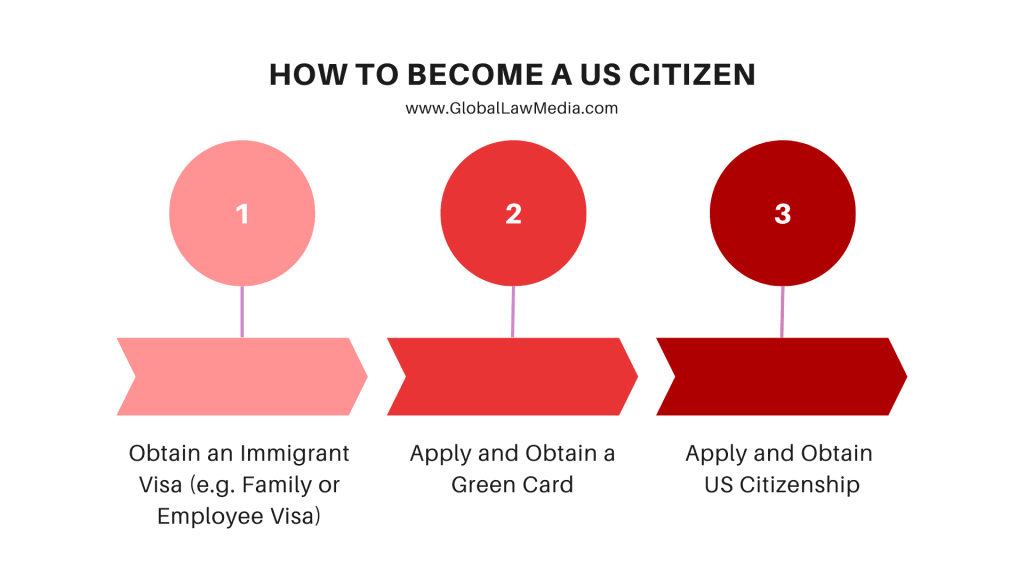
Immigrant visas are for individuals seeking permanent residence in the US, while nonimmigrant visas are for those only seeking temporary stays for specific purposes (e.g. to attend a university or for business purposes). Once you receive an immigrant visa, you will be able to apply for a Green Card after a number of years, which will give him permanent resident status. With a Green Card, you can live and work freely in the US, and eventually become eligible for US citizenship.
Nonimmigrant visas do not directly lead to permanent residency status, however, some nonimmigrant categories may allow you to transition to an immigrant visa status under certain circumstances. It will be wise to understand your long-term goals and be able follow a visa path that fits those plans
What are the Different Types of Immigrant Visas?
Family-Based Immigration and Employment-Based Immigration are the two main types of immigration visas. Family-Based Immigration allows US citizens and lawful permanent residents to apply for certain relatives to immigrate to the US. Employment-Based Immigration allows individuals with certain skills and qualifications that are in demand by US employers to be able to come and stay in the US.
What is Family Based Immigration?
Family-Based Immigration is typically for family members of green card holders and US citizens and is based on a preference category and limit per year. If a family member is considered an Immediate Relative, then there is no fiscal year limit on the amount of family members in this category that can apply for a visa. The type of Immediate Relative visa covers the following individuals:
Spouse of a US Citizen,
Unmarried Child Under 21 Years of Age of a U.S. Citizen,
Orphan adopted abroad by a US Citizen,
Orphan to be adopted in the U.S. by a US citizen, and
Parent of a U.S. Citizen who is at least 21 years old
US citizens can file an immigrant visa petition for their spouse, child, parent, or sibling. However, a US Lawful Permanent Residents can only file an immigrant visa petition for their spouse and unmarried son or daughter.
What are Family Preference Immigrant Visas?
Family Preference Immigrant Visas are petitions for more distant family relationships to a U.S. citizen and some specified relationships with a Lawful Permanent Resident. Unlike the Immediate Relative Visa, the Family Preference Immigrant Visas has a limit on the number of these visas that can be granted every fiscal year.
The family preference categories are:
First preference (F1) – unmarried sons and daughters (21 years of age and older) of U.S. citizens;
Second preference (F2A) – spouses and children (unmarried and under 21 years of age) of lawful permanent residents;
Second preference (F2B) – unmarried sons and daughters (21 years of age and older) of lawful permanent residents;
Third preference (F3) – married sons and daughters of U.S. citizens; and
Fourth preference (F4) – brothers and sisters of U.S. citizens (if the U.S. citizen is 21 years of age and older).
Once the limit has been reached Family Preference Immigrant Visas, there will be no more Family Preference Immigrant Visas issued in the fiscal year.
Family Visas allow immigration through marriage and allows reunification with children
What are the Pros and Cons of Family Based Immigration?
The main pro of family-based immigration is that it allows you to later apply for a green card, which creates a way for you to become permanent resident in the US, and then you can apply for US citizenship after you receive a green card. In addition, you can live near your family. The main con is that family-based immigration requires significant paperwork and potentially lawyer fees, long wait times if you are in the preference category.
If you marry or have a close family member who is a US citizen or green card holder, family-based immigration may be a viable option for you. However, it’s crucial to carefully research the process, understand the eligibility requirements and potential wait times, and consider seeking guidance from an experienced immigration attorney.
What are Employment-Based Immigration Visas?
Employment-based immigration visas allow individuals with a valuable skill set to relocate and come work in the US. Employment-based immigration encompasses visas that lead to a green card, unlike the popular H-1B visa. US employers will petition for these employees and if the person fits into one of the five more common preference category visas such as the following:
EB-1: For individuals with extraordinary abilities and typically at the top in their field, (e.g., athletes, researchers, or inventors). It also applies to executives and managers of multinational organizations. Most people will not qualify for a EB-1, and therefore it takes a shorter time to get a EB-1 visa
EB-2: For professionals with advanced degrees (Masters degrees or higher) in fields relevant to the US job market, or individuals with exceptional ability in the arts, sciences, or business. These individuals will not have the extraordinary talent as individuals in the EB-1 category, and therefore the processing time will be long for this visa than the EB-1.
EB-3: For professionals, skilled workers, and unskilled workers that work in areas where there are no qualified American workers who could perform the job. This is confirmed by a PERM certification. In addition, you must have two years of experience.
EB-4: For religious workers, certain government employees, and some international investors. This is considered a special category because often these individuals do not need a formal education. For example, a person isn’t required to go to college to be a religious worker.
EB-5: For foreign investors who invest a significant amount of capital into a US commercial enterprise (at least $1,050,000 and $800,00 for Targeted Employment Areas) that creates at least ten jobs for qualified US workers.
The Immigrant Based Visas all lead to ability to obtain a green card, which offers permanent residency in the US. This is different from nonimmigrant visas.
How does a Person Apply for an Immigrant Visa?
A person can apply for an immigrant visa by having someone submit the petition on your behalf, paying the necessary fees, interviewing at a consulate or embassy, and completing the necessary document. Once this process has been completed, you can potentially obtain a Green Card. This petition is mostly filed by either a family or employer where you have a job offer. In addition, the document will be submitted to the USCIS.
What are the Different Types of Nonimmigrant Visas?
The different types of nonimmigrant visas allow individuals to come to the US for tourism, business, study, work, and cultural exchange. A nonimmigrant visa has no direct path to a green card, unlike the immigrant visas, which permits permanent residence. Both foreigners and the US benefit from nonimmigrant visas.
What are the Tourism Visas for the US?
The B-1 visa and the B-2 visa are the main tourist visas for the US. The B-1 visa is primarily for individuals who are visiting the US for business purposes (e.g, closing a business, signing a contract, or attending a conference/convention). The B-2 visa is for leisure tourism and vacation (e.g., touring a major US city, visiting family and friends, participating in a festival or concert).
What are the US Student Visas?
The F-1 and the M-1 are the primary student visas individuals use to enter the US for educational purposes. The F-1 student visa is for students accepted into full-time academic universities, colleges, high schools, private elementary schools, etc. The M-1 student visa is for students accepted into a full-time vocational school, instead of an academic school. Both the F-1 and M-1 must be enrolled into a Student and Exchange Visitor Program (SEVP) approved program. In addition, the student must show he/she can financially support and cover their living expenses while attending the school in the US.
Other Nonimmigrant Visas
The J-1 Visa is for individuals participating in an exchange program (e.g., students, researchers, teachers, and interns). The I Visa is for individuals seeking to come to the US that work in foreign media organizations working (e.g., newspapers, radio, or press) The R Visa is for religious workers coming to the US to perform religious functions in a religious organization (e.g, church, synagogue, or mosque).
Nonimmigrant visas cater to individuals seeking temporary stays in the US for various purposes. Here’s a breakdown of some common nonimmigrant visa categories:
What are the Benefits of a Nonimmigrant Visa?
Foreigners benefit from a Nonimmigrant Visa because it allows them to come to the US for a variety of purposes on a short term basis and experience American culture. In addition, while nonimmigrant visas do not offer a direct path to permanent residence, they can offer opportunities for permanent residency. For example, an F-1 visa holder can be granted an employment based green card.
The US benefits from increased money spent during tourism, an increased skilled workforce, cultural exchange programs, and increased partnerships with other countries.
What is a Green Card for Immigration to the US?
A Green Card is a document that allows for permanent residence in the US, where a person can work and live indefinitely in the US. To qualify for a Green Card, you must qualify for one from an employment based visa, family sponsorship, being an investor, have refugee or asylum status, or win the Diversity Visa Lottery. All applicants for Green Cards undergo security screenings and background checks. In addition, you will have to have an interview for your Green Card.
Are there Limits on the Amount of Green Cards Issued Every Year?
Yes, there are limits on the amount of green cards issued every year. This is known as “per-country ceilings” and it helps ensure that no one country takes a large percentage of green cards in a particular year, according to, “Numerical Limits on Permanent Employment Based Immigration: Analysis of the Per-country Ceilings” by Carla Argueta. They primarily focus on the annual limits on green cards for each preference category within family-based and employment-based immigration.
The demand for visas from certain countries is so high, that a backlog forms and can create longer wait times for certain countries (e.g. Mexico, China, India). It may be wise to apply for a visa or permanent residency in different areas if you qualify. Diversity is important to the US, and the US wants to ensure that its population is composed of individuals from different countries.
What are the Costs to Obtain a Green Card?
The cost to obtain a Green Card can range from $325 up to almost $4,000 depending on the type of immigration visa (family based, employer based) you will be using to apply for a green card. If you are using an immigration lawyer to apply for a green card, you can expect the fees to be more. You will likely expect to pay for the following:
Application fees
Biometric fees
Medical examination
Affidavit of Financial Support for your Sponsors
Attorney Fees
These are just estimated costs, and it will be important to take into consideration additional travel costs for the interviews, translation services, etc. Please visit the USCIS website for more information on the exact price.
How Long Does it Take to Obtain a Green Card?
It can take up anywhere from a year up to almost four years to obtain a green card, depending on the visa category you are applying from and the volume and backlog of applications from your home country. Countries with a higher number of applications for green cards, will have long wait time and experience backlogs. Please check the USCIS monthly Visa Bulletin which details the priority dates for each visa category in countries with visa backlog
To minimize the wait times, you can strategically choose the visa categories based on their potential wait time. An immigration attorney will be best to help you with this matter. In addition, it is vital to complete the paperwork correctly and respond to the USCIS request as quickly as possible.
How Can A Person Lose Their Green Card?
A person can lose their Green Card by not spending the required amount of time in the US, and failing to renew the Green Card before it expires. It will be important to maintain permanent resident status in order to be able apply for US citizenship.
Who Qualifies for Asylum and Refugee Status in the US?
Individuals that are fleeing persecution or violence in their home countries qualify for asylum and refugee status in the US. A person seeking asylum status is already present in the US, while a refugee is a person that is not necessarily in the US but is seeking refugee status from the US. Both refugees and asylum seekers may seek permanent residency in the US after a year, and can be protected from being deported in the US. However, there are caps on the number of individuals that will be granted asylee or refugee status every year. In addition, each person will be interviewed and will have to go through a security screening.
What are the other US Humanitarian Relief Immigration Programs?
The U Visa, T Visa, and Temporary Protected Status (TPS), are some of the other humanitarian relief immigration programs. The U Visa is available to victims of human trafficking, violent crime, or domestic violence in the US, and who have assisted law enforcement to investigate or prosecute the crime. The T Visa is primarily for victims of human trafficking that help law enforcement with the investigation or prosecution of the trafficking scheme. In addition, the TPS is granted on a limited basis, and is for individuals from certain countries that are experiencing natural disasters, ongoing armed conflict, or other situations that prevent their safe return home.
What is the Diversity Visa Program?
The Diversity Visa Program is a US lottery program where individuals from countries with low rates of immigration to the US are given the opportunity to win a US Permanent Resident Card. The Diversity Visa Program is also known as the “Green Card Lottery” because 50,000 immigrants are awarded a green card every year. The goal of the Diversity Visa Program is to diversify the US immigrant population, and the program selects from countries with low numbers of immigrants in the previous five years. More than 11 million people apply for 50,000 green cards every year. There is no fee that is charged to enter the Diversity Visa lottery, applicants should ensure their country is on the list of eligible nations for the Diversity Visa Program.
What are the Common Problems When Immigrating to the US?
Choosing the wrong visa category, not completing the application properly, missing deadlines, not having legal representation, and entering the US illegally are the common problems when immigrating to the US. All of the mishaps will lead you to not getting a successful visa or green card. In addition, it can cost even more money to refile and correct any mistakes.
What happens if a Person Illegally Immigrates to the US?
A person risks deportation, working for low wages and overpaying in taxes without receiving a refund, straining on public welfare and social services, and participating or being a victim of crime (e.g., human trafficking, drug trafficking, theft) if he/she illegally immigrates to the US. Illegal immigration is a very political topic and has both truth (e.g., bypassing security checks) and elements of fear mongering (e.g., immigrants taking all of the jobs). In addition, illegal immigration is complex because many American children have undocumented parents, and deporting the parent will potentially break up a family.
Final Words
Immigrating to the US and obtaining a Green Card can be a life-changing experience. New doors will be opened for new opportunities, cultural experiences, and personal growth. It is important to properly research the visa requirements, and seek the help of an immigration lawyer professional guidance from an immigration attorney. The US system is complex, but it will be worth the time and money spent once you have successfully immigrated to the US.
FAQ
What is a permanent resident?
A permanent resident is a person who has the legal right to live in a country or territory permanently, but is typically not a citizen of the country.
What is an immigrant?
An immigrant is a person living in a country other than that of his or her birth or home country.
What is a refugee?
A refugee is a person that has been forced to leave their country in order to escape war, persecution, or natural disaster.
What is a migrant?
A migrant is a person that moves away from his or her place of residence temporarily or permanently. A migrant may choose to move within the country or internationally
To set up a courthouse wedding you must have your documents and applications completed, be of legal age for marriage in your state (typically 18, but some states allow 16 or 17 with parental consent), schedule your ceremony at the courthouse, and obtain the marriage certificate or a certified copy of the marriage certificate. This can be an affordable and efficient option for couples especially for those with immigration matters involved. It is important to understand what it takes to plan a courthouse wedding for immigration purposes, from understanding the benefits to navigating the legal requirements.
Table of Contents
What To Know About Courthouse Weddings
It is vital to know that courthouse weddings are civil ceremonies, held in a government building like a courthouse by a designated official, and led by a judge, clerk, or justice of the peace. Courthouse weddings are typically shorter and simpler than traditional weddings, and they focus more on the legal aspects of marriage.
Courthouse weddings are significantly cheaper than traditional weddings. You won’t have to pay expense fees to rent out the courthouse. You will likely only have to pay for the marriage license and the ceremony itself, which is a fraction of the price of a traditional wedding. For example, the marriage ceremony fee in New York City is $25.
In addition, some courthouses allow a small number of guests, but it will be important to verify the guest restrictions beforehand. You can expect a casual dress code, but you are free to wear formal marriage attire. Since you will be getting married at a courthouse, there’s likely little room for decorations and you may not be able to add personal touches to the ceremony itself.
5 Steps to Plan a Courthouse Wedding
Planning a courthouse wedding involves a five important steps:
Research courthouses in your area that offer wedding ceremonies. Take into consideration location, ceremony availability (weekdays vs. weekends), guest limitations, and any fees associated with the ceremony itself.
Apply for Your Marriage License from the county clerk’s office. You’ll need to provide a valid identification (driver’s license or passports), proof of social security numbers (not always required), and possibly pay a fee.
Bring Your Important Documents such as your government issued IDs for you and your partner, a completed marriage license, and witnesses if required.
Determine the date and time for your wedding, dress appropriately, ensure the number of guests are allowed.
Determine if your post-wedding celebration will be a small gathering, a fancy dinner, or celebration for another day.
Benefits of Courthouse Weddings for Immigration
For couples with immigration matters, a courthouse wedding offers several advantages. A courthouse wedding is held and recognized by the government, and you will be able to show to the immigration officer (at the local USCIS office or the U.S. embassy or consulate nearest to you) you have a legal marriage. In addition, they are cheaper than traditional weddings.
If you are in a hurry due to immigration deadlines, a courthouse wedding can typically be scheduled faster than a traditional wedding. Courthouse weddings typically involve less paperwork compared to traditional weddings involving religious institutions.
How Long Is A Courthouse Wedding Ceremony?
A courthouse wedding is typically only 5 to 15 minutes long. The focus is on the legal exchange of vows and the signing of the marriage license.
What Documents Are Needed For A Courthouse Wedding?
As mentioned above, a valid government-issued ID (e.g., a driver’s license or passport for both individuals), and completed marriage license application: You’ll obtain this from the county clerk’s office where you apply for the license.
Some US States may require a witness identification, and a dissolution of marriage decrees If either partner has been previously married). It is best to check with your specific courthouse to confirm their exact requirements for documentation. The courthouse may have its own government issued forms that need to be completed as well.
What Does A Courthouse Wedding Consist Of?
Even though a courthouse wedding ceremony is short, it still is a formal ceremony and traditionally adheres to the following scheduling:
Opening remarks: The officiant will welcome you, your partner, and any guests present.
Declaration of intent: The officiant will ask each of you to confirm your willingness to marry each other.
Vows: You may choose to recite traditional vows provided by the officiant, write your own vows, or forego vows altogether.
Exchange of rings, if you choose to exchange rings.
Declaration of marriage: The officiant will pronounce you and your partner as being married.
Sign the marriage license: Both partners will sign the marriage license in the presence of witnesses (if required) and the officiant.
Closing remarks: The officiant may offer a brief congratulatory message or reading.
The entire ceremony is usually streamlined and focused on the legal aspects of marriage.
Tips for a Memorable Courthouse Wedding
No matter if your wedding is in the courthouse and in an ultra luxury destination, you can still make your wedding memorable. You can make your wedding feel special and reflect your personalities by doing the following:
Dress appropriately: You should ensure the outfits are respectful and put-together.
Write your own vows: Even a few heartfelt sentences can express your commitment to each other.
Bring flowers such as a small bouquet or boutonniere because they can add a touch of elegance to the courthouse and your wedding photos.
Plan a special dinner, a small gathering with close friends and family, or even a fun activity to celebrate your marriage after the ceremony.
Hire a photographer to capturing the joy of your wedding day with professional photos
Enjoy the moment and don’t stress.
Final Words
Courthouse weddings offer a practical and stress-free way to get married, particularly for couples with immigration considerations. They are affordable, efficient, and can still be a beautiful and significant start to your married life together.
Remember, the most important aspect of your wedding day is the commitment you make to your partner. Whether in a grand ceremony or a courthouse setting, the act of getting married signifies the beginning of your journey as a couple. With careful planning and a touch of personalization, you can have a courthouse wedding that is both meaningful and sets the stage for a happy future together.
A consulate and embassy are different because each have different functions, are located in different places, and are typically headed by a different person. While both represent a foreign country on foreign soil, embassies are often the primary place for a country’s diplomatic activities in another country, as opposed to consulates that tend to focus more on support for visa and passport for citizens and businesses abroad. Both a consulate and embassy can help a person immigrate to the US, and obtain tourist visas and green cards. It is important to understand the difference between a consulate and embassy especially for anyone traveling or living overseas.
Table of Contents
What is an Embassy?
An embassy is the diplomatic mission a country establishes in foreign country and is typically led by an ambassador. Embassies are typically located in the foreign country’s capital city and the embassy will serve as the primary channel of communication between the two governments. They deal with important issues like political relations between the two countries, military collaboration and peace, and the creation and facilitation of trade agreements. The embassy’s ambassador is the highest-ranking official representing that country in the foreign nation. The ambassador acts as the official spokesperson for their government.
What is a Consulate?
A consulate is a diplomatic office typically in a major city, that is not the capital of the foreign host country, and is led by the consul. Consulates typically handle matters like handling passports, processing visa applications, and assisting its citizens in the region in case of emergencies or legal matters. They may also play a role in promoting trade and cultural exchange within their designated area. A consulate provides regional support and ultimately reports to the ambassador at the embassy. Despite the difference both consulates and embassies have a harmonious relationship.
The following photo explains the difference
Can I Apply for a Visa and Passport at an Embassy and Consulate?
Yes, you can apply for a visa and passport at an embassy and consulate. However, some nations restrict visa and passport matters to the regional consulates. It is important to check the website of the embassy or consulate in the host nation you’ll be visiting. They will have the most up-to-date information on visa requirements, application procedures, and any fees involved. Consulting an immigration lawyer can help you with any issues you may face at a consulate or embassy.
Are Embassies and Consulates under the Rule of the Nation They are Located in?
Yes, embassies and consulates are under the rule of the nation they are located in.
Embassies and consulates are located on foreign soil. For example, a US embassy or consulate that is located in another country is not considered American soil, according to “Embassy and Consulates General Frequently Asked Questions”. However, they enjoy certain protections and diplomatic immunities under international law according to the Vienna Convention on Diplomatic Relations (1961) for embassies and the Vienna Convention on Consular Relations (1963) for consulates.
What is Diplomatic Immunity?
Diplomatic immunity is a legal privilege granted to certain foreign government officials who are not subject to the jurisdiction of local courts and other authorities of the host country they are located in both their “official and, to a large extent, their personal activities”, according to “Diplomatic and Consular Immunity: Guidance for Law Enforcement and Judicial Authorities” by the US State Department. Diplomatic immunity is important because it helps facilitate diplomatic communication and collaboration between nations.
However, diplomatic immunity is not complete immunity and individuals are held accountable for serious crimes, succession, and the individual’s home country is able to waive immunity for the individual as well.
How Do Embassies and Consulates Protect Their Citizens Abroad?
Embassies and consulates protect their citizens abroad by providing emergency assistance, travel advisories, and serving as the bridge and liaison with local law enforcement. It is important to register with your embassy or consulate before traveling or living abroad because it will allow you to receive important updates and assistance more easily in case of emergencies or crises.
Case Study: Evacuation During Political Unrest
In 2021, after the Taliban retook control of Afghanistan it created significant political unrest in the country. The Taliban began to enforce strict islamic rule and harsh penalties for violations. The US with the help of its embassy evacuated more than 120,000 Americans, legal permanent residents, vulnerable Afghans and other partners.
Can I Meet the President or Prime Minister When They Visit Their Embassy or Consulate?
No, it is unlikely that you will be able to meet the President or Prime Minister when they visit their embassy or consulate. Their visits are typically focused on meeting with their government counterparts from the host nation. In addition, their schedules are typically filled and there will be security protocols in place for their protection.
However, there might be public events or receptions organized at the embassy or consulate in conjunction with the leader’s visit. These event may provide a chance to meet them?
Can I Take a Tour of an Embassy or Consulate?
No, it is unlikely you will be able to take a tour of an embassy or consulate. These places conduct official business on behalf of their home country and they likely do not have the capacity to handle tours. However, some embassies or consulates might offer occasional open house events or cultural celebrations where visitors can get a glimpse inside. In addition, some embassies may have a gift shop selling souvenirs which allow visits.
Fun Facts About Embassies and Consulates
The first embassy was founded in Northern Italy in the thirteenth century, according to National Geographic Society.
The term “embassy” comes from the old French word “ambassee”.
Many embassies and consulates host cultural events throughout the year. These events can be a fantastic opportunity to experience the music, food, and traditions of another country.
Mythbusters: Common Misconceptions about Embassies and Consulates
Here are a few misconceptions about embassies and consulates.
Embassies and consulates do not issue currencies, and it best to visit your local bank for currency exchange services.
Asylum is typically handled by a country’s immigration authorities, not embassies or consulates.
If you are in legal trouble, the embassy and consulate staff cannot intervene directly in legal matters or get you out of jail. They can offer legal referrals to help you get fair representation though.
Final Words
Knowing the difference between embassies and consulates is important if you ever need help from your home country while you’re traveling. Embassies deal with important matters between governments, and you’ll find them in the capital city. Consulates are like mini-embassies in other big cities, and they help citizens directly with passports or if they’re ever in trouble. Both embassies and consulates are there to keep you safe when you’re abroad. Therefore, if you’re ever on holiday or an adventure, remember you can always ask your embassy or consulate for help.
No, airport scanners can not detect drugs in your bum or inside of any other body part. Airports typically use x-rays and millimeter wave scanners, which can not directly detect drugs inside a body part. However, airport dogs are trained to sniff out narcotics, and TSA officers can take further security measures if the scanners pick up what may be deemed a suspicious shape on the scanner. It is best to not bring drugs or any other illegal product into an airport. This will keep you from violating any travel law and help ensure a smooth travel experience.
Table of Contents
How Do Airport Scanners Work?
Airport security uses two main types of scanners: X-ray scanners and millimeter wave scanners.
X-ray scanners are very similar to how the machine doctors use to take X-rays of your bones. However, X-ray scanners can’t tell the difference between different types of organic materials. While X-ray scanners can not directly identify drugs inside a body part, the X-ray scanners might flag a suspicious package which may alert TSA officers.
Millimeter Wave Scanners are relatively new scanners that use radio waves to create a 3D image of your body. While the millimeter waves can not see through your clothes, they may detect objects with a different density than your body which helps detect items like weapons. However, similar to an X-ray scanner, it can not differentiate between materials like drugs, electronics, or even certain clothing styles.
What Can Airport Scanners Actually Find?
Airport scanners can alert inspections if they find unusual bulges or body inconsistencies which seem suspicious to a TSA officer. For example, if there is a bulge under a person’s clothing that doesn’t seem natural, scanners can flag these inconsistencies, prompting airport security to investigate the shape.
A flagged scan can lead to pat-downs which require an airport officer to physically check your clothing or bring a drug-sniffing dog that is trained to smell narcotics hidden anywhere on your person, including your bum.
What Happens if You are Caught with Drugs at the Airport?
You may face a fine, delay of your flights, or even imprisonment if you are caught with drugs at the airport.
Drugs often have penalties based on the amount. If you have a small amount for your own use, it might be legally considered a misdemeanor. However, if you have a large quantity, the law may assume you had the intent to deliver / traffic the drugs which could lead to a much harsher penalty such as a felony conviction.
Passengers as well as airline employees can get in trouble with trying to bring illegal drugs in an airport. In May 2024, three individuals were criminally charged with smuggling 112 pounds of meth in their luggage at Indy airport.
If security suspects you have illegal drugs, they may detain you which take the following steps:
Detain you and prevent you from boarding your flight,
Search you and your belongings,
Confiscate the drugs, and
Call local police
What You Can Do to Avoid Trouble and Travel Safely?
Not bringing drugs into the airport is the best thing you can do to avoid trouble and travel safely. It is not worth the risk of legal trouble because ignorance of the law is no excuse. You can participate in drug tourism and travel to places that have legalized drugs.
If you have prescribed medication, you should bring a doctor’s note, declare it at the airport and it is best you have the medication in its original labeled containers. It is best not bring them in travel bottles, even if it is medically marijuana. Even if you are not physically inside the airport, airport security can still pull you over if you are on the airport property if they have reasonable belief you have illegal drugs.
Final Thoughts
While airport scanners might not be able to see directly into your body, they still play a vital role in security. Understanding how they work and the limitations of the technology can help alleviate any anxieties you might have about passing through security.
Remember, the goal is to ensure a safe and smooth travel experience for everyone. By following the tips outlined above, you can avoid unnecessary trouble and navigate airport security confidently.
You can carry on as many travel bottles as you like as long as they collectively do not exceed 3.4 ounces or 100 millimeters. However, exceeding this limit can lead to confiscated items and delays at airport security, turning an exciting trip into a frustrating experience. Understanding travel regulations regarding liquids ensures a smooth journey and allows you to focus on your adventure ahead.
Table of Contents
The 3-1-1 Rule Decoded: Legal Limits for Carry-On Liquids
The Transportation Security Administration (TSA) enforces the 3-1-1 rule, a cornerstone of travel law for carry-on liquids. Each number refers a different part of the rule:
3 ounces: Each individual container of liquid (including gels and aerosols) cannot exceed 3.4 ounces or 100 milliliters.
1 quart-sized bag: All your travel-sized liquids must fit comfortably within one clear, quart-sized (or one liter) plastic bag.
1 bag per passenger: Only one quart-sized bag of liquids is allowed per passenger.
The 3-1-1 rules exists primarily due to national security and passenger safety. Limiting the amount of travel bottles and liquids that passengers can bring onboard minimizes the risk of flammable or explosive materials being smuggled onto airplanes.
Beyond the Bottle: Understanding TSA Regulations for Gels & Aerosols
Gels and aerosols, including common travel items like toothpaste, sunscreen, and shaving cream can also fit into travel bottles and are covered under the 3-1-1 rule. Cream deodorants may also be considered gels. Please check the TSA website for a comprehensive list of approved and prohibited carry-on items.
Packing with Purpose: Avoiding Legal Issues at Airport Security
If you exceed the 3-1-1 rule your items may be confiscated and you made be delayed at security checkpoints. To avoid this, you can pack smart by doing the following:
Travel-Sized Containers: Purchases in refillable travel-sized containers that meet the 3.4-ounce limit. Drugstores, Amazon, Wal-mart, and travel stores in the U.S. offer a variety of convenient options.
Pour Products into Travel Sized Bottles: If you can’t find your favorite products in travel sizes, consider down-sizing them into TSA-approved travel bottles. It would be helpful to label the containers with the product name for quick identification during security checks.
Checking in Larger Items: Pack larger containers of liquids, such as shampoo or conditioner, in your checked baggage. Double-check the airline’s baggage fees and weight restrictions to avoid additional charges.
Following the 3-1-1 rule not only ensures legal compliance but also streamlines your security screening experience. TSA officers can quickly assess your liquids when they are properly contained and organized, minimizing delays and allowing you to reach your gate with ease.
Exceptions & Special Cases: Legal Considerations for Medical Needs
The 3-1-1 rule has exceptions for medications and medically necessary liquids exceeding the standard limits. Here’s what you need to know:
Doctor’s Note: Bring a doctor’s note that clearly shows your medical condition and the necessity for exceeding the 3-1-1 rule.
Original Medical Bottle: Keep medications in their original labeled containers because this helps TSA officers easily determine what is in the package.
Declare Medications: Some international destinations require travelers to declare medications upon arrival. Research the specific regulations of your destination country in advance to avoid any legal issues.
Conclusion
Understanding travel law, particularly the 3-1-1 rule, empowers you to pack efficiently and navigate airport security with confidence. By following these guidelines, you can know how many bottles you can carry one. This will allow for a smooth and hassle-free start to your travels, allowing you to focus on creating lasting memories on your exciting adventure.
This website uses cookies to improve your experience while you navigate through the website. Out of these, the cookies that are categorized as necessary are stored on your browser as they are essential for the working of basic functionalities of the website. We also use third-party cookies that help us analyze and understand how you use this website. These cookies will be stored in your browser only with your consent. You also have the option to opt-out of these cookies. But opting out of some of these cookies may affect your browsing experience.
Necessary cookies are absolutely essential for the website to function properly. These cookies ensure basic functionalities and security features of the website, anonymously.
Cookie
Duration
Description
cookielawinfo-checkbox-analytics
11 months
This cookie is set by GDPR Cookie Consent plugin. The cookie is used to store the user consent for the cookies in the category "Analytics".
cookielawinfo-checkbox-functional
11 months
The cookie is set by GDPR cookie consent to record the user consent for the cookies in the category "Functional".
cookielawinfo-checkbox-necessary
11 months
This cookie is set by GDPR Cookie Consent plugin. The cookies is used to store the user consent for the cookies in the category "Necessary".
cookielawinfo-checkbox-others
11 months
This cookie is set by GDPR Cookie Consent plugin. The cookie is used to store the user consent for the cookies in the category "Other.
cookielawinfo-checkbox-performance
11 months
This cookie is set by GDPR Cookie Consent plugin. The cookie is used to store the user consent for the cookies in the category "Performance".
viewed_cookie_policy
11 months
The cookie is set by the GDPR Cookie Consent plugin and is used to store whether or not user has consented to the use of cookies. It does not store any personal data.
Functional cookies help to perform certain functionalities like sharing the content of the website on social media platforms, collect feedbacks, and other third-party features.
Performance cookies are used to understand and analyze the key performance indexes of the website which helps in delivering a better user experience for the visitors.
Analytical cookies are used to understand how visitors interact with the website. These cookies help provide information on metrics the number of visitors, bounce rate, traffic source, etc.
Advertisement cookies are used to provide visitors with relevant ads and marketing campaigns. These cookies track visitors across websites and collect information to provide customized ads.