The Virginia Alcohol Safety Action Program (VSAP) drug tests as often as it believes is required to determine whether a person is using alcohol or drugs. The drug tests will occur randomly. This means there is no fixed schedule for drug testing, and participants must be prepared for testing at any time throughout their involvement in the program. The frequency of drug tests can vary depending on individual circumstances, such as the severity of the DUI offense, the participant’s treatment plan, and any signs of relapse or noncompliance.
Table of Contents
What Happens If You Fail A VASAP Drug Test?
If you fail a VASAP drug test, there may be a revocation of your suspended jail sentence and you risk being forced to serve in jail. If you are an immigrant, you may not be able to get a green card or could get deported in the worse case scenario. Failing a VASAP drug test is a serious violation of the program’s rules and can have severe consequences. The specific penalties for failing a drug test will depend on several factors, including:
The type of drug used: Some drugs are considered more serious than others.
The frequency of failed tests: Repeated failures can lead to harsher penalties.
Your overall progress in the program: If you’re making good progress in other areas of the program, it may mitigate the consequences of a failed drug test.
In addition to potential jail time, failing a VASAP drug test can result in other penalties, such as:
License Suspension: Your driver’s license may be suspended or revoked.
Program Termination: You may be expelled from the VASAP program.
Increased Program Requirements: You may be required to attend additional counseling sessions or participate in more intensive treatment programs.
It’s important to understand that failing a VASAP drug test is a serious matter with potentially severe consequences. If you’re struggling with substance abuse, seeking help from a qualified treatment provider is crucial.
What is a Drug Test?
A drug test is a medical procedure that analyzes a biological sample, like urine, blood, or hair, to detect the presence of drugs or their byproducts. VASAP uses drug tests to monitor participants’ sobriety and ensure they are complying with the program’s requirements.
There are several types of drug tests, but urine tests are most commonly used in VASAP programs. These tests can detect a wide range of substances, including:
Alcohol: While primarily focused on alcohol abuse, VASAP programs may also include tests for alcohol to monitor sobriety progress.
Cocaine: A powerful stimulant with high addictive potential.
Marijuana: A commonly used drug with varying legal statuses across different jurisdictions.
Opiates: This category includes prescription pain medications and heroin.
Amphetamines: This includes stimulants like methamphetamine and prescription medications like Adderall.
It’s important to note that drug tests can detect both illegal substances and prescription medications that are being misused. The specific substances included in a drug test may vary depending on the program and the individual’s treatment plan.
Frequently Asked Questions
Here are some frequently asked questions about VASAP drug testing:
Q: How often does VASAP drug test on average?
A: The frequency of VASAP drug tests varies depending on individual circumstances. Some participants may be tested weekly, while others might be tested less frequently. There’s no standard schedule, and the program can adjust the testing frequency based on your progress and risk factors.
Q: Can I refuse a VASAP drug test?
A: Refusing a VASAP drug test is a serious violation of the program’s rules. It could lead to severe consequences, including possible jail time. It’s essential to comply with all program requirements, including drug testing.
Q: Can I get out of VASAP early?
A: The duration of VASAP participation is determined by the court. Early termination is generally not possible and it’s essential to follow the program’s guidelines and demonstrate progress to increase your chances of early completion.
Q: What if I fail a VASAP drug test multiple times?
A: Repeated failed drug tests can have severe consequences, including program termination, license suspension, and potential jail time. If you’re struggling with substance abuse, it’s crucial to seek professional help to address the underlying issues and avoid further legal troubles.
Final Words
Understanding the VASAP drug testing process is crucial for anyone involved in the program. By understanding the potential consequences of failing a drug test and the importance of maintaining sobriety, participants can increase their chances of successfully completing the program and regaining their driving privileges.
Remember, VASAP is designed to help individuals address alcohol or drug abuse issues and promote safe driving habits. By adhering to the program’s rules and seeking support when needed, participants can overcome challenges and achieve long-term sobriety.
Errors in your application, issues with your eligibility, and mistakes during processing can disqualify you from getting a green card. The US Citizenship and Immigration Services (USCIS) carefully scrutinizes every application, ensuring all requirements are met and national security is protected. The green card is regulated by US immigration law and it is important to understand the most common reasons for denial can help you avoid pitfalls and increase your chances of success.
Here, we’ll explore the top 18 reasons why a green card application might be denied. By being aware of these potential roadblocks, you can prepare a strong application and navigate the process more smoothly.
Table of Contents
You’re Not Eligible for a Green Card
The first step is understanding your eligibility for a green card. There are various pathways to obtaining a green card, each with specific requirements. Some common reasons you might not be eligible include:
Lacking a qualifying sponsor: Certain green card categories, like family-based sponsorship, require a U.S. citizen or lawful permanent resident relative to petition on your behalf. Without a qualified sponsor, you might not be eligible for that specific green card category.
Entering the U.S. without inspection: If you entered the U.S. without inspection (inadmissible), you may face a waiting period before being eligible to apply for a green card. The length of this waiting period depends on the specific circumstances of your entry.
Certain temporary visas: Some temporary visas, like tourist visas or business visitor visas, do not lead to permanent residency. If your current visa status doesn’t offer a path to a green card, you may need to explore other options.
It’s crucial to determine your eligibility before investing time and resources into the green card application process. An immigration lawyer can assess your situation and advise you on the most suitable green card category based on your circumstances.
Health-Related Issues
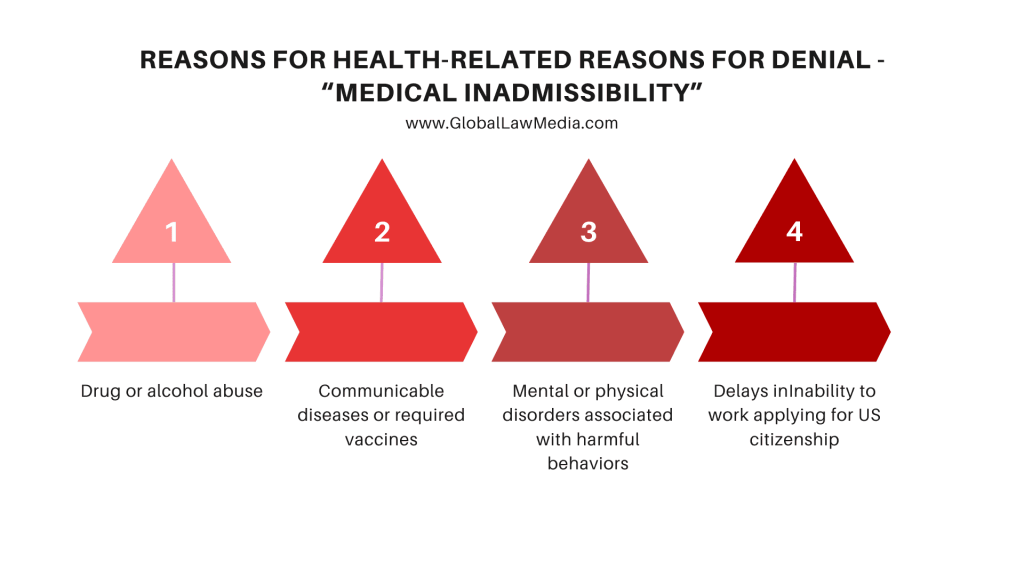
In some cases, health concerns can lead to a green card denial. USCIS aims to protect public health and ensure that green card holders won’t become a significant burden on the healthcare system. Here’s a breakdown of the main health-related reasons for denial:
Communicable Diseases: Having a contagious disease, like tuberculosis or certain vaccine-preventable illnesses, can lead to denial. However, waivers may be available in some cases if you undergo treatment and meet specific requirements.
Mental Health Conditions: Severe mental health conditions that could pose a threat to yourself or others can be grounds for denial. However, a documented history of proper treatment and management can help overcome this hurdle.
It’s important to note that USCIS requires a medical examination by a designated civil surgeon as part of the green card application process. Being upfront and honest about your health conditions during the medical exam is crucial. An immigration lawyer can advise you on navigating health-related concerns and potentially overcoming them in your green card journey.
Criminal-Record-Related Issues
A criminal record can significantly impact your green card application. USCIS conducts thorough background checks, and certain criminal offenses can make you inadmissible to the United States. Here’s a breakdown of some potential issues:
Felonies: Generally, convictions for felonies (serious crimes) are grounds for inadmissibility. The specific consequences depend on the nature and severity of the felony.
Crimes Involving Moral Turpitude: Crimes involving moral turpitude, such as fraud, theft, or domestic violence, can also lead to denial. The specific details of the crime and any mitigating factors are considered during the adjudication process.
Multiple Misdemeanors: While a single misdemeanor (minor offense) might not automatically disqualify you, a history of multiple misdemeanors could raise red flags for USCIS.
However, there are possibilities for overcoming these hurdles:
Waivers: For certain offenses, waivers of inadmissibility may be available. These waivers require demonstrating significant rehabilitation, the passage of time since the offense, and no likelihood of future criminal activity.
Pardons: In some cases, having received a pardon for a criminal offense can improve your eligibility for a green card.
As stated before, consulting with an immigration lawyer is crucial to understand your specific situation and explore potential solutions, such as waivers or demonstrating rehabilitation.
Security-Related Issues
National security is a top priority for USCIS. If you’re flagged as a potential security threat, your green card application could be denied. Here are some situations that might raise security concerns:
Terrorism or Espionage: Any ties to terrorism or espionage activities will automatically disqualify you from obtaining a green card.
Activities Prejudicial to the United States: Being involved in activities deemed harmful to the U.S., such as supporting organizations advocating for the overthrow of the government, could lead to denial.
Membership in Certain Organizations: Membership in certain organizations, particularly those designated as terrorist organizations by the U.S. government, can raise red flags during the application process.
USCIS prioritizes protecting national security, and any suspicion of potential threats can lead to denial. Always be truthful and upfront about your past activities during the application process.
Public Charge Inadmissibility (When Your Income Is Too Low)
The United States aims to welcome immigrants who can contribute positively to the country. One way USCIS assesses this is by considering your potential to become a “public charge,” meaning someone reliant on government assistance for basic needs. A lack of income can affect your green card application:
Income Requirements: There’s no set minimum income requirement for green card applicants. However, USCIS considers your overall financial resources, including your income, employment history, and assets.
Affidavit of Support: For certain green card categories, like family-based sponsorship, your sponsor (typically a U.S. citizen relative) must submit an Affidavit of Support (Form I-864). This affidavit legally obligates your sponsor to financially support you for a specific period, typically three years, ensuring you won’t rely on public assistance.
Public Charge Inadmissibility Rule: While the rule has undergone revisions, USCIS still considers your potential to become a public charge. Having a stable income, employment history, and health insurance can alleviate concerns and demonstrate your ability to support yourself.
Insufficient Financial Resources:
Even if you don’t have a sponsor submitting an Affidavit of Support, limited financial resources can still raise red flags. Here’s what you can do:
Provide Evidence of Assets: Owning property, having savings, or receiving investments can demonstrate your ability to financially support yourself.
Highlight Employment Prospects: A strong job offer or evidence of in-demand skills can reassure USCIS of your future earning potential.
Remember, the goal is to demonstrate your self-sufficiency and ability to contribute positively to the U.S. economy.
Issues for Immigration Violators
Having a history of violating immigration laws can significantly complicate your green card application. USCIS takes immigration violations seriously, and the consequences can vary depending on the severity of the offense. Here’s a breakdown of some potential issues:
Overstaying a Visa: If you overstayed the authorized period of your visa, you may face a waiting period outside the U.S. before being eligible to apply for a green card. The length of the waiting period depends on the duration of the overstay.
Unlawful Presence: Accruing significant unlawful presence in the U.S. (being present without authorization) can lead to inadmissibility and a lengthy bar on re-entering the country.
Entry without Inspection: Entering the U.S. without going through inspection at a designated port of entry can also trigger consequences, potentially including a waiting period for applying for a green card.
Deportation or Removal Orders: If you’ve been deported or removed from the U.S. in the past, you may face significant challenges in obtaining a green card. However, there may be options depending on the reason for removal and the specific green card category you’re applying for.
Case Study: Overstaying a Visa
John, a tourist from Canada, entered the U.S. on a six-month visitor visa. He intended to travel and visit family but ended up finding a job and staying longer than authorized. John overstayed his visa for one year before finally deciding to apply for a green card through his U.S. citizen employer.
Analysis:
John’s overstay may lead to a denial of his initial green card application. A good immigration strategy for John would be to depart the U.S. and wait for a period of time outside the country before being eligible to reapply. Always comply with the terms of your visa and seek legal guidance if you have questions about your immigration status.
Failure to Meet Immigration Application Requirements
Failing to meet the application requirements – can be a major reason for green card denial. The green card application process involves specific forms, documentation, and procedures. Missing any crucial element can lead to delays or even rejection. Here’s a closer look at some common pitfalls:
Incomplete Applications: Not submitting all the required forms, along with proper documentation and filing fees, will result in an incomplete application. USCIS won’t process incomplete applications and will likely return them for you to complete and resubmit, causing delays.
Incorrect Information: Providing inaccurate or misleading information on your application is a serious offense and can lead to denial or even permanent inadmissibility. Double-check all information for accuracy before submitting your application.
Missing Evidence: USCIS requires specific documentation to support your eligibility for a green card. Missing documents, such as proof of relationship, employment history, or financial resources, can weaken your application and raise doubts about your case.
Improper Filing: There are specific procedures for filing a green card application, including following the correct filing instructions, meeting deadlines, and submitting the application to the appropriate USCIS office. Improper filing can lead to delays or rejection.
An immigration lawyer can ensure your application package is complete, accurate, and filed correctly. Their expertise can significantly increase your chances of a smooth and successful application process.
Additional reasons for green card denial:
Failure to Attend Immigration Appointments: Missing scheduled biometrics appointments, interviews with USCIS officers, or medical examinations can raise concerns about your seriousness and commitment to obtaining a green card.
Changing Jobs After Employer Filed I-140 (Employer-Sponsored Green Card): In some employment-based green card categories, if you change employers after your employer has already filed Form I-140 on your behalf, it can complicate the process. An immigration lawyer can advise you on the specific implications for your situation and potential solutions.
Prior Immigration Violations (beyond those mentioned previously): This could include using fraudulent documents to enter the U.S., marriage fraud for immigration purposes, or working without authorization. The consequences of these violations vary depending on the specifics, but they can significantly impact your green card eligibility.
Fraud or Willful Misrepresentation: Intentionally providing false information or deliberately misleading USCIS officers is a serious offense that can lead to permanent inadmissibility and potential criminal charges.
Incomplete Green Card Application (beyond the examples mentioned previously): There are specific sections within the application form that require detailed information about your background, travel history, and criminal record. Leaving any sections blank or incomplete can raise red flags for USCIS.
Mistakes on the green card application package (beyond the examples mentioned previously): Even seemingly minor errors, like typos or inconsistencies in dates, can raise doubts about the accuracy of your application. Careful review and proofreading are crucial before submitting your application.
Missed Deadlines: USCIS has specific deadlines for responding to requests for evidence (RFEs) or appearing for appointments. Missing these deadlines can lead to delays or even denial of your application.
Failing to establish a valid and authentic marriage (Marriage-Based Green Card): If you’re applying for a green card based on marriage to a U.S. citizen or permanent resident, USCIS will thoroughly scrutinize your relationship to ensure it’s genuine and not entered into solely for immigration purposes.
Inappropriate Denial, Based on Error by Immigration or the Consulate: In rare instances, USCIS might deny an application due to a processing error or mistake by the consulate. If you believe your denial is unfair or based on incorrect information, consulting with an immigration lawyer can help you explore options for appealing the decision.
Frequently Asked Questions (FAQs)
What can I do if my green card application is denied?
If your green card application is denied, USCIS will typically provide a written explanation outlining the reason(s) for denial. Here are your options:
Request for Evidence Review (RFER): Sometimes, USCIS might deny your application due to missing evidence. If this is the case, you can submit a Request for Evidence Review (RFER) along with any missing documentation to potentially overcome the denial.
Appeal the Decision: If you believe the denial was unfair or based on incorrect information, you can file an appeal with USCIS. An immigration lawyer can advise you on the appeals process and increase your chances of success.
Refile the Application: In some cases, you may be able to refile your green card application entirely, addressing the reasons for the previous denial. Consulting with a lawyer is advisable before refiling to ensure a stronger application.
How long does the green card application process take?
Processing times for green card applications can vary significantly depending on the specific category, your background, and current USCIS workloads. It’s wise to check USCIS processing times for your specific category to get a general idea.
Do I need a lawyer to apply for a green card?
While it’s not mandatory to have a lawyer for your green card application, the process can be complex and filled with potential pitfalls. An immigration lawyer can guide you through the process, ensure your application is complete and accurate, and represent you in case of any issues.
What are the benefits of having a green card?
Green card holders enjoy numerous benefits, including:
The ability to live and work permanently in the United States
Eligibility to travel freely in and out of the U.S.
Access to social security benefits (after meeting eligibility requirements)
The ability to sponsor family members for green cards
A pathway to U.S. citizenship (after meeting specific requirements)
Final Words
Obtaining a green card is a significant step toward building a life and immigrating to the United States. While the application process can be challenging, understanding the most common reasons for denial can help you avoid pitfalls and increase your chances of success.
By carefully preparing your application, gathering the necessary evidence, and potentially seeking guidance from an immigration lawyer, you can navigate the green card process more confidently. Remember, a well-presented and well-supported application demonstrates your eligibility and strengthens your case for obtaining a green card.
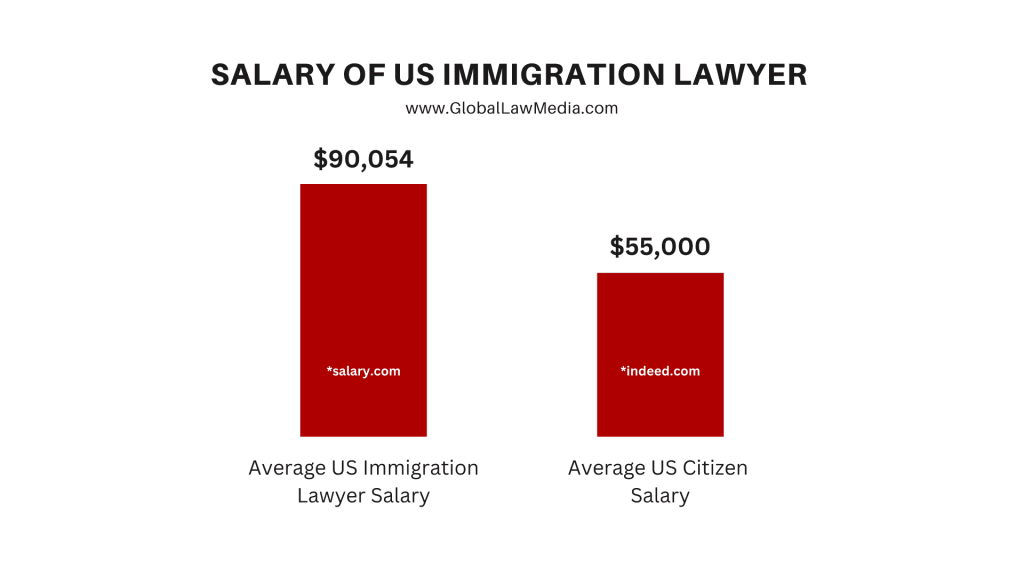
The average salary for an immigration lawyer in the US is $90,054, according to salary.com. This is higher than the average salary for the average US citizen at approximately $55,000, according to indeed.com. Therefore, immigration lawyers make good money compared to the average person. The salary of an immigration lawyer depends on the type of immigration law they practice, their location, and their education. In addition, being able to speak multiple languages will help immigration lawyers make a high income as well.
Table of Contents
What is an Immigration Lawyer?
An immigration lawyer is an attorney who specializes in helping individuals and businesses with their immigration law and legal matters. These specialized attorneys possess a deep understanding of immigration laws, regulations, and procedures.
Immigration lawyers handle a wide range of legal matters, including:
Visas: They assist clients in obtaining various visas, such as family-based visas for relatives of U.S. citizens, travel visas, employment-based visas for skilled workers, and student visas for international education opportunities.
Green Cards: Green cards grant lawful permanent residency status in the U.S. Immigration lawyers guide clients through the green card application process, ensuring all requirements are met and supporting them during interviews with US Citizenship and Immigration Services (USCIS).
Citizenship:Becoming a US citizen is a significant milestone. Immigration lawyers help clients navigate the naturalization process, including completing applications, passing the citizenship exam, and participating in the naturalization ceremony.
Deportation Defense: If someone faces deportation proceedings, an immigration lawyer can represent them in court, advocating for them to stay in the U.S. This may involve exploring options like waivers or appealing deportation orders.
Compliance: Immigration lawyers advise businesses on employing foreign workers and ensure they comply with complex immigration regulations.
In essence, immigration lawyers act as advocates for their clients, protecting their rights and helping them achieve their immigration goals.
What Do Immigration Lawyers Do?
Immigration lawyers consult and communicate with clients and the government, appear in court, and perform legal research. The daily tasks of an immigration lawyer can vary depending on their area of specialization and clientele. Here’s a glimpse into a typical day:
Client Consultations: Immigration lawyers spend a significant amount of time meeting with clients to understand their specific situations and immigration goals. This initial consultation allows the lawyer to assess the client’s eligibility for different options and develop a personalized strategy.
Casework and Research: Once a strategy is established, immigration lawyers delve into legal research, gathering evidence, and completing extensive paperwork on behalf of their clients. This may involve collecting documents, filling out complex forms, and preparing written legal arguments.
Client Communication: Immigration lawyers keep their clients informed throughout the process, explaining legal complexities in clear and understandable terms. They address their clients’ questions and concerns promptly, ensuring they feel supported and understood.
Communication with USCIS: Immigration lawyers frequently communicate with USCIS, submitting applications, responding to requests for evidence, and representing their clients during interviews. Effective communication with USCIS is crucial for moving cases forward smoothly.
Court Appearances: In some cases, immigration lawyers appear in court on behalf of their clients. This may involve deportation hearings, appeals of unfavorable decisions, or challenges to USCIS actions. Strong litigation skills are essential for success in these situations.
Staying Up-to-Date: Immigration laws and regulations are constantly evolving. Immigration lawyers must dedicate time to continuing legal education, ensuring their knowledge remains current with the latest changes and legal interpretations.
The work of an immigration lawyer requires a unique blend of legal expertise, communication skills, empathy, and meticulous attention to detail. Their dedication plays a vital role in helping individuals and families navigate the complexities of the US immigration system.
How to Become an Immigration Lawyer?
The path to becoming an immigration lawyer requires a strong academic foundation, legal training by going to law school, and a commitment to ethical practice. Here’s a breakdown of the key steps:
Earn a Bachelor’s Degree: There’s no specific undergraduate major required for immigration law. However, a strong foundation in political science, history, international relations, or criminal justice can be beneficial. If you do not attend university in the US, you’ll likely have a LL.B (Bachelors of Law) from an accredited university outside the US.
Take the Law School Admission Test (LSAT): The LSAT is a standardized test used by law schools to assess a candidate’s reading comprehension, analytical reasoning, and logical thinking skills. A high LSAT score can increase your chances of admission to a top law school.
Graduate from Law School: Earning a Juris Doctor (JD) degree is the foundation for becoming a lawyer. Law school typically takes three years and involves intensive coursework in legal theory, constitutional law, and various legal practice areas.
Pass the Bar Exam: Each state has its own bar exam, which you must pass to become licensed to practice law in that state. The bar exam tests your knowledge of the law and your ability to apply legal principles to real-world scenarios.
Consider an Immigration Law Specialization: While not mandatory, some law schools offer specialization programs or courses in immigration law. These programs provide a deeper understanding of the intricacies of immigration law and can give you a competitive edge in the job market.
Gain Immigration Law Experience: Many immigration lawyers gain valuable experience through internships or clerkships with immigration law firms, non-profit organizations, or government agencies during law school or after graduation.
Join the American Immigration Lawyers Association (AILA): AILA is a professional association for immigration lawyers. Membership offers access to resources, continuing education opportunities, and networking with other immigration law professionals.
The journey to becoming an immigration lawyer requires dedication and hard work. However, for those passionate about helping others navigate the complexities of immigration law, the rewards can be both personally and professionally fulfilling.
What Makes Up the Immigration Lawyer Industry?
Immigration lawyers work in various settings, each offering unique opportunities and challenges. Here’s a look at some common work environments:
Private Law Firms: Many immigration lawyers work in private law firms specializing in immigration law. These firms may handle a wide range of immigration matters or focus on specific areas, such as business immigration or family-based immigration.
Non-Profit Organizations:Non-profit organizations dedicated to immigrant rights and legal services often employ immigration lawyers. These lawyers typically work with low-income clients and may specialize in deportation defense or advocating for policy changes.
Government Agencies: US Citizenship and Immigration Services (USCIS) and other government agencies employ immigration lawyers to review applications, adjudicate cases, and provide legal advice. These positions typically require passing a government civil service exam.
In-House Counsel: Large corporations with international operations may have in-house immigration lawyers on staff. These lawyers advise the company on immigration compliance, handle employment-based visa applications for foreign workers, and ensure the company adheres to complex immigration regulations.
The choice of work environment depends on individual preferences and career goals. Some lawyers might thrive in the fast-paced environment of a private firm, while others may prefer the mission-driven work of a non-profit organization. Government positions offer stability and benefits, while in-house counsel roles provide opportunities for close collaboration with businesses.
What is the Growth Trend for Immigration Lawyers?
The demand for skilled immigration lawyers is expected to remain strong in the coming years. Here are some key factors driving this trend:
Increased Global Mobility: The world is becoming increasingly interconnected, with people traveling and working across borders more frequently. This trend translates to a higher need for legal guidance on immigration matters.
Complex Immigration Laws: US immigration laws and regulations are complex and constantly evolving. Individuals and businesses navigating this system require the expertise of immigration lawyers to ensure compliance and achieve their goals.
Enforcement and Policy Changes: Changes in government enforcement priorities and immigration policies can create uncertainty and lead to increased demand for legal representation. Immigration lawyers can help clients understand these changes and navigate the resulting complexities.
Backlog and Processing Times: USCIS currently faces a significant backlog of immigration applications, leading to longer processing times. Immigration lawyers can help clients navigate the application process, ensure all requirements are met, and advocate for faster case processing.
Undocumented Population: The United States has a large undocumented immigrant population. As pathways to citizenship become available or policies change, this population might require legal assistance to navigate the process of obtaining legal status.
These factors, combined with an aging population of immigration lawyers nearing retirement, suggest that the job outlook for qualified immigration lawyers remains positive. The demand for their expertise is likely to continue growing in the foreseeable future.
Frequently Asked Questions (FAQs)
Q: How much does it cost to hire an immigration lawyer?
An immigration lawyer costs between $150 to $400 or more per hour in major US cities, or they may work on a flat fee where lawyer fees are capped. In addition, some lawyers may charge a consultation fee for the nitial meeting to discuss your case.
Many immigration lawyers charge an hourly rate and they will track the time spent working on your case and bill you accordingly. If the immigration matter is straightforward, some lawyers may offer a flat fee for the entire process. This can be helpful for budgeting purposes, as you’ll know the total cost upfront. However, flat fees may not be applicable for complex cases that might require additional work outside the initial scope. Legal fees are an investment in your future. While cost is a consideration, prioritizing experience and qualifications is crucial for a successful outcome in your immigration case.
Q: What are some of the benefits of hiring an immigration lawyer?
A: Here are some key benefits of hiring an immigration lawyer:
Expertise and Knowledge: Immigration lawyers possess a deep understanding of immigration laws, regulations, and procedures. They can guide you through the complex process and ensure you meet all the requirements.
Increased Chances of Success: An experienced immigration lawyer can significantly improve your chances of a successful outcome in your case. They can anticipate potential issues, address them proactively, and represent you effectively in interviews or court proceedings.
Save Time and Reduce Stress: The immigration process can be lengthy and overwhelming. An immigration lawyer can handle the paperwork, communication with USCIS, and legal complexities, freeing you up to focus on other aspects of your life.
Peace of Mind: Having an experienced professional by your side can provide peace of mind throughout the immigration journey. An immigration lawyer can answer your questions, address your concerns, and advocate for your rights.
Q: Can I represent myself in immigration proceedings?
A: Yes, you can represent yourself in immigration court. However, immigration law is complex, and the stakes can be high. An immigration lawyer can provide invaluable guidance and representation, significantly increasing your chances of a successful outcome.
Q: How can I find a qualified immigration lawyer?
A: There are several ways to find a qualified immigration lawyer. You can ask friends, family, or colleagues for recommendations. You can also search online directories of the American Immigration Lawyers Association (AILA) or your state bar association. Finally, attending immigration workshops or community events can be a good way to connect with local immigration lawyers.
Final Words
Becoming an immigration lawyer is a demanding yet rewarding career path. It requires a strong academic foundation, legal expertise, and a commitment to ethical practice. However, for those passionate about helping others navigate the complexities of immigration law, the opportunity to make a positive impact on people’s lives can be incredibly fulfilling.
Whether you’re considering a career in immigration law or simply seeking legal guidance with your own immigration journey, understanding the role of an immigration lawyer is crucial. These dedicated professionals can be your trusted guide through the US immigration system, helping you achieve your goals and build a new life in the United States.
The Immigration Act of 1965 is the Immigration and Nationality Act of 1965 (INA), a US immigration law that abolished immigration quotas, and created a preference system for immigrating to the US based on immigrants’ skills and family relations with citizens or U.S. residents. Then US President Lyndon B. Johnson stated, “This is a simple test, and it is a fair test. Those who can contribute most to this country–to its growth, to its strength, to its spirit–will be the first that are admitted to this land.” The INA is also known as the Hart–Celler Act, named for its two main sponsors, Senator Philip Hart and Congressman Emanuel Celler.
Prior to the INA, US immigration policy heavily favored immigrants from Northern and Western Europe. This system, established in the early 1920s, used quotas based on the national origin of immigrants already living in the U.S. The INA aimed to reform this system, promoting a more deserving and family-based approach to immigrating to the US and becoming a US Citizen.
Table of Contents
What did the Immigration and Nationality Act of 1965 Do?
The INA abolished immigration quotas, and established immigration preferences for family and valued skilled laborers.
Abolished Quotas: The most impactful change was the elimination of quotas based on national origin. Prior to 1965, quotas severely limited immigration from countries in Asia, Africa, and Southern and Eastern Europe. The INA replaced quotas with a preference system that prioritized reuniting families and attracting skilled workers.
Family-Based Preferences: The INA established a preference system that gave priority to certain family relationships. Immediate relatives of U.S. citizens, such as spouses and minor children, could immigrate without numerical limitations. The system also included preferences for parents, adult children, and siblings of U.S. citizens.
Employment-Based Preferences: The INA recognized the value of skilled workers for the U.S. economy. It established categories for workers with extraordinary abilities in fields like science, arts, and business. Additionally, preferences were created for professionals with advanced degrees and workers with skills needed by U.S. employers.
Western Hemisphere Immigration: For the first time, the INA placed numerical limitations on immigration from countries in the Western Hemisphere, primarily Latin America and the Caribbean. Previously, there were no quotas for immigration from these regions.
These changes had a profound impact on the demographics of the United States. In the decades following the INA, the U.S. witnessed a surge in immigration from Asia, Africa, and Latin America. This shift helped diversify the American population and brought new skills and perspectives to the workforce.
What was the Immediate Impact of the INA?
The Immigration Act of 1965 had a rapid and significant impact on US immigration patterns:
Increased Immigration: Within a few years of the law’s passage, the annual immigration numbers increased. This trend continues even today.
Shifting Demographics: The elimination of quotas led to a dramatic change in the origin countries of immigrants. Prior to 1965, the majority of immigrants came from Europe. That number has reduced after 1980.
Economic Growth: The influx of skilled workers from various countries fueled economic growth in the U.S. Immigrants with advanced degrees and specialized skills filled critical gaps in the workforce, contributing to innovation and entrepreneurship.
Social and Cultural Change: The arrival of immigrants from diverse backgrounds brought a wave of new cultures, languages, and traditions to the U.S. This cultural enrichment helped shape American cuisine, music, art, and even everyday life.
However, the immediate impact of the INA wasn’t without its challenges. Some communities expressed concerns about increased competition for jobs and resources. Others worried about the ability of newcomers to integrate into American society. These concerns continue to be part of the ongoing debate surrounding immigration policy.
Why is the INA a Continuing Source of Debate?
The Immigration Act of 1965 remains a source of debate for several reasons:
Economic Impact: Concerns persist about the potential negative impact of immigration on wages and job opportunities for U.S. workers. Supporters of the INA argue that immigrants often fill jobs that American workers are unwilling or unable to do, ultimately contributing to economic growth.
National Security: Security concerns have become a major focus in recent decades. Opponents of the INA argue that lax immigration policies could leave the U.S. vulnerable to terrorism or other security threats.
Family Reunification vs. Skills-Based System: The balance between family reunification and attracting skilled workers is a constant debate. Some argue that prioritizing family reunification strengthens American values and social fabric. Others advocate for a more skills-based system that directly benefits the U.S. economy.
Illegal Immigration: The issue of illegal immigration is often conflated with legal immigration. The INA does not address illegal immigration, which remains a complex issue with separate policy discussions.
Integration and Cultural Change: The rapid cultural shift brought about by increased immigration has caused anxieties about assimilation and the preservation of American identity. Supporters of the INA argue that immigration has always been a source of cultural enrichment and continues to strengthen the nation’s diversity.
The debate surrounding the INA reflects the ongoing conversation about the role of immigration in American society. Understanding the historical context and the long-term impact of the INA can help inform this important conversation.
What is Immigration in the US in the 21st Century?
Since the passage of the INA in 1965, US immigration policy has continued to evolve. Here’s a glimpse into the current landscape:
Diversity Visa Lottery: The Diversity Visa Lottery, also known as the “green card lottery,” offers a limited number of green cards each year to applicants from countries with historically low immigration rates to the U.S. This program aims to maintain diversity in the immigrant population.
Temporary Work Visas: Temporary work visa programs allow foreign workers with specialized skills to fill specific labor needs in the U.S. These visas come with specific requirements and limitations on duration of stay.
Increased Security Measures: Following the September 11th terrorist attacks, the U.S. implemented stricter security screening procedures for all immigrants. This includes background checks, biometric data collection, and enhanced border security measures.
Pathways to Citizenship: The INA established a path to citizenship for lawful permanent residents who meet specific eligibility requirements, including residency time, good moral character, and passing a civics exam. Recent debates have focused on creating pathways to citizenship for undocumented immigrants already living in the U.S.
Immigration today remains a critical aspect of the U.S. economy and society. Understanding the different categories and pathways to legal immigration is essential for individuals seeking to enter the U.S.
Who is President Lyndon B. Johnson?
Lyndon B. Johnson, often referred to by his initials LBJ, was the 36th President of the United States. He served from 1963 to 1969, taking office after the assassination of President John F. Kennedy. LBJ is known for his ambitious domestic agenda, which included the passage of the INA.
Here are some key points about Lyndon B. Johnson:
Great Society Programs: LBJ championed a series of social welfare programs aimed at reducing poverty, expanding healthcare access, and improving education. These programs, collectively known as the Great Society, were a major factor in shaping American society in the latter half of the 20th century.
Civil Rights Movement: LBJ played a pivotal role in the passage of landmark civil rights legislation, including the Civil Rights Act of 1964 and the Voting Rights Act of 1965. These laws helped dismantle racial segregation and discrimination in the United States.
Vietnam War: LBJ’s presidency was also marked by the escalation of the Vietnam War. The war proved to be deeply unpopular and divided American society. LBJ ultimately chose not to seek re-election in 1968.
President Johnson’s legacy is complex and continues to be debated by historians. However, his signature on the INA stands as a significant accomplishment that reshaped the demographics and cultural landscape of the United States.
What is the US Civil Rights Movement?
The US Civil Rights Movement was a long struggle by African Americans to achieve equal rights and opportunities. This movement gained significant momentum in the mid-20th century, culminating in landmark legislation and social change.
Here are some key aspects of the Civil Rights Movement:
Fighting Segregation: Segregation laws enforced racial separation in public spaces, schools, and neighborhoods. The Civil Rights Movement fought against these discriminatory practices through peaceful protests, boycotts, and legal challenges.
Voting Rights: African Americans were historically denied the right to vote through discriminatory practices like literacy tests and poll taxes. The Voting Rights Act of 1965, signed by President Johnson, aimed to eliminate these barriers and ensure equal access to the ballot box for all citizens.
Nonviolent Resistance: Leaders like Martin Luther King Jr. championed nonviolent resistance as a powerful tool for social change. Through marches, sit-ins, and freedom rides, activists brought national attention to the injustices faced by African Americans.
The Civil Rights Movement’s success can be attributed to the courage and determination of countless activists, lawyers, and ordinary citizens who demanded equality. The passage of the INA, signed into law by President Johnson during this era, reflected a broader shift towards a more inclusive and diverse American society.
How to Immigrate to the US?
The process of immigrating to the US can be complex, with different pathways depending on your situation. Here’s a simplified overview:
Eligibility: The first step is to determine your eligibility for immigration benefits. US Citizenship and Immigration Services (USCIS) offers various resources and online tools to help you assess your options.
Visa Categories: There are numerous visa categories, each with specific requirements. Common visa categories include family-based visas for relatives of U.S. citizens or green card holders, employment-based visas for skilled workers, and student visas for international education opportunities.
Application Process: Each visa category has a specific application process, typically involving forms, supporting documentation, fees, and sometimes an interview. It’s crucial to research the specific requirements for your chosen visa category.
Legal Representation: Consulting with an immigration lawyer can be highly beneficial. Immigration lawyers can guide you through the application process, ensure all requirements are met, and represent you before USCIS if necessary.
Processing Times: Processing times for immigration applications can vary significantly depending on the visa category, your home country, and current USCIS workloads. Wait times can range from a few months to several years.
Understanding the US Preference System
The US preference system prioritizes certain categories of immigrants over others. Here’s a basic breakdown:
Family-Based Preferences: Immediate relatives of US citizens, such as spouses and minor children, have the highest priority. The system also prioritizes parents, adult children, and siblings of U.S. citizens.
Employment-Based Preferences: Skilled workers with extraordinary abilities or advanced degrees, as well as workers needed by U.S. employers, are eligible for certain employment-based preference categories.
Diversity Visa Lottery: The Diversity Visa Lottery offers a limited number of green cards to individuals from countries with historically low immigration rates to the U.S. This program aims to promote diversity among immigrants.
Understanding the preference system can help you determine which pathway might be most suitable for your situation.
Frequently Asked Questions
Q: How much does it cost to immigrate to the US?
A: The cost of immigration can vary depending on the visa category, application fees, legal representation (if applicable), and other factors. USCIS outlines the specific fees associated with each visa category on their website. Consulting with an immigration lawyer can help you estimate the total costs involved in your specific case.
Q: Can I come to the US if I have a criminal record?
A: Certain criminal offenses can make you inadmissible to the United States. However, there may be waivers available depending on the nature of the crime, the length of time that has passed, and other factors. Consulting with an immigration lawyer is crucial to determine your eligibility if you have a criminal record.
Q: How long does it take to become a US citizen?
A: There is no one-size-fits-all answer to this question. The processing times for naturalization applications can vary depending on your background, current USCIS workloads, and any potential delays. Generally, it can take anywhere from several months to a few years to complete the naturalization process.
Q: What are the benefits of US citizenship?
A: US citizenship offers numerous benefits, including the right to vote, hold federal office, sponsor certain family members for immigration benefits, and travel freely with a US passport. Citizens also enjoy greater stability and security in the United States.
Q: What if I am in the US without legal documentation?
A: If you are currently in the US without legal documentation, your options can be complex and depend on your specific situation. Consulting with an immigration lawyer specializing in deportation defense is essential to understand your rights and explore potential avenues for obtaining legal status.
Final Words
The Immigration Act of 1965 stands as a landmark piece of legislation that transformed the demographics and cultural landscape of the United States. Understanding the historical context, ongoing debate, and various pathways to legal immigration is crucial for anyone considering immigrating to the US. Whether you’re seeking to reunite with family, pursue career opportunities, or simply embrace the American dream, there may be a path for you. With careful research, proper guidance, and a commitment to following the legal process, you can take the first steps towards a new life in the United States.
US immigration law is a complex system of laws that governs who is allowed to enter the United States, how long they can stay, their eligibility to work and live in the country, and the requirements for obtaining U.S. citizenship. This intricate web of laws and regulations touches the lives of millions of people every year, shaping who can call America home. Understanding the basics of US immigration law can be helpful for anyone considering coming to the United States, whether for a temporary visit, work opportunities, or permanent residence.
Table of Contents
What are the Sources of Immigration Law?
US federal statutes and US federal regulations are the sources of Immigration Law.
Federal Statutes: These are laws passed by the US Congress that set the overall framework for immigration policy. Key legislation includes the Immigration and Nationality Act (INA), which establishes the legal basis for obtaining visas, green cards, and U.S. citizenship.
Federal Regulations: These are detailed rules and procedures created by government agencies, such as the U.S. Citizenship and Immigration Services (USCIS), to implement the laws passed by Congress. These regulations provide specific instructions for applying for visas, green cards, and citizenship, including required forms, filing fees, and eligibility criteria.
In addition to these primary sources, court rulings also play a role in shaping immigration law. Decisions made by federal judges can interpret the existing laws and regulations, sometimes clarifying ambiguities or establishing new legal precedents.
Who Can Give Immigration Law Advice?
Lawyers can only give immigration legal advice. Immigration law is a complex and ever-changing field, and because there are potential mistakes, it’s crucial to seek guidance from qualified professionals when navigating the immigration process. Licensed attorneys specializing in immigration law possess in-depth knowledge of the laws, regulations, and legal precedents. They can provide comprehensive legal advice, represent you before USCIS or immigration courts, and help you understand your rights and options throughout the process.
It’s important to remember that not everyone who claims to be an immigration expert is qualified. Avoid relying on advice from friends, family, or online forums that may be inaccurate or misleading. Consulting with a qualified immigration attorney or accredited representative is the safest way to ensure you receive sound legal guidance.
What Does an Immigration Lawyer Do?
An immigration lawyer provides legal services for both Businesses and Individuals acts as your advocate and guide throughout the complex world of US immigration law. Their services can be broadly categorized into assisting businesses and individuals.
Lawyer Immigrations Services for Businesses
Businesses often rely on immigration lawyers for the following:
Sponsor foreign workers: The process of sponsoring foreign workers for temporary or permanent visas can be intricate. Immigration lawyers can navigate the complex legalities, ensuring compliance with all regulations and maximizing the chances of approval.
Obtaining work permits: Certain visas require employers that hiring a foreign worker to ensure the employment won’t adversely affect U.S. worker opportunities. Immigration lawyers can assist with ensuring a smooth application and increasing the chance of success.
Compliance with immigration laws: Businesses that employ foreign workers have specific legal obligations. Immigration lawyers can advise businesses on these requirements and help them maintain compliance with US immigration laws.
Lawyer Immigration Services for Individuals
Individuals seeking to enter, work, or live permanently in the U.S. can benefit from an immigration lawyer’s expertise in several ways:
Visa Applications: There are numerous visa categories, each with specific requirements. Immigration lawyers can help you choose the appropriate visa type, complete the application accurately, and gather the necessary supporting documentation.
Green Card Applications: Obtaining a green card, also known as a lawful permanent resident (LPR) card, is a crucial step towards U.S. citizenship. Immigration lawyers can guide you through the green card application process, ensuring all eligibility requirements are met and increasing your chances of approval.
Pathways to Citizenship: There are various paths to U.S. citizenship, such as family-based immigration or naturalization. Immigration lawyers can advise you on the most suitable path based on your circumstances and help you navigate the application process.
Deportation Defense: If you are facing deportation proceedings, an immigration lawyer can represent you in immigration court and fight to protect your right to remain in the U.S.
Can an Immigration Lawyer Speed up the Immigration Process?
No, an immigration lawyer cannot speed up the immigration process. While immigration lawyers cannot guarantee faster processing times, their expertise can help streamline the application process. By ensuring your application is complete, accurate, and meets all eligibility requirements, you can minimize the risk of delays or requests for additional evidence. In addition, lawyers can communicate effectively with USCIS on your behalf, potentially expediting communication and reducing processing times.
How Much do Immigration Lawyers Cost?
An immigration lawyer costs between $150 to $400 or more per hour in major US cities, or they may work on a flat fee where lawyer fees are capped. In addition, some lawyers may charge a consultation fee for the initial meeting to discuss your case.
Many immigration lawyers charge an hourly rate and they will track the time spent working on your case and bill you accordingly. If the immigration matter is straightforward, some lawyers may offer a flat fee for the entire process. This can be helpful for budgeting purposes, as you’ll know the total cost upfront. However, flat fees may not be applicable for complex cases that might require additional work outside the initial scope. Legal fees are an investment in your future. While cost is a consideration, prioritizing experience and qualifications is crucial for a successful outcome in your immigration case.
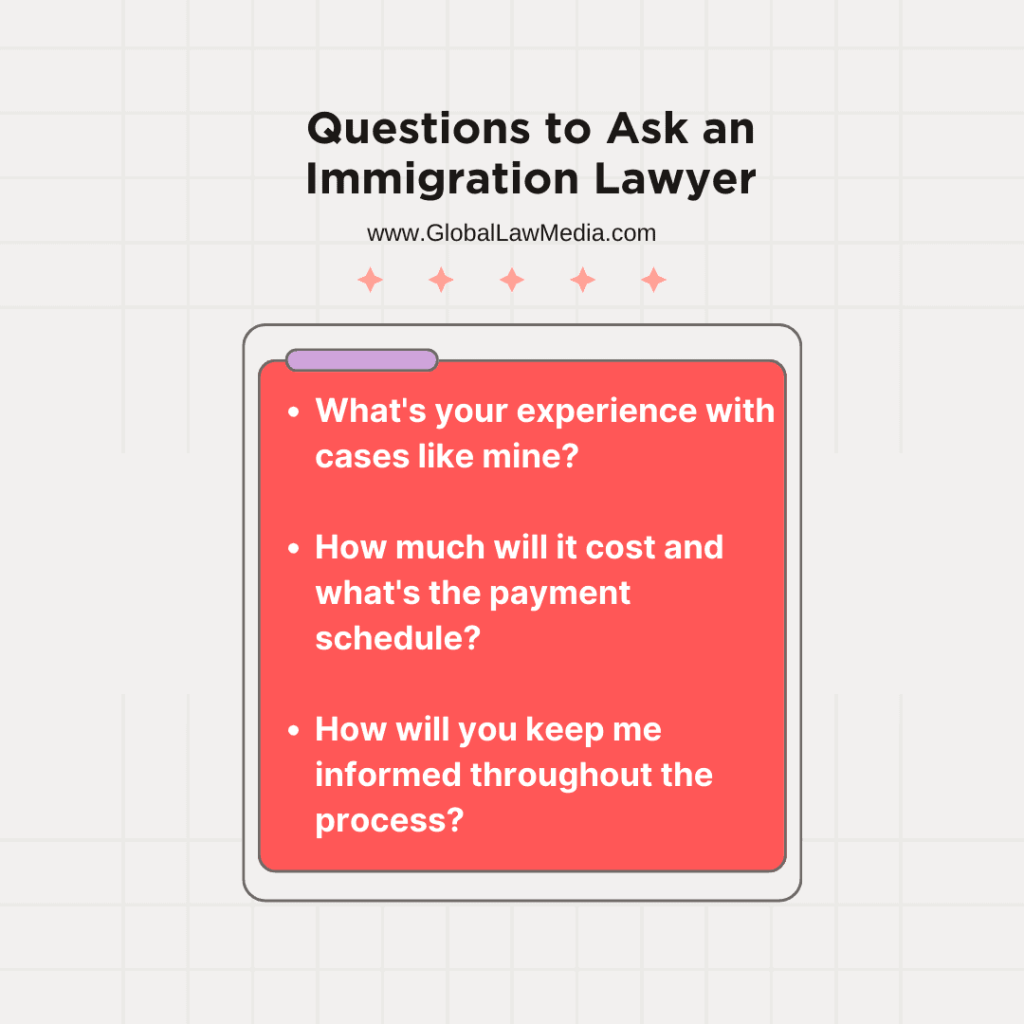
It’s important to get quotes from several immigration lawyers before making a decision. Be sure to ask about their experience in handling cases similar to yours, their fee structure, and what their fees include.
How Can Immigration Lawyers Help Me?
Immigration lawyers offer a comprehensive range of services to help you navigate the US immigration system. Here are some key ways they can assist you:
Case Evaluation: Lawyers can assess your situation and eligibility for different immigration benefits, providing you with a clear understanding of your options.
Application Preparation: They can guide you through the application process, ensuring all forms are filled out correctly and that you gather the necessary supporting documentation.
Legal Representation: Lawyers can represent you before USCIS or immigration courts, protecting your rights and advocating for your case.
Communication with USCIS: They can handle communication with USCIS on your behalf, ensuring clear and timely communication that avoids misunderstandings.
How to Hire an Immigration Lawyer?
Finding the right immigration lawyer is crucial and you can hire a qualified lawyer through the following paths:
Look for experience: Choose a lawyer who has extensive experience in handling cases similar to yours.
Check their credentials: Ensure the lawyer is licensed to practice law in your state and is in good standing with the bar association.
Get recommendations: Ask friends, family, or immigration advocacy groups for recommendations.
Schedule consultations: Meet with several lawyers to discuss your case and find someone you feel comfortable with.
How the United States Immigration System Works
The United States immigration system provides various pathways for individuals to enter the country legally. Understanding these categories can help you determine the most suitable option for your situation.
Family-Based Immigration
Family-based immigration allows U.S. citizens and lawful permanent residents to sponsor certain family members for green cards. This category includes spouses, children, parents, and siblings. The wait times for family-based green cards can vary depending on the relationship and the applicant’s home country.
Employment-Based Immigration
Employment-based immigration offers opportunities for skilled workers to obtain visas and green cards to work in the United States. This category includes several visa options, such as H-1B visas for specialty occupations, EB-5 visas for investors, and green cards for workers with extraordinary abilities.
Per-Country Ceilings
The U.S. government places annual limits, known as per-country ceilings, on the number of green cards issued from each country. This system aims to promote diversity among immigrants. Countries with high numbers of applicants may experience longer wait times for green cards.
Refugees and Asylees
The United States offers resettlement opportunities for refugees fleeing persecution in their home countries. Asylum is another option for individuals who fear persecution based on race, religion, nationality, political opinion, or membership in a particular social group.
The Diversity Visa Program
The Diversity Visa Program, also known as the “green card lottery,” is a random lottery conducted annually. This program offers a limited number of green cards to qualified individuals from countries with historically low rates of immigration to the U.S.
U.S. Citizenship
U.S. citizenship is the highest status attainable in the U.S. immigration system. Citizens enjoy full rights and privileges, including the right to vote, hold federal office, and sponsor certain family members for immigration benefits. There are several paths to U.S. citizenship, including naturalization for lawful permanent residents who meet specific eligibility requirements.
What are Immigration Law Courses to Take?
While a law degree is required to become a licensed immigration lawyer, there are educational resources available for those interested in gaining a deeper understanding of US immigration law. Here are a few options to consider:
Paralegal Studies Programs: Community colleges and vocational schools offer paralegal studies programs that may include coursework on immigration law. These programs can equip you with the knowledge and skills to assist immigration lawyers with case preparation, document filing, and legal research.
Immigration Law Courses for Non-Lawyers: Universities and online platforms sometimes offer non-accredited immigration law courses for individuals seeking a general understanding of the legal framework. These courses can provide valuable insights into visa categories, green card applications, and the naturalization process.
American Immigration Lawyers Association (AILA) Resources: The AILA offers a wealth of resources for the public, including educational materials, webinars, and publications on various immigration topics. These resources can be a helpful starting point for anyone wanting to learn more about specific aspects of immigration law.
It’s important to remember that these resources are not a substitute for legal advice. If you have specific immigration questions or are considering pursuing an immigration benefit, consulting with a qualified immigration lawyer is essential.
Frequently Asked Questions
Q: How long does it take to get a green card?
A: Processing times for green cards can vary significantly depending on the category you are applying under, your home country, and current USCIS workloads. Wait times can range from a few months to several years. An immigration lawyer can provide you with a more accurate estimate based on your specific circumstances.
Q: Can I come to the US if I have a criminal record?
A: Certain criminal offenses can make you inadmissible to the United States. However, there may be waivers available depending on the nature of the crime and the length of time that has passed. Consulting with an immigration lawyer is crucial to determine your eligibility if you have a criminal record.
Q: What happens if I overstay my visa?
A: Overstaying your visa can have serious consequences, including difficulty obtaining future visas, inadmissibility to the U.S., and even deportation. If you find yourself in a situation where you may need to stay longer than your visa allows, it’s essential to consult with an immigration lawyer to explore your options.
Q: Can I marry a US citizen to get a green card?
A: Marrying a US citizen is a pathway to obtaining a green card through family-based immigration. However, USCIS carefully scrutinizes marriage-based applications to prevent immigration fraud. An immigration lawyer can advise you on the process and help ensure your application is legitimate, even if you get a divorce.
Q: How much does it cost to become a US citizen?
There are various fees associated with the naturalization process, including application fees, biometric screenings, and fingerprinting. The total cost can vary depending on the specific circumstances. USCIS provides a detailed breakdown of fees on their website.
Q: What are the benefits of US citizenship?
U.S. citizenship offers numerous benefits, including the right to vote, hold federal office, sponsor certain family members for immigration benefits, and travel freely with a US passport. Citizens also enjoy greater stability and security in the United States.
Final Words
The U.S. immigration system can be complex and daunting. However, with proper education and guidance, navigating the process can be achievable. Whether you’re seeking to reunite with family, pursue career opportunities, or simply achieve the dream of becoming a U.S. citizen, understanding your options and consulting with a qualified immigration lawyer can significantly increase your chances of success. Consulting with a qualified immigration lawyer can provide you with personalized guidance and ensure you pursue the most appropriate path towards achieving your immigration goals.
A lawyer at a citizenship interview will benefit you because they are knowledgeable about the interview process, they can ensure you understand the questions being asked, and help you navigate any complexities that may arise during the interview. An attorney with expertise in immigration law can be a powerful asset on your path to becoming a U.S. citizen. He can help make the transition to immigrating to the US and becoming a US Citizen as easy as possible.
Table of Contents
What are the Reasons To Hire An Experienced Immigration Attorney for an Citizenship Interview
An experienced immigration attorney you hire can help you prepare, understand the questions, and address complexities and difficult questions that may occur during the citizenship interview.. The U.S. Citizenship and Immigration Services (USCIS) conducts citizenship interviews to assess an applicant’s eligibility for naturalization. While the interview may seem straightforward, it can be a nerve-wracking experience, and even seemingly minor mistakes can have serious consequences. An experienced immigration attorney can provide invaluable support throughout the interview process.
Key Benefits Of Having A Lawyer At Citizenship Interview
The key benefits of having a lawyer at a citizenship interview include proper preparation for the interview, clearly understanding the questions, and addressing any misunderstandings. Having an attorney present during the interview offers numerous advantages which include the following:
Preparation is Key: A lawyer can guide you through the interview process, explain what to expect, and help you anticipate the types of questions that may be asked. This includes practicing your responses for the civics test, a vital component of the interview.
Understanding the Questions: During the interview, the lawyer can ensure you understand the questions being asked and can clarify any ambiguities. This can help prevent misunderstandings that could lead to incorrect answers or missed opportunities to provide relevant information.
Addressing Complexities: If your situation involves complexities, such as past arrests or periods spent outside the U.S., a lawyer can help you explain these issues in a clear and concise manner that strengthens your case.
How can a Lawyer Prepare the Applicant for the Interview?
A lawyer can prepare the applicant by extensive practice for the interview and helping clarify any questions during the interview. Beyond the legalities, an immigration attorney plays a crucial role in preparing you for the interview itself by doing the following:
Mock Interviews: Attorneys can conduct mock interviews that simulate the real interview experience. This helps you practice answering questions confidently and identify areas where you may need further clarification.
Reviewing Application and Documents: An attorney will meticulously review your application and supporting documents to identify any potential inconsistencies or missing information. This proactive approach can prevent delays or even denials during the interview.
Building Confidence: The entire process of applying for citizenship can be stressful. An attorney can provide guidance and support, address your concerns, and boost your confidence as you approach the interview.
How can a Lawyer Assist And Represent You at The Interview?
An immigration lawyer can assist and represent you at the interview by being your strongest ally in the USCIS office. Here’s how your attorney’s presence benefits you:
Professional Representation: Having a lawyer by your side demonstrates your commitment to the process and portrays a professional image to the USCIS officer.
Clarifying Responses: If you misunderstand a question or need to elaborate on your answer, your lawyer can step in to ensure clear communication and avoid any confusion.
Addressing Unexpected Issues: Should unforeseen issues arise during the interview, your lawyer can handle them calmly and professionally, protecting your rights and ensuring a fair outcome.
Negotiating on Your Behalf: In rare instances, there may be room for negotiation on specific points related to your application. An attorney with experience in immigration law can advocate for you effectively.
How can a Lawyer Help Make Sure an Applicant Isn’t Abused at the Interview?
While uncommon, there have been documented cases of USCIS officers exhibiting unprofessional or even hostile behavior during citizenship interviews. An immigration lawyer can act as a safeguard against such situations:
Maintaining Professional Conduct: The lawyer’s presence itself can deter unprofessional behavior from the officer. They are familiar with USCIS protocol and can ensure the interview is conducted fairly and respectfully.
Protecting Your Rights: If the officer oversteps their bounds or attempts to ask irrelevant or discriminatory questions, your lawyer can intervene and protect your rights. They understand the legal boundaries of the interview process.
De-escalating Tensions: If tensions rise during the interview, the lawyer can act as a buffer, de-escalating the situation and ensuring a productive dialogue continues.
How can a Lawyer Help Explain and Address Case Weaknesses?
Your lawyer can help explain and address case weaknesses anticating issues and preparing explanations, and providing supporting documentation. Nobody’s application is perfect. There might be areas in your background that could raise questions during the interview. Here’s how a lawyer can help navigate these potential weaknesses:
Anticipating Issues: An attorney will thoroughly review your application and identify any potential red flags, such as past arrests or periods of ineligibility.
Preparing Explanations: The lawyer will work with you to craft clear and concise explanations for any weaknesses in your case. This proactive approach demonstrates accountability and strengthens your overall application.
Supporting Documentation: If necessary, the lawyer can help you gather relevant documentation to support your explanations. This could include police reports, court documents, or character references.
Legal Representation: In complex situations, the lawyer can provide legal representation if needed. This could be crucial if there are legal challenges to your eligibility for citizenship.
How can a Lawyer Help Keep the Applicant Calm?
The pressure of the interview can cause anxiety, which can cloud your thinking and hinder your performance. An immigration lawyer can play a vital role in keeping you calm:
Managing Expectations: The lawyer will explain the interview process in detail, reducing any anxieties about the unknown. They can also give you realistic expectations about the types of questions you might encounter.
Practice Makes Perfect: Mock interviews conducted by the lawyer will help you become familiar with the interview format and build your confidence in answering questions effectively.
Positive Reinforcement: The lawyer will offer encouragement and support throughout the process, reminding you of your qualifications and boosting your confidence in your ability to succeed.
Calming Presence: Having a knowledgeable and experienced professional by your side can provide a sense of security and stability, allowing you to focus on answering questions clearly and concisely.
How can a Lawyer Provide Protection Against Excessive Screening or Vetting?
The security landscape can sometimes lead to increased scrutiny during citizenship interviews. Here’s how a lawyer can help navigate this:
Understanding Procedures: An immigration attorney stays current on USCIS procedures and can explain any additional screening measures that may be implemented. This knowledge helps manage expectations and alleviate any unnecessary anxieties.
Advocating for Fair Treatment: If you feel you are being subjected to excessive questioning or vetting, your lawyer can advocate for fair treatment and ensure the interview adheres to established protocols.
Legal Expertise: Should the situation escalate and require legal intervention, your lawyer can provide expert guidance and representation to protect your rights.
How can a Lawyer Clarify Unclear Questions and Complex Issues?
Citizenship interviews often involve complex legal concepts and historical facts. An attorney with expertise in immigration law can ensure clear communication throughout the process:
Understanding the Nuances: Lawyers are trained to understand the legal nuances of citizenship applications. They can explain complex questions in a clear and concise way, ensuring you fully grasp the meaning before responding.
Tailoring Responses: The lawyer can guide you on how to tailor your responses to the specific questions asked, avoiding irrelevant information and focusing on the key points that strengthen your case.
Addressing Misconceptions: If the USCIS officer appears to have misconceptions about your situation, the lawyer can politely clarify any misunderstandings and ensure your eligibility is accurately assessed.
Legal Framework: If complex legal issues arise during the interview, your lawyer can explain the relevant legal framework and how it applies to your case. This can be particularly helpful in situations involving past immigration violations or periods of inadmissibility.
How can a Lawyer Help Prevent Unnecessary Delays And Complications?
The USCIS application process can be lengthy and complex. A lawyer can help you avoid delays and complications that could derail your path to citizenship:
Complete and Accurate Application: An attorney can meticulously review your application and supporting documents to ensure everything is complete, accurate, and filed correctly. This minimizes the risk of errors that could lead to delays or requests for additional evidence.
Meeting Deadlines: Immigration lawyers are familiar with USCIS deadlines and can ensure you meet all filing requirements on time. This helps keep your application moving forward smoothly.
Anticipating Issues: Through their experience, lawyers can often foresee potential issues that might arise during the application process. They can take proactive steps to address these issues upfront, preventing delays and complications down the road.
Efficient Communication: Lawyers can communicate effectively with USCIS on your behalf, ensuring clear and timely communication that avoids misunderstandings and unnecessary back-and-forth.
How can a Lawyer Serve as an Advocate?
The USCIS interview is your opportunity to showcase your qualifications for citizenship. An immigration lawyer can act as your strongest advocate throughout this crucial stage:
Highlighting Strengths: The lawyer can help you identify and highlight your strengths as a potential citizen. This could include your contributions to the community, your work history, and your commitment to U.S. values.
Crafting a Compelling Narrative: Working with the lawyer, you can develop a compelling narrative that showcases your journey to becoming a U.S. citizen. This personalized approach can resonate with the USCIS officer and strengthen your application.
Responding to Challenges: If you encounter any challenges during the interview, your lawyer can step in to advocate for you and ensure your voice is heard. They can present any relevant evidence or documentation that supports your case.
Professional Communication: An attorney can represent you in a professional and respectful manner, fostering a positive rapport with the USCIS officer, which can be crucial for a successful outcome.
How can a Lawyer Add Credibility to your Immigration Claim?
The USCIS officer ultimately decides whether to approve or deny your citizenship application. An immigration lawyer can bolster the credibility of your claim:
Verifying Documentation: Lawyers can ensure all your supporting documents are genuine and properly authenticated. This eliminates doubts about the validity of your application.
Consistently Presented Story: The lawyer will work with you to ensure your application and interview responses present a consistent and truthful narrative. This strengthens your credibility and portrays you as a reliable and trustworthy candidate for citizenship.
Addressing Inconsistencies: If there are any inconsistencies in your application or background, the lawyer can help you develop clear and concise explanations that mitigate any concerns the USCIS officer might have.
Legal Expertise: In complex cases, the lawyer’s legal expertise can be invaluable. They can present legal arguments that support your eligibility for citizenship and address any legal challenges that may arise.
How Much Do Immigration Lawyers Typically Charge?
An immigration lawyer costs between $150 to $400 or more per hour in major US cities, or they may work on a flat fee where lawyer fees are capped. In addition, some lawyers may charge a consultation fee for the initial meeting to discuss your case.
Many immigration lawyers charge an hourly rate and they will track the time spent working on your case and bill you accordingly. If the immigration matter is straightforward, some lawyers may offer a flat fee for the entire process. This can be helpful for budgeting purposes, as you’ll know the total cost upfront. However, flat fees may not be applicable for complex cases that might require additional work outside the initial scope. Legal fees are an investment in your future. While cost is a consideration, prioritizing experience and qualifications is crucial for a successful outcome in your immigration case.
It’s important to get quotes from several immigration lawyers before making a decision. Be sure to ask about their experience in handling cases similar to yours, their fee structure, and what their fees include.
What Value Does an Immigration Lawyer Offer?
While the upfront cost of hiring an immigration lawyer may seem daunting, it’s important to consider the value they bring to the table. Here’s how a lawyer can save you time, aggravation, and even money in the long run:
Increased Efficiency: Lawyers are familiar with the intricacies of immigration law and USCIS procedures. They can guide you through the application process efficiently, avoiding delays and unnecessary back-and-forth with USCIS.
Reduced Stress: The immigration process can be stressful, especially if you’re unfamiliar with the legalities involved. An attorney can handle the complexities, allowing you to focus on preparing for the interview and feeling confident about your application.
Avoiding Mistakes: Even seemingly minor errors on your application can lead to delays or even denials. A lawyer’s meticulous review of your application minimizes the risk of errors and ensures it’s presented professionally.
Potential for Approval on First Try: A well-prepared and professionally represented application by a lawyer increases your chances of USCIS approval on the first try. This can save you time and money associated with refiling applications or appealing denials.
Long-Term Investment: Obtaining U.S. citizenship opens doors to opportunities such as federal jobs, voting rights, and easier travel. The investment in an immigration lawyer can be seen as a long-term investment in your future and the future of your family.
What an Immigration Lawyer Cannot Do for You
It’s important to understand that while an immigration lawyer is a valuable asset, they cannot guarantee a positive outcome for your citizenship application. Here’s what a lawyer cannot do:
Guarantee Approval: USCIS makes the final decision on citizenship applications. A lawyer can significantly improve your chances of approval by ensuring a complete and accurate application, but they cannot guarantee a specific outcome.
Bypass Eligibility Requirements: If you don’t meet the basic eligibility requirements for citizenship, such as good moral character or the required time spent as a lawful permanent resident, a lawyer cannot change these requirements.
Fix Major Inconsistencies: If there are significant inconsistencies or misrepresentations in your application or background, a lawyer may not be able to overcome these issues. Honesty and transparency are crucial throughout the application process.
Travel Visas: Help you apply and transition from a Travel Visa to Citizenship, if you are not qualified.
Marriage: After you get married, they can’t speed up the time for you apply for US Citizenship
When Should You Hire an Immigration Attorney?
Given the complexity of the immigration process and the high stakes involved, consider consulting with an immigration lawyer in the following situations:
Complex Case: If your case involves any complexities, such as past arrests, periods of inadmissibility, or significant gaps in your physical presence in the U.S., an attorney’s expertise can be invaluable.
Limited English Proficiency: If you have limited English proficiency, a lawyer can ensure clear communication throughout the application process and during the interview.
Previous Denials: If you have had a previous application for citizenship denied, an immigration lawyer can help you understand the reasons for the denial and guide you through the process of reapplying.
Seeking Legal Representation: If you anticipate needing legal representation at a USCIS hearing or in court, it’s essential to hire an immigration lawyer with experience in litigation.
How to File a Request for Hearing After USCIS Denies Application for Naturalization
If USCIS denies your application for naturalization, you have the right to request a hearing before an immigration judge. An immigration lawyer can guide you through this process. The lawyer can represent you at the hearing and present evidence to support your eligibility for citizenship.
Frequently Asked Questions
Q: Can I represent myself at the citizenship interview?
A: You are not legally required to have a lawyer present at your citizenship interview. However, given the importance of the interview and the potential consequences of mistakes, consulting with an immigration lawyer is recommended.
Q: How can I find a qualified immigration lawyer?
A: You can find qualified immigration lawyers through referrals, bar associations, the American Immigration Lawyers Association (AILA) directory or by asking friends, family, or colleagues for recommendations.
Q: What should I ask a lawyer during a consultation?
A: During your consultation, be sure to ask the lawyer about their experience in handling cases similar to yours, their fee structure, and what their fees include. You should also feel comfortable with the lawyer’s communication style and personality.
Final Words
The decision of whether or not to hire an immigration lawyer for your citizenship interview is a personal one, and it can help you immigrate to the US if you are not currently in the US. However, the benefits of having a qualified legal professional by your side can be significant. An immigration lawyer can guide you through the process, ensure a smooth interview experience, and ultimately increase your chances of achieving your goal of becoming a U.S. citizen.
To choose a good immigration lawyer, the lawyer should be experienced in handling immigration matters and be able to answer your questions clearly. Legal directories, Bar Associations, and referrals from trusted sources can be a good starting point in your search for a qualified attorney. However, choosing the right lawyer goes beyond just finding someone who practices immigration law. When navigating the complexities of US immigration law, having a skilled and experienced lawyer on your side can make a significant difference in the outcome of your case. Immigration law is complex and involves immigrating to the US or becoming a US citizen. It is important to know when legal representation is crucial, what qualities to look for in a lawyer, and where to find qualified professionals.
Table of Contents
When is an Immigration Lawyer Needed?
A Immigration lawyer is needed when you need legal matters involving immigration. However, not every immigration process requires an attorney. There are situations where legal expertise is highly recommended. Here are some instances where consulting with an immigration lawyer is beneficial:
If You Have Prior Immigration Violations: If you have a history of overstaying a visa, deportation orders, or any past immigration offenses, an immigration lawyer can advise you on the best course of action and represent you in court if necessary.
If You’re Currently Out of Status in the U.S.: Being out of status can make it difficult to obtain legal immigration status. An immigration lawyer can explore your options, including potential avenues to adjust your status or re-enter the US legally.
If You Have Criminal History: A criminal record can complicate the immigration process. An immigration lawyer can assess your situation and determine the potential impact of your criminal history on your immigration case.
If You’re Facing Deportation or Removal Proceedings: If you are facing deportation proceedings, having an immigration lawyer represent you in court is crucial. The lawyer can fight for your rights and explore potential avenues to remain in the US legally.
If You Need to Get Your Application Process Faster: Under certain circumstances, it may be possible to expedite the processing of your immigration application. An immigration lawyer can help you determine if you qualify for expedited processing and guide you through the necessary steps.
If You Need Help Figuring Out Your Immigration Options: The US immigration system can be complex and confusing. An immigration lawyer can help you understand your options based on your specific circumstances and advise you on the best path forward.
If You Have a Unique Case or Specific Legal Questions: If your situation involves unusual circumstances or you have complex legal questions, consulting with an immigration lawyer can provide much-needed clarity and guidance.
How Much Does an Immigration Lawyer Cost?
An immigration lawyer costs between $150 to $400 or more per hour in major US cities, or they may work on a flat fee where lawyer fees are capped. In addition, some lawyers may charge a consultation fee for the initial meeting to discuss your case.
Many immigration lawyers charge an hourly rate and they will track the time spent working on your case and bill you accordingly. If the immigration matter is straightforward, some lawyers may offer a flat fee for the entire process. This can be helpful for budgeting purposes, as you’ll know the total cost upfront. However, flat fees may not be applicable for complex cases that might require additional work outside the initial scope. Legal fees are an investment in your future. While cost is a consideration, prioritizing experience and qualifications is crucial for a successful outcome in your immigration case.
What To Look For When Choosing A Good Immigration Lawyer
Finding a qualified and trustworthy immigration lawyer requires careful consideration. Here are some key factors to keep in mind:
Get A Trusted Referral:
Personal recommendations from friends, family, or colleagues who have had positive experiences with immigration lawyers can be a valuable starting point.
Avoid Hiring A General Practitioner Lawyer:
Immigration law is a complex area with its own specific set of regulations and procedures. Choose a lawyer who specializes in immigration law and stays up-to-date on the latest changes.
Be Skeptical Of Unrealistic Promises:
If a lawyer guarantees a successful outcome or makes promises that seem too good to be true, proceed with caution. Reputable lawyers will explain the legal process honestly and set realistic expectations.
Inquire About Their Availability During Regular Office Hours:
Effective communication is essential. Choose a lawyer who is readily available to answer your questions and address your concerns throughout the process.
Cost Hourly Rate Or A Flat Fee:
Understand the lawyer’s fee structure (hourly rate or flat fee) upfront and inquire about any additional costs associated with the case.
Experience In The Immigration System:
Experience matters. Choose a lawyer with a proven track record of success in handling cases similar to yours. Look for lawyers who are members of the American Immigration Lawyers Association (AILA).
Written Contract:
Before starting work, ensure a written service agreement clearly outlines the scope of the lawyer’s services, fees, and payment schedule.
Question Their Work Ethics:
A good lawyer should be ethical, honest, and responsive to your needs. Ask about their approach to communication and how they handle client concerns.
Check Their Professional Memberships And Affiliations:
Membership in reputable organizations like AILA indicates the lawyer’s commitment to staying current with immigration law.
Look For An Online Presence And Reviews:
Many lawyers have websites that showcase their experience and areas of expertise. Additionally, online reviews from past clients can offer valuable insights.
Immigration Lawyer Cost When Hiring An Immigration Lawyer:
While cost is a factor, remember that the lawyer’s experience and qualifications are paramount. A skilled lawyer can help you navigate the complexities of the immigration system and increase your chances of a successful outcome, potentially saving you time and money in the long run.
Where to Look for a Good Lawyer
You can look for a good lawyer in many places. Finding a qualified immigration lawyer involves exploring various avenues. Here are some effective ways to begin your search:
Word of Mouth:
Personal recommendations are a great starting point. Talk to friends, family, colleagues, or anyone you know who has gone through the immigration process. Ask about their experiences with their lawyers and see if they would recommend them to you.
Nonprofits and Pro Bono Lawyers:
Non-profit organizations often offer immigration legal services or referrals to pro bono (free) lawyers. These services can be particularly helpful for low-income individuals.
Find a Service Organization Near You:
Locate non-profit organizations in your area that specialize in immigration issues. These organizations can provide legal assistance, referrals, and other resources.
Lawyer Directories:
Several online lawyer directories allow you to search for attorneys by practice area and location. Here are a few reputable options:
AILA Private Immigration Lawyer Search Tool: The American Immigration Lawyers Association (AILA) website has a searchable directory of its members who specialize in immigration law.
National Immigration Project of the National Lawyers Guild – Find an Attorney tool: This directory allows you to search for immigration lawyers affiliated with the National Lawyers Guild.
DOJ Recognized Organizations And Accredited Representatives: The US Department of Justice (DOJ) website maintains a directory of organizations recognized to provide immigration legal services and accredited representatives who can assist with certain immigration applications and petitions.
How to Prepare to Meet with an Immigration Lawyer
Before meeting with your immigration lawyer, gather all relevant documents related to your immigration case. This might include your passport, visa documents, any previous immigration applications, and any court orders or documentation related to your situation.
Having a clear understanding of your desired outcome is also crucial. Do you want to apply for a green card, citizenship, or temporary work authorization? The more specific you are about your goals, the better the lawyer can tailor their advice and services to your needs.
By being prepared and asking thoughtful questions, you can gain valuable insights into the lawyer’s experience, approach, and suitability for your case.
How Do I Know if an Immigration Attorney Is Right for Me?
Choosing the right immigration lawyer is a crucial decision. Here are some key factors to consider when evaluating potential lawyers:
Experience and Track Record: Look for a lawyer with a proven track record of success in handling cases similar to yours. Experience translates to a deeper understanding of the legal issues involved and the best strategies to navigate the immigration process.
Communication Style and Demeanor: During your consultation, pay attention to the lawyer’s communication style. Do they explain things clearly and answer your questions in a way you understand? Do they appear confident and knowledgeable in immigration law? It’s important to feel comfortable and trust your lawyer throughout the process.
Availability and Responsiveness: An immigration case can take time. Choose a lawyer who is readily available to address your concerns and promptly responds to your questions. Effective communication is essential for building trust and ensuring a smooth attorney-client relationship.
Fees and Payment Structure: Be upfront about your budget and inquire about the lawyer’s fees. Understand their fee structure (hourly rate or flat fee) and any additional costs associated with the case. Some lawyers may offer payment plans to accommodate your financial situation.
Client Reviews and Testimonials: While online reviews shouldn’t be the sole deciding factor, they can offer valuable insights from past clients. Look for reviews that mention the lawyer’s expertise, communication style, and overall effectiveness.
Don’t be afraid to interview several lawyers before making a decision. The initial consultation is an opportunity for you to assess the lawyer’s qualifications and determine if they are a good fit for your needs and personality.
What Are Potential Red Flags When It Comes To Choosing an Immigration Attorney?
Finding the right lawyer can feel overwhelming, and unfortunately, there are some red flags to watch out for during your search. Here’s how to avoid falling victim to unscrupulous practices:
Guaranteed Success: If a lawyer guarantees a successful outcome in your case, be wary. Immigration law is complex, and there are no guarantees in any legal proceeding. A reputable lawyer will explain the process honestly and set realistic expectations.
Pressure to Hire Immediately: A trustworthy lawyer won’t pressure you to make a hasty decision. Take your time, interview several lawyers, and choose the one you feel most comfortable with.
Unrealistic Timelines: If a lawyer promises a lightning-fast turnaround time for your case, proceed with caution. The US immigration system can have processing backlogs, and reputable lawyers will manage your expectations accordingly.
Vague Fee Structure: A lawyer should be upfront and transparent about their fees. Don’t hesitate to ask clarifying questions about the fee structure, hourly rate (if applicable), and any potential additional costs.
Unethical Behavior: If a lawyer suggests breaking the law or providing false information, avoid them at all costs. A good lawyer will prioritize ethical practices and legal compliance.
Dismissive Attitude: A lawyer who doesn’t listen attentively to your concerns or seems dismissive of your questions is not a good fit. Choose a lawyer who demonstrates genuine interest in your case and takes the time to address your needs.
By being aware of these red flags, you can make informed decisions and avoid choosing a lawyer who might jeopardize your immigration case.
If I Don’t Need an Immigration Attorney, Why Hire One?
While not every immigration process requires legal representation, there are significant advantages to having a qualified immigration lawyer on your side:
Increased Chances of Success: Immigration law is intricate, and the application process can be complicated. An experienced lawyer can navigate the legalities, ensure all forms are filled out correctly, and represent you effectively if any issues arise.
Reduced Stress and Anxiety: The immigration process can be stressful and confusing. A lawyer can handle the complexities, answer your questions, and provide guidance throughout the journey, giving you peace of mind.
Avoiding Delays and Denials: Improperly filled-out applications or missing documentation can lead to delays or even denials. A lawyer can ensure your application is complete and filed correctly, minimizing the risk of setbacks.
Knowledge of Recent Changes: Immigration laws and regulations are constantly evolving. A lawyer stays up-to-date on the latest changes and can advise you on how they might impact your case.
Representation in Court: If your case requires appearing in immigration court, having a lawyer by your side is crucial. A skilled lawyer can advocate for you and fight for your rights in court proceedings.
Even for seemingly straightforward applications, an immigration lawyer’s expertise can prove invaluable. They can identify potential issues you might overlook, expedite the process, and ultimately increase your chances of a successful outcome.
What Happens After I Choose My Immigration Lawyer?
After you choose an immigration lawyer you will formally establish the attorney-client relationship, and sign a retainer agreement that outlines the scope of the lawyer’s services, fees, and payment schedule.
The lawyer will then gather all necessary documents and information from you to begin working on your case. They will guide you through the application process, answer your questions, and keep you informed of any updates.
Open communication is key throughout the process. Don’t hesitate to reach out to your lawyer with any questions or concerns you may have.
What are some Questions to Ask Potential Immigration Lawyers?
Here are some additional questions to consider asking potential lawyers during your consultations:
How much experience do you have handling cases similar to mine?
How many clients do you typically handle at a time?
How will you keep me informed about the progress of my case?
What is your plan for handling any potential challenges that may arise in my case?
Do you offer any payment plans?
What are your fees and how do you bill?
What is your communication style? How often can I expect updates on my case?
What are the potential challenges in my case and what is the likelihood of success?
By asking thoughtful questions, you can gain a deeper understanding of the lawyer’s approach, experience, and suitability for your specific needs.
Written Service Agreement or Contract:
Before starting work on your case, ensure a written service agreement clearly outlines the following:
The scope of the lawyer’s services (what they will and will not do for you)
The lawyer’s fees and how they will be billed (hourly rate or flat fee)
The payment schedule
Having a written agreement protects both you and the lawyer and ensures everyone is on the same page regarding the scope of services and associated costs.
Questions About Their Practice
Here are some additional questions to consider asking potential lawyers about their practice:
Do you primarily focus on immigration law?
What types of immigration cases do you handle most often?
Are you familiar with the specific consulate or USCIS office that will be handling my case?
What is your approach to communication with clients?
How can I reach you if I have questions outside of regular office hours?
By asking these questions, you can gain valuable insights into the lawyer’s experience, communication style, and overall approach to handling immigration cases.
Communication and Promptness
Effective communication is paramount throughout the attorney-client relationship. Here’s what to look for in a lawyer regarding communication:
Accessibility: Choose a lawyer who is readily available to answer your questions and address your concerns. This might involve phone consultations, email communication, or in-person meetings.
Promptness: Timely responses to your inquiries are essential. A lawyer who takes days or even weeks to return your calls or emails is not demonstrating the level of responsiveness you deserve.
Clear and Concise Communication: Legal jargon can be confusing. A good lawyer will explain complex legal concepts in a way you can understand and ensure you are informed about the progress of your case.
Transparency: Be upfront about your budget and any concerns you may have. A reputable lawyer will be honest and transparent about fees, potential challenges, and the overall timeline of your case.
How to Avoid Immigration Scams?
Unfortunately, there are individuals who prey on immigrants seeking legal assistance. Here are some tips to avoid becoming a victim of a scam:
Check Credentials: Always verify the lawyer’s license to practice law in your state with the Bar Association.
Beware of Unrealistic Promises: If a lawyer guarantees a successful outcome or makes promises that seem too good to be true, be wary. The immigration process can be complex, and there are no guarantees in legal matters.
Don’t Pay Large Upfront Fees: While a retainer fee is common, be cautious of lawyers who demand a large sum of money upfront before any work is done.
Get Everything in Writing: A written service agreement should clearly outline the scope of services, fees, and payment schedule. Never proceed without a signed agreement.
Trust Your Gut: If something feels off about a lawyer or their practices, don’t hesitate to walk away and seek out a more reputable professional.
By following these tips, you can protect yourself from scams and ensure you are working with a qualified and trustworthy immigration lawyer.
US Immigration: A Statistical Overview
Understanding some general statistics about US immigration can provide context for your situation. Here’s a brief snapshot:
Legal Permanent Residents (Green Card Holders): As of 2023, there were over 12 million legal permanent residents in the United States, according to Office of Homeland Securit.
Top Sending Countries: Mexico, India, China, the Philippines, and El Salvador are consistently among the top countries of origin for immigrants to the United States.
Reasons for Immigration: People immigrate to the US for various reasons, including family reunification, employment opportunities, education, and escaping violence or persecution.
Frequently Asked Questions (FAQ)
Q: Can I represent myself in immigration court?
A: Yes, you can represent yourself, but it’s highly advisable to have an attorney represent you in court. Unlike in criminal court, you are not constitutionally guaranteed a lawyer. Immigration law is complex, and an experienced lawyer can significantly increase your chances of a successful outcome.
Q: How long does it take to get a green card?
A: It can take several months to several years to get a green card. Processing times for green cards can vary depending on the category you are applying under and the current workload of USCIS.
Q: What documents do I need to apply for a green card?
A: The required documents will vary depending on your specific situation. An immigration lawyer can advise you on the exact documentation needed for your case.
Final Words
Choosing the right immigration lawyer is a crucial decision that can significantly impact your future. By following the guidance in this article, you can find a qualified and experienced professional who will effectively represent you throughout the immigration process. Remember, don’t hesitate to ask questions, conduct thorough research, and trust your instincts when choosing a lawyer who is the right fit for you.
No, the US Immigration does not perform a physical test for drugs. During the medical examination for a green card, the doctors will ask questions about your current medications and your history with alcohol and drugs. Based on your answers, the doctor may require you to take a drug test. This is because drug use and addiction can be grounds for inadmissibility to the United States. However, the medical exam is much broader than just drug testing, and is important to know for aspiring green card holders and individuals that aim to be a US Citizen one day.
Table of Contents
What is the immigration medical exam?
The immigration medical exam is a mandatory part of the green card application process. It is conducted by a doctor who has been authorized by the United States Citizenship and Immigration Services (USCIS) – often referred to as a “civil surgeon.” The exam aims to ensure you don’t have any medical conditions that could pose a threat to public health or prevent you from working.
What Drugs May Come Up in a Drug Test?
As mentioned earlier, there’s no routine drug test during the green card medical exam. However, the doctor will ask questions about your past and present drug use. Here are some categories of drugs that might raise concerns:
Illegal Drugs: This includes marijuana, cocaine, heroin, methamphetamine, and other illicit substances. Using or possessing illegal drugs is a serious offense and can lead to inadmissibility.
Prescription Drugs: While taking prescription drugs isn’t necessarily an automatic bar to getting a green card, misusing them or having a history of addiction can be problematic. Be honest about any prescription medications you take and their purpose.
Over-the-Counter Drugs: While less likely to be a major concern, abusing over-the-counter medications like cough syrups containing codeine (also known as dirty sprite) or excessive use of pain relievers could raise questions about potential substance abuse issues.
It is important to be truthful and upfront about your past and present drug use during the medical exam. If you have a history of drug abuse but have undergone rehabilitation and are no longer using drugs, provide documentation to support your recovery.
Why do I need to take the immigration medical exam?
There are two main reasons why you need to take the immigration medical exam:
Public Health Protection: The exam helps screen for contagious diseases that could spread to others in the US.
Ensuring Self-Sufficiency: The exam also assesses your overall health to determine if you have any medical conditions that would prevent you from working and supporting yourself financially.
By undergoing the medical exam, you demonstrate that you meet the health requirements for obtaining a green card.
What to Expect and How to Prepare for the Green Card Medical Exam
You can expect the exam to lasts about an hour and can involve the following:
Review of your medical history: The doctor will ask questions about your past and present health conditions, medications you’re taking, and any surgeries you’ve had.
Physical examination: This includes a basic checkup like checking your blood pressure, heart rate, vision, and hearing.
Vaccinations: The doctor will review your vaccination records and may recommend additional vaccinations if needed.
You can prepare for the medical exam by:
Gather your medical records: Collect documents like immunization records, past prescriptions, and doctor’s reports to share with the civil surgeon.
Complete the vaccination questionnaire: USCIS will provide you with a questionnaire about your vaccination history. Fill it out accurately and bring it to the exam.
Fasting (optional): While not always required, some blood tests might require fasting beforehand. Check with the doctor’s office for specific instructions.
By coming prepared with your medical history and any necessary records, you can ensure a smooth and efficient medical exam experience.
How Much Will the Medical Exam Cost?
The cost of the medical exam can vary depending on the doctor’s fees and any additional tests required. Generally, it can range from $200 to $500. It’s important to confirm the cost upfront with the civil surgeon before scheduling the exam. The USCIS fee for filing Form I-693, the Application for Verification of Medical Examination, is separate from the doctor’s exam fee.
When and How Do I Schedule the Medical Exam?
You schedule a medical exam depending on whether you are located in or out of the US.
What to Do if you are Applying from Within the United States?
If you’re already in the US and applying for a green card through adjustment of status, USCIS will typically send you instructions on scheduling your medical exam after you file Form I-485, Application to Register Permanent Residence or Adjust Status.
Here’s the process:
USCIS will send a notice: You’ll receive a notice containing a list of USCIS-authorized civil surgeons in your area.
Choose a doctor: Select a convenient civil surgeon from the list.
Contact the doctor’s office: Call the doctor’s office to schedule your exam appointment.
What to Do if you are Applying from Outside the United States?
If you’re applying for your green card from outside the US through consular processing, the process is slightly different.
Here’s what to expect:
The US embassy or consulate will contact you: After your green card interview at the US embassy or consulate, they’ll provide you with a list of USCIS-approved panel physicians in your area.
Schedule the exam: Contact a chosen doctor from the list to schedule your medical exam appointment.
Regardless of your location, ensure you schedule the medical exam after you receive instructions from USCIS or the US embassy/consulate. Scheduling the exam too early can cause delays in your green card application process.
What Should I Bring to My Medical Exam?
You should bring the following items with you to your medical exam
A valid government-issued photo ID (e.g., passport, driver’s license)
The Appointment Letter you received from USCIS
Completed Form I-693 (Application for Verification of Medical Examination)
Your Vaccination Records (childhood and adult immunizations)
Any Medical Records related to past illnesses, surgeries, or ongoing medical conditions
In addition, you should dress comfortably, bring a translator if you need one, potentially wear a mask if the healthcare facilities still require masks due to COVID-19. Check with the doctor’s office beforehand for their specific guidelines.
By bringing the necessary documentation and following these tips, you can ensure a smooth and efficient medical exam experience.
What will Happy During the Green Card Medical Exam?
During the green card medical exam, you will have to undergo a variety of tests such as a drug and alcohol screening, tuberculosis test, blood and urine test, and vaccination screening
Drug and Alcohol Screening
As mentioned earlier, there’s no physical drug test during the exam. However, the doctor will ask you questions about your past and present drug and alcohol use. Be honest and upfront in your responses.
The doctor will assess your answers and may request a drug test if they have concerns about potential substance abuse issues. Drug addiction or dependence on controlled substances can be grounds for inadmissibility to the US.
Tuberculosis Test
This test checks for tuberculosis (TB), a contagious lung infection.
There are two ways the TB test can be administered:
Skin test (TST): A small amount of tuberculin is injected under the skin of your forearm. You’ll need to return to the doctor’s office 48-72 hours later for a reading.
Blood test (IGRA): A blood sample is drawn to detect TB infection.
The type of TB test used may depend on several factors, including your age, medical history, and the country you’re coming from.
Blood and Urine Tests
These tests are used to screen for various medical conditions, such as anemia, syphilis, and HIV.
Vaccination Screening
The doctor will review your vaccination records and may recommend additional vaccinations to meet US requirements. Common vaccinations for green card applicants include measles, mumps, rubella (MMR), tetanus, diphtheria, and polio.
After the Green Card Medical Exam
Once you’ve completed the medical exam, the process varies slightly depending on whether you’re applying from within the US or abroad.
What to Do if you are Applying from Within the United States
The civil surgeon will complete Form I-693, which summarizes your medical exam findings.
Sealed Envelope: The doctor will seal the form in an envelope and give it to you unopened. Do not break the seal!
Submit the Sealed Envelope: You’ll need to submit the sealed Form I-693 along with your other green card application materials to USCIS.
What to Do if you are Applying from Outside the United States
The civil surgeon will submit Form I-693 electronically to the US Department of State.
You won’t receive a copy of the form.
The US embassy or consulate will be notified of your medical exam results.
Regardless of your location, keep a copy of your medical records and any receipts from the exam for your own reference.
What Are the Health-Related Reasons for Denial – “Medical Inadmissibility”
There are several health-related reasons that can lead to a denial on the basis of “medical inadmissibility”, such as the following
Reason 1: Communicable diseases that could affect public health
This includes diseases like tuberculosis (TB), syphilis, and certain contagious strains of influenza. The goal is to prevent the spread of serious illnesses within the US population. If you have a communicable disease, you may be denied a green card until you complete the necessary treatment and are deemed non-contagious by a doctor.
Reason 2: Drug or alcohol abuse
Drug addiction or dependence on controlled substances can be grounds for inadmissibility. The doctor’s assessment during the medical exam and your answers about past or present drug use will be considered. If there’s evidence of a serious substance abuse problem, your green card application could be denied.
Reason 3: Mental or physical disorders associated with harmful behaviors
This category applies to mental health conditions that could pose a threat to yourself or others. It’s important to note that having a mental health condition itself doesn’t automatically disqualify you. However, if the condition is severe and unmanaged, leading to harmful behaviors, it could lead to inadmissibility.
Reason 4: Inability to work
One of the underlying purposes of a green card is to allow you to live and work in the US and support yourself financially. If the civil surgeon determines you have a severe medical condition that prevents you from working entirely, your application could be denied.
Reason 5: Failure to show proof you previously had your required vaccines
Vaccinations are crucial for protecting public health. The US has specific vaccination requirements for green card applicants. If your medical records lack documentation of receiving the required vaccinations, you may be denied until you get them and update your records.
Unfortunately, not everyone who undergoes the green card medical exam automatically qualifies. Here’s a breakdown of the main reasons.
How Can I Prevent or Challenge a Health-Related Denial
You can prevent a health-related denial by ensuring you have all of your medical documentation and you can challenge the denial by filing with the I-601 Waiver and I-602 Waiver and with help of an immigration attorney.
If your green card application is denied due to medical inadmissibility, you have the right to appeal the decision. This process typically involves filing a waiver application with USCIS. There are two main waiver options:
I-601 Waiver (Medical Grounds): This waiver applies to inadmissibility based on specific medical conditions, such as certain communicable diseases. Meeting specific criteria and demonstrating the condition won’t cause harm allows for a waiver.
I-602 Waiver (Public Charge): This waiver applies to inadmissibility based on the inability to work and potential reliance on public benefits. Showing sufficient financial resources and future earning potential can strengthen a waiver request.
The waiver process can be complex, and consulting with an immigration attorney is highly recommended for navigating the legalities and increasing your chances of a successful appeal.
Is there Important Information About the Immigration Medical Exam for Women?
Yes, there are some specific considerations for women undergoing the green card medical exam which include:
Pregnancy: If you are pregnant, inform the doctor at the beginning of the exam. Certain tests, like X-rays, may not be recommended during pregnancy. The doctor will adjust the exam accordingly to ensure your safety and the health of the fetus.
Pap Smear: While not mandatory, some civil surgeons may recommend a Pap smear during the exam, especially for women over a certain age. A Pap smear is a screening test for cervical cancer. Ultimately, the decision to undergo a Pap smear is yours, but discussing it with the doctor beforehand allows you to make an informed choice.
Menstrual Cycle: The timing of your menstrual cycle may not significantly impact the exam itself. However, if you experience heavy bleeding or cramps, you may want to reschedule for a more comfortable experience.
It’s always best to communicate openly and honestly with the doctor about any health concerns or questions you may have, including those related to your pregnancy or menstrual cycle.
How Do I Choose the Right Doctor?
You must select a USCIS-authorized civil surgeon to conduct your green card medical exam. You can find these doctors in the following places:
USCIS Website: The USCIS website provides a searchable directory of authorized civil surgeons in your area.
Insurance: Check with your insurance company to see if they cover any portion of the medical exam cost. If so, choosing an in-network doctor can help reduce your out-of-pocket expenses.
Online Reviews: Read online reviews from other immigrants who have used the doctor for their green card medical exam. This can give you insights into the doctor’s efficiency, communication style, and overall experience.
Location: Consider the doctor’s location and choose one conveniently located for you to minimize travel time on the day of your exam.
Ultimately, the most important factor is choosing a doctor who is licensed, experienced, and puts you at ease.
Do I Need an Immigration Lawyer?
While not mandatory, consulting with an immigration lawyer can be beneficial for several reasons:
Complex Medical Conditions: If you have a pre-existing medical condition that might raise concerns about inadmissibility, an attorney can advise you on appropriate steps to take and explore options like waivers.
Application Process Guidance: An immigration lawyer can guide you through the entire green card application process, ensuring all forms are filled out correctly and deadlines are met.
Denial Appeals: If your green card application is denied due to medical inadmissibility, an immigration lawyer can represent you throughout the appeal process and increase your chances of success.
While the decision to hire a lawyer is ultimately yours, their expertise can provide valuable support and peace of mind during the green card application journey, especially if your situation involves any complexities.
Frequently Asked Questions (FAQ)
Here are some commonly asked questions regarding the green card medical exam and drug testing:
Q: Can I fail the medical exam because of a past DUI?
A: Not necessarily. A DUI on its own might not automatically disqualify you. However, if it indicates a pattern of problematic alcohol use, it could raise concerns. Honesty about the DUI and any steps you’ve taken to address the issue can be helpful.
Q: What happens if I test positive for drugs during the exam?
A: As mentioned before, there’s typically no physical drug test during the exam. However, if the doctor has concerns about your drug use based on your answers, they may request a drug test. A positive test result could lead to a denial of your green card application, but it’s not an automatic disqualification. Consulting with an immigration lawyer can help you navigate the situation.
Q: Can I get a medical marijuana card and still qualify for a green card?
A: Marijuana remains a federally controlled substance in the US, even if it’s legal for medicinal purposes in some states. Using medical marijuana could be grounds for inadmissibility. Consult with an immigration lawyer to discuss your specific situation.
Final Words
The green card medical exam is an important step in the green card application process. While there’s no physical drug test, being honest about your past and present drug use is crucial. Understanding the reasons for medical inadmissibility and potential options for overcoming them can help ease anxieties. Once you get your green card, Remember, consulting with an immigration lawyer can provide valuable guidance and support throughout your green card journey.
The B-1 visa is for business travel to the US and the B-2 visa is for individuals traveling to the US for tourism or leisure purposes. This is an important difference because they both have different requirements and application processes. The United States welcomes millions of visitors each year for business and pleasure. If you’re planning a trip to the US, understanding the difference between a B-1 and B-2 visa is crucial. These two common visitor visas cater to distinct purposes and have separate application processes. Choosing the right visa type is essential to avoid any issues at the port of entry. Applying for the wrong visa can lead to delays, denials, or even being turned away. Even though these are travel related visa, it’s is possible to obtain a green card and one day become a US citizen.
Table of Contents
What Are the B-1 and B-2 US Visitor Visas?
The B-1 visa is for business visitors, while the B-2 visa is for tourists and leisure travelers.
The B-1 Visa (Business Visitor) allows foreign citizens to engage in a variety of business activities in the US, but there are some limitations. Some common permitted activities include
Attending conferences or business meetings
Negotiating contracts
Consulting with business partners
Conducting research or training
Participating in short-term business projects
It is Important to remember that with a B-1 visa, you cannot work for a US company or legally sell goods or services in the US.
The B-2 Visa (Tourist Visa) is best for individuals traveling to the US for pleasure purposes such as the following:
Sightseeing and vacations
Visiting family or friends
Participating in cultural events or festivals
Receiving medical treatment (with some restrictions)
Enrolling in short-term recreational courses (not for academic credit)
However, it is important to know with a B-2 visa you can not work or accept employment in the US, study for academic credit at a US school, or participate in activities that could be perceived as business (attending business conferences, for example)
How to Apply for the Visitor Visas?
Applying for a B-1/B-2 visa involves five steps.
1. Complete Form DS-160: This is the online nonimmigrant visa application form. It gathers your biographical information, travel details, and purpose of your visit to the US. Answer all questions truthfully and accurately. It is important to correctly complete the DS-160 because a mistake on your application could delay or even prevent your visa approval.
2. Pay the US visitor visa application fee: The fee amount varies depending on your visa category, so check the current fees on the US Department of State website before making the payment. Remember, this fee is non-refundable, even if your visa application is ultimately denied.
3. Schedule your visitor visa interview: Once you’ve paid the application fee, schedule an interview appointment at a US embassy or consulate in your home country. Scheduling can be done online through the US Department of State website. Wait times for interview appointments can vary depending on your location and workload at the embassy or consulate.
4. Compile your document file for the B-1/B-2 visas: While you wait for your interview, gather the necessary documents to support your application. These documents typically include:
A valid passport with at least six months of remaining validity beyond your intended stay in the US.
A copy of the DS-160 confirmation page.
Proof of payment for the visa application fee.
A recent passport-sized photograph.
Documentation demonstrating strong ties to your home country. This shows the US visa officer that you have compelling reasons to return home after your visit. Examples of ties to your home country could include employment, property ownership, or family ties.
Evidence of your planned activities in the US. This might include business invitation letters for B-1 visas or travel itineraries and hotel bookings for B-2 visas.
Financial documents showing you have sufficient funds to cover your stay in the US. The specific requirements can vary depending on your circumstances.
5. Attend your interview: Dress professionally and arrive at the embassy or consulate on time for your interview. The interview will be conducted by a US consular officer who will ask questions about your trip, your purpose for visiting the US, and your plans after your visit. Be prepared to answer these questions honestly and concisely.
Following these steps will guide you through the B-1/B-2 visa application process. The next section will address processing times and some key differences between the B-1 and B-2 visas.
How long does it take to get a B-1/B-2 visa?
It can take anywhere from a few weeks to several months to get a B-1/B-2 visa. Processing times for B-1/B-2 visa applications can vary depending on several factors, including:
Your nationality: Citizens of some countries may experience longer wait times due to higher application volume or security checks.
The workload at the US embassy or consulate: Embassies and consulates with a high volume of applications might have longer processing times.
The complexity of your application: If your application requires additional scrutiny or documentation, it could take longer to process.
It is best to plan ahead and apply for your visa well in advance of your intended travel date.
How long can you stay in the US on a B-1/B-2 Visa?
You can stay in the US on a B-1/B-2 no longer than what the Customs and Border Protection (CBP) officer provides you. Unlike some visas with a set duration of stay, a B-1/B-2 visa can be a multiple entry visa. This means the visa itself allows for multiple trips to the US within its validity period. However, the authorized duration of each stay is determined by the CBP officer at the port of entry. They will grant you a specific period to stay in the US based on your itinerary and purpose of visit.
A multiple entry B-1/B-2 visa doesn’t guarantee unlimited stays in the US. CBP can deny entry.
How Many Times Can You Visit the U.S. with a B-1/B-2 Visa?
You can visit the US multiple times with a B-1/B-2 visa. A key benefit of the B-1/B-2 visa is its potential for numerous entries. This means the visa itself can be used for multiple trips to the US during its validity period. However, the duration of each stay is determined by the Customs and Border Protection (CBP) officer when you enter the country.
Here’s how it works:
CBP Officer Grants Entry: The CBP officer at the port of entry (airport, seaport) will review your passport and visa. They will also ask questions about your trip and purpose for visiting. Based on this information, they will grant you a specific period of authorized stay in the US.
Valid for Multiple Entries: As long as your B-1/B-2 visa remains valid, you can use it for multiple entries to the US within that validity period.
No Guarantee of Unlimited Stays: Having a multiple entry visa doesn’t guarantee unlimited stays in the US. CBP can deny entry if they suspect you intend to stay longer than authorized or violate visa conditions.
How Much Does a B-1/B-2 Visa Cost?
The cost of a B-1/B-2 visa is $185, according to the US Department of State. The fee is typically non-refundable, even if your visa application is ultimately denied. Therefore, paying the fees doesn’t guarantee visa approval.
In addition, there may be other costs associated with the application process, such as:
Travel to the US embassy or consulate for your interview.
The cost of passport photos.
Translation fees if any required documents are not in English.
What are the Requirements for a B-1 and B-2 Visa?
Obtaining a B-1/B-2 visa requires a valid passport, intent to leave the US, financial resources, and no criminal background.These criteria aim to ensure that visitors have legitimate reasons for entering the US and will depart after their authorized stay. Here’s a breakdown of some key requirements:
Valid Passport: You must possess a valid passport from your home country that has at least six months of remaining validity beyond your intended stay in the US. A damaged or expired passport will render you ineligible.
Completed DS-160 Application Form: This online form gathers your biographical information, travel details, and purpose of visit to the US. Fill out the form accurately and truthfully, as any inconsistencies could raise red flags for visa officers.
Visa Application Fee Payment Receipt: Keep a copy of the receipt confirming your payment of the visa application fee. The amount can vary depending on the visa category, so be sure to check the US Department of State website for current fees.
Nonimmigrant Intent: You must demonstrate that you have no intention of immigrating to the US. This typically involves showing strong ties to your home country, such as:
Stable employment
Property ownership
Close family ties (spouse, children, parents)
Purpose of Visit: You must have a legitimate purpose for your visit that aligns with the B-1 or B-2 visa category you’re applying for. Documentation to support your purpose of visit is crucial. For example:
Business invitation letters (B-1 visa)
Travel itinerary and hotel bookings (B-2 visa)
Financial Resources: You must demonstrate sufficient financial resources to cover your expenses during your stay in the US. This could include bank statements, proof of employment, or a sponsor’s letter of financial support.
Clean Criminal Record: A history of serious criminal offenses could lead to visa ineligibility.
Can you change status from B-1/B-2?
Yes, you can change your status from a B-1/B-2 visa, if you marry a US citizen or have a medical emergency. However, it is not advisable to enter the US with the intention of changing your visa status later. B-1/B-2 visas are specifically designed for short-term stays, and attempting to switch to a long-term visa category while in the US can be risky.
Here’s why:
Misrepresentation: When applying for a B-1/B-2 visa, you declare your intention to return to your home country after a temporary visit. If you enter with the idea of changing status later, this could be seen as misrepresenting your initial intentions to immigration officials.
Complex Process: Changing visa status within the US can be a complex and lengthy process. It involves filing additional applications, attending interviews, and potentially waiting months for a decision.
No Guarantee of Approval: There’s no guarantee that your application to change status will be approved. US Citizenship and Immigration Services (USCIS) will carefully evaluate your case and may deny your request if they believe you didn’t have genuine intentions of temporary stay when entering with a B-1/B-2 visa.
However, there are some exceptions where changing status from B-1/B-2 might be possible. These situations typically involve unforeseen circumstances that necessitate a longer stay in the US. Here are a couple of examples:
Marriage to a US Citizen: If you enter on a B-1/B-2 visa and then marry a US citizen, you may be eligible to apply for a change of status to a green card through marriage. It’s important to consult with an immigration attorney to navigate this process.
Medical Emergency: If you experience a serious medical emergency requiring extended medical treatment in the US, you might be able to apply for a change of visa status. Documentation from a medical professional would be necessary to support such a request.
How Do I Get a B1/B2 Visa Extension?
Filing Form I-539 and receiving approval is how you get a B1/B2 Visa Extension While B-1/B-2 visas are designed for temporary stays, there might be situations where you need to extend your time in the US. Here’s what you need to know about B-1/B-2 visa extensions:
Extension Process: Extending your B-1/B-2 visa requires filing Form I-539, Application to Change Nonimmigrant Status, with US Citizenship and Immigration Services (USCIS) before your authorized stay expires. There are associated filing fees, and USCIS approval is not guaranteed.
Eligibility for Extension: Approval for a B-1/B-2 visa extension depends on various factors, including:
The reason for your extension request.
Evidence of sufficient financial resources to support your extended stay.
Maintaining nonimmigrant intent (having no intention of immigrating to the US).
Consult an Immigration Attorney: The extension process can be complex. Consulting with an immigration attorney is highly recommended, especially if your situation is unique or involves unforeseen circumstances.
Can I Get a Green Card With the Visitor Visas?
No, you cannot obtain a Green Card directly through a B-1/B-2 visa. However, you can get a Green Card if you have a B-1/B-2 visa if you marry a US citizen or qualify for another visa.
Marriage to a US Citizen: If you enter on a B-1/B-2 visa and then marry a US citizen, you may be eligible to apply for a change of status to a Green Card through marriage. This process involves extensive paperwork, interviews, and background checks. Consulting with an immigration attorney is crucial for navigating this route, especially if you get a divorce after receiving your green card.
Qualifying for another Visa Category: In some rare cases, you might enter on a B-1/B-2 visa and then discover you qualify for a different visa category that allows a path to a Green Card. This would involve applying for a change of visa status within the US, which is a complex process with a low approval rate. Again, consulting with an immigration attorney is highly recommended.
It is important to note that entering the US with the intention of later changing your visa status is generally not advisable. US immigration authorities frown upon misrepresentation of your initial intentions. It’s always best to be upfront about your purpose of visit when applying for a visa.
Can I Bring My Dependents With a B1/B2 Visa?
Yes, your dependents (spouse and unmarried children under 21) can apply for their own B-1/B-2 visas to accompany you to the US. Here’s what to keep in mind:
Separate Applications: Each dependent needs to submit a separate B-1/B-2 visa application, even if traveling with you.
Supporting Documentation: Include documentation supporting documentation in their application that strengthens their ties to their home country and demonstrates their purpose for visiting the US aligns with the B-1/B-2 visa category. For example, a child’s birth certificate and proof of school enrollment can be relevant.
Separate Interview: While rare, consular officers might request separate interviews for dependents, especially older children.
Here are some additional points to consider:
Validity Period: The visa officer might issue B-1/B-2 visas with different validity periods for you and your dependents depending on your individual circumstances.
Traveling Separately: If you plan to travel separately from your dependents, it’s important to have a notarized letter of permission from the non-traveling parent authorizing the travel with the other parent.
Financial Support: If your dependents are not financially independent, you’ll need to show proof of sufficient funds to cover their expenses during the stay in the US.
How will an Immigration Lawyer Help with a B1/B2 Visa?
An immigration lawyer can help you in the following ways:
Understanding Eligibility: Immigration lawyers possess a deep understanding of B-1/B-2 visa requirements and can help you determine which visa category best suits your needs. They can analyze your situation and advise you on whether you meet the eligibility criteria.
Completing the Application: The B-1/B-2 visa application can involve various forms and documentation. An immigration lawyer can guide you through the application process, ensuring all forms are filled out accurately and completely. They can also help you gather the necessary supporting documents to strengthen your application.
Interview Preparation: The visa interview can be a nerve-wracking experience. An immigration lawyer can prepare you for the interview by anticipating potential questions and guiding you on how to respond effectively. They can also help you practice your interview skills to boost your confidence.
Addressing Complexities: If your situation involves complexities, such as a criminal record or past visa denials, an immigration lawyer can offer valuable guidance. They can help you navigate these challenges and present your case in the most favorable light.
Denial Representation: If your B-1/B-2 visa application is denied, an immigration lawyer can represent you in appealing the decision. They understand the appeals process and can increase your chances of a successful outcome.
The B-1/B-2 visa application process can sometimes be complex, especially if your situation involves unique circumstances. Consulting with an immigration lawyer doesn’t guarantee visa approval. However, their expertise can significantly improve your chances of a smooth and successful application process.
Do I Need to Obtain Health Insurance as a Visitor in the United States?
No, health insurance is not mandatory for obtaining a B-1/B-2 visa. However, having health insurance is strongly recommended for visitors to the United States. Here’s why:
High Medical Costs: Medical care in the US is very expensive. Even a minor illness or injury can result in significant medical bills. Health insurance can help protect you from financial hardship in case of an unexpected medical emergency.
Limited Coverage by Travel Insurance: Travel insurance often excludes pre-existing medical conditions or specific types of emergencies. It’s crucial to carefully review your travel insurance policy to understand its limitations.
Peace of Mind: Having health insurance can provide peace of mind during your visit. Knowing you’re covered for medical expenses allows you to relax and enjoy your trip without worrying about unforeseen medical costs.
What are the Types of Health Insurance for Visitors:
There are two main types of health insurance options for visitors to the United States:
Travel Medical Insurance: These short-term insurance plans are specifically designed for visitors and can cover medical expenses incurred during your trip. Premiums vary depending on the plan’s coverage, your age, and the length of your stay.
Comprehensive Medical Insurance: If you’ll be visiting the US for an extended period, you might consider purchasing a comprehensive medical insurance plan. These plans offer broader coverage but typically come with higher premiums.
How to Choose the Right Health Insurance?
When selecting a health insurance plan for your US visit, consider the following factors:
Length of Stay: The longer your trip, the more comprehensive coverage you might need.
Activities: If you plan on engaging in adventurous activities, ensure your plan covers potential injuries.
Pre-existing Conditions: Choose a plan that covers pre-existing medical conditions if applicable.
Budget: Compare plans and premiums to find one that fits your budget.
It will be important to carefully review the terms, exclusions, and limitations of any health insurance plan before purchasing it. By obtaining health insurance, you can safeguard yourself from financial burdens and enjoy your US visit with greater peace of mind.
Do I Need to Obtain Travel Insurance before Coming to the United States?
No, you do not need to obtain travel insurance before coming to the US and for a B-1/B-2 visa. However, travel insurance is a valuable consideration for visitors to the United States. Here’s a breakdown of the pros and cons to help you decide:
What are the Benefits of Travel Insurance?
Trip Cancellation Coverage: Travel insurance can reimburse you for prepaid trip expenses (flights, hotels) if you’re forced to cancel your trip due to a covered reason, such as illness, injury, or natural disasters.
Trip Interruption Coverage: If your trip is interrupted due to a covered reason, travel insurance can help cover expenses to return home and resume your trip later.
Medical Expense Coverage: Some travel insurance plans offer supplemental medical expense coverage, which can be beneficial if your health insurance has limited coverage in the US.
Baggage Loss or Delay Coverage: Travel insurance can reimburse you for lost, stolen, or delayed baggage, helping you replace essential items.
Travel Assistance Services: Many travel insurance plans offer 24/7 assistance services, providing help with things like finding medical care, replacing lost travel documents, or arranging emergency transportation.
What Things Does Travel Insurance Don’t Cover?
Pre-existing Medical Conditions: Most travel insurance plans exclude coverage for pre-existing medical conditions.
Certain Activities: Travel insurance might not cover injuries sustained during high-risk activities like extreme sports.
Change of Mind: Travel insurance typically doesn’t cover cancellations or trip interruptions due to a change of plans on your end.
The decision to purchase travel insurance depends on your individual circumstances and risk tolerance. Here are some factors to consider:
Value of Your Trip: If your trip involves expensive flights, hotels, and pre-paid activities, travel insurance can provide valuable financial protection in case of cancellation.
Your Health: If you have any pre-existing medical conditions, travel insurance with supplemental medical coverage might be wise.
Your Risk Tolerance: If you’re worried about unexpected events disrupting your trip, travel insurance can offer peace of mind.
Travel insurance premiums can vary depending on the coverage you choose, the length of your trip, and your age. It’s always best to compare plans and prices from different providers before making a decision.
How Does the Electronic Visa Update System (EVUS) Apply to Visiting the US?
The Electronic Visa Update System (EVUS) is an online system that applies to nationals of certain countries holding B-1/B-2 visas that are entering the United States. TheEVUS is mandatory for travelers holding a valid 10-year B1/B2, B1, or B2 visa issued by the US Department of State and who are nationals of certain countries participating in the Visa Waiver Program (VWP).
What is the Visa Waiver Program (VWP)?
The VWP allows citizens from certain countries to travel to the US for short stays (up to 90 days) without obtaining a visa. However, travelers from VWP countries who hold a B1/B2, B1, or B2 visa still need to enroll in EVUS before their trip.
How Does EVUS Work?
The EVUS enrollment process involves creating an online account and providing basic information, including passport details, travel itinerary, and contact information.
Benefits of Enrolling in EVUS:
Faster Entry Process: Having a valid EVUS enrollment can expedite your entry process at US Customs and Border Protection (CBP).
Travel Authorization Confirmation: A successful EVUS enrollment provides confirmation that you’re authorized to travel to the US under the VWP with your B1/B2, B1, or B2 visa.
Important to Remember:
Validity Period: An EVUS enrollment is generally valid for two years or until your visa expires, whichever comes first. You’ll need to re-enroll in EVUS if you obtain a new visa or your existing enrollment expires.
Not a Guarantee of Entry: A valid EVUS enrollment doesn’t guarantee automatic entry into the US. The final decision on entry rests with the CBP officer at the port of entry.
By understanding the EVUS requirements, you can ensure a smooth travel experience when visiting the US under the VWP with your B1/B2, B1, or B2 visa.
How Does the NAFTA and USMCA Treaty Apply to Visiting the US?
The North American Free Trade Agreement (NAFTA), now superseded by the United States-Mexico-Canada Agreement (USMCA), no longer directly applies to visa requirements for short-term business travel to the US.
However, there are some residual effects of NAFTA, and the USMCA offers similar benefits for business travel between the three countries (US, Mexico, and Canada).
USMCA and Professional Visas
The USMCA doesn’t have a direct equivalent to the TN visa. However, citizens from Canada and Mexico can still apply for other professional visas, such as the H-1B visa for specialty occupations, to work temporarily in the US.
Benefits for Business Travelers
The USMCA promotes business travel between the US, Canada, and Mexico by:
Streamlining business travel procedures: This can involve simplifying border crossings and expediting entry processes for business travelers.
Encouraging short-term business visits: The USMCA acknowledges the importance of facilitating short-term cross-border business activities.
Important to Remember:
Citizens from Canada and Mexico still require visas: Even with the USMCA, Canadian and Mexican citizens typically need a visa to work in the US, depending on the nature and duration of their business activities.
Consult an Immigration Lawyer: The US immigration system can be complex. If you’re a business person from Canada or Mexico planning to travel to the US for work purposes, consulting with an immigration lawyer is highly recommended. They can advise you on the appropriate visa category and ensure you meet the eligibility requirements.
While the NAFTA TN visa is no longer available, the USMCA maintains a focus on facilitating business travel between the three North American countries. However, always check current visa requirements and consult with an immigration lawyer for specific business travel needs.
Frequently Asked Questions (FAQs) about B-1 and B-2 Visas
Q: Can I apply for a B-1/B-2 visa online?
A: Yes, you can apply for a B-1/B-2 visa by completing the DS-160 application form online. However, a face-to-face interview at a US embassy or consulate in your home country remains mandatory.
Q: How long do I have to wait for a B-1/B-2 visa interview?
A: Wait times for interview appointments can vary depending on your location and the workload at the US embassy or consulate.
Q: How long can I stay in the US on a B-1/B-2 visa?
A: The validity period of a B-1/B-2 visa can vary depending on your application, the purpose of your visit, and the decision of the consular officer. They can be issued for multiple entries and can range from a few months to several years.
Q: Can I extend my stay in the US on a B-1/B-2 visa?
A: There’s a possibility, but it requires filing an application with USCIS before your authorized stay expires. Approval for extension is not guaranteed.
Q: Can I work in the US on a B-1/B-2 visa?
A: No. Working for a US company or receiving payment from a US source is strictly prohibited on a B-1/B-2 visa.
Q: Should I bring a sponsor letter for my B-1/B2 visa application?
A: In some cases, a sponsor letter demonstrating financial support can strengthen your application, especially if you have limited funds. However, it’s not mandatory for all situations. Consult with an immigration lawyer for specific guidance.
Q: Should I hire an immigration lawyer to help with my B-1/B-2 visa application?
A: While not mandatory, consulting with an immigration lawyer can be beneficial, especially if your situation is complex or you have any concerns about eligibility. An immigration lawyer can provide guidance throughout the application process and represent you if needed during the interview.
Q: What happens if my B-1/B-2 visa application is denied?
A: If your visa application is denied, you will receive a notification explaining the reason for denial. You can reapply for the visa, but you’ll need to address the reasons for the previous denial in your new application.
Final Words
Planning a trip to the United States can be exciting, and understanding the visa process is crucial for a smooth experience. Whether you’re a business person attending a conference (B-1) or a tourist visiting family (B-2), the B-1/B-2 visa can be your gateway to exploring the US.
Key Takeaways:
The B-1 visa is for short-term business activities, while the B-2 visa is for tourism and pleasure.
Carefully consider your trip’s purpose to choose the right visa category.
Consulting an immigration lawyer can be beneficial for a complex application or unique circumstances.
Consider health insurance and travel insurance for added peace of mind during your visit.
Be aware of EVUS requirements if you’re traveling from a VWP country with a B1/B2, B1, or B2 visa.
The USMCA facilitates business travel between the US, Canada, and Mexico, but visa requirements still apply.
By understanding the information presented in this comprehensive guide, you can approach the B-1/B-2 visa application process with more confidence. Remember, thorough preparation and adherence to visa regulations will increase your chances of a successful application and a memorable US visit.
If you get divorced after getting a green card, you risk never receiving a permanent 10-year green card if you still have your conditional green card, which is valid for only two years. However, if you’ve already obtained your permanent green card, there’s no penalty for divorce. Understanding the different types of green cards and how they’re affected by divorce is crucial in becoming a US citizen. It is important to navigate potential challenges if your marital status were to change.
Table of Contents
What is a Divorce?
A divorce is a legal process that dissolves a marriage. Oftentimes, couples will get married in the courthouse for immigration purposes and the benefits of an affordable wedding. Once a divorce is finalized, it will legally terminate the legal rights and obligations of a marriage (e.g., spousal support and shared ownership of property).
What is a Green Card?
A Green Card is a physical identification card that is officially issued by the United States Citizenship and Immigration Services (USCIS) to lawful permanent residents. It has the color green on the document, and has acquired the name “Green Card”, however it is officially called a Permanent Resident Card. A Green Card is proof that you are authorized to lawfully live and work permanently in the United States.
There are several different categories for Green Cards that allow you to lawfully immigrate to the US, The each have their own specific eligibility requirements, and the most common type of Green Card issued are for individuals who have family members who are US citizens or for those who have employment skills that are in high demand in the US.d SA`1
What is a Conditional Green Card?
A conditional green card is a temporary green card that is valid for two years, and is issued when you marry a US citizen. A conditional green card gives you legal permanent residence status in the US. You will have a conditional status until you file and obtain a permanent 10-year green card. You and your spouse must file a joint petition with USCIS before the two-year conditional green card expires in order to get a permanent green card.
What is a Permanent Green Card?
A permanent green card is a 10-year green card that is issued to lawful permanent residents based on marriage, and does not have any conditions. It allows you to live and work permanently in the United States and enjoy many benefits, such as traveling freely in and out of the country. A permanent green card is typically valid for 10 years and needs to be renewed before the green card expires.
What Happens if You Get Divorced Before Green Card Approval but after the Application?
Your entire application for a conditional green card is stopped, if you filed for a green card through marriage to a US citizen but got divorced before USCIS approves your application. Since the entire reason for your green card application was marriage, a divorce eliminates your eligibility. Unfortunately, you cannot continue the process on your own and would likely need to return to your home country or file for another visa.
What Happens if You Get Divorced After Receiving a Green Card but Before Removing Conditions?
You must get a waiver from the joint filing requirement or show mitigating factors (e.g., abuse), if you get divorced after receiving your conditional green card but before filing the joint petition to remove conditions. This situation is more complicated because normally you must file Form I-751 jointly with your spouse to remove the conditional status and obtain a permanent green card.
Can You Get a Green Card or Remove Conditions Without Your Spouse’s Consent?
In most cases, you cannot file Form I-751 or remove the conditions on your green card without your spouse’s cooperation. However, the USCIS may allow you to waive the joint filing requirement if you can demonstrate your spouse is unwilling or unable to participate in the process.
The USCIS may waive the joint filing requirement if you have experienced domestic violence or abuse from your spouse. You must be able to show substantial evidence to support your domestic violence claim. Police reports and injuries may help you claim. In addition, support is available and you should call 1.800.799.SAFE (7233) if you are experiencing domestic or sexual violence. In addition, you can receive a waiver if divorcing your spouse would cause you extreme hardship. This hardship could be financial, emotional, or related to threats to your safety if you were forced to return to your home country.
How Do You Waive the Joint Filing Requirement?
Filing Form I-751 with the waiver application Form I-601 is how you waive the joint filing requirement. This application requires extensive documentation to prove your eligibility for the waiver, and it will be important to speak with an immigration attorney to help with these m
How To Prove the Marriage Was in Good Faith?
Photographs, joint financial records, rental agreements, and affidavits from friends or family will help prove the marriage was in good faith. It is crucial to show the marriage to your US citizen spouse was entered into in good faith and not solely to obtain a green card. This might involve providing evidence such as:
What Happens if You Get Divorced After Receiving a 10-Year Green Card
If you already have a permanent 10-year green card and then get divorced, there is no penalty if you get divorced after receiving a 10-year green card. However, your green card must remain valid and unexpired in order for you to continue living and working in the US.
Can You Become a U.S. Citizen After Divorce?
Yes, after a divorce you can become a US citizen if you meet the eligibility requirements. These requirements typically include:
Meeting a specific residency period as a lawful permanent resident (usually five years if married to a US citizen or three years if you haven’t been married for the past three years).
Passing the US citizenship test, which includes a written exam on US history and civics and an English language proficiency test.
Demonstrating good moral character.
If you obtained your green card through marriage, USCIS will scrutinize your marriage’s legitimacy during your naturalization application. However, as long as you can demonstrate a legitimate marriage, a divorce shouldn’t necessarily prevent you from becoming a US citizen. It will be important to speak with immigration attorney that can prepare you for this.
Do You Need to Talk to an Attorney About Divorce After Getting a Green Card?
Yes, you should talk to an attorney if you are serious about getting an divorce after getting a Green Card, especially if you have a conditional green card. An attorney can advise you on your specific situation, help you understand your rights and options, and guide you through the appropriate legal processes, such as applying for a waiver or filing for naturalization.
What is the Difference between Divorce and Separation?
A divorce formally dissolves a marriage through a legal process which terminates all legal rights and obligations of the marriage. However, a separation is an informal arrangement where spouses live apart but remain legally married.
Frequently Asked Questions (FAQs)
Here are some frequently asked questions regarding divorce and green cards:
Can I get a green card if I’m already divorced?
Yes, you can get a green card through marriage even if you’re divorced. However, you’ll need to demonstrate a bona fide marriage with your current spouse.
What if my spouse refuses to cooperate with removing conditions on my green card?
You can still apply for a permanent 10 year green card, and qualify for a waiver due to abuse, extreme hardship, or other reasons, without your spouse’s cooperation. Please speak with an immigration attorney to determine if you qualify.
How long does it take to get a green card after divorce?
The processing times for green cards can vary depending on your specific situation and the workload of USCIS.
Final Words
Divorce can be a complex and stressful process, and navigating the potential immigration implications can add another layer of worry. However, understanding the different types of green cards and how they are affected by divorce can help you make informed decisions. Remember, consulting with an immigration attorney experienced in such cases is highly recommended to ensure you are taking the right steps to protect your immigration status.
This website uses cookies to improve your experience while you navigate through the website. Out of these, the cookies that are categorized as necessary are stored on your browser as they are essential for the working of basic functionalities of the website. We also use third-party cookies that help us analyze and understand how you use this website. These cookies will be stored in your browser only with your consent. You also have the option to opt-out of these cookies. But opting out of some of these cookies may affect your browsing experience.
Necessary cookies are absolutely essential for the website to function properly. These cookies ensure basic functionalities and security features of the website, anonymously.
Cookie
Duration
Description
cookielawinfo-checkbox-analytics
11 months
This cookie is set by GDPR Cookie Consent plugin. The cookie is used to store the user consent for the cookies in the category "Analytics".
cookielawinfo-checkbox-functional
11 months
The cookie is set by GDPR cookie consent to record the user consent for the cookies in the category "Functional".
cookielawinfo-checkbox-necessary
11 months
This cookie is set by GDPR Cookie Consent plugin. The cookies is used to store the user consent for the cookies in the category "Necessary".
cookielawinfo-checkbox-others
11 months
This cookie is set by GDPR Cookie Consent plugin. The cookie is used to store the user consent for the cookies in the category "Other.
cookielawinfo-checkbox-performance
11 months
This cookie is set by GDPR Cookie Consent plugin. The cookie is used to store the user consent for the cookies in the category "Performance".
viewed_cookie_policy
11 months
The cookie is set by the GDPR Cookie Consent plugin and is used to store whether or not user has consented to the use of cookies. It does not store any personal data.
Functional cookies help to perform certain functionalities like sharing the content of the website on social media platforms, collect feedbacks, and other third-party features.
Performance cookies are used to understand and analyze the key performance indexes of the website which helps in delivering a better user experience for the visitors.
Analytical cookies are used to understand how visitors interact with the website. These cookies help provide information on metrics the number of visitors, bounce rate, traffic source, etc.
Advertisement cookies are used to provide visitors with relevant ads and marketing campaigns. These cookies track visitors across websites and collect information to provide customized ads.